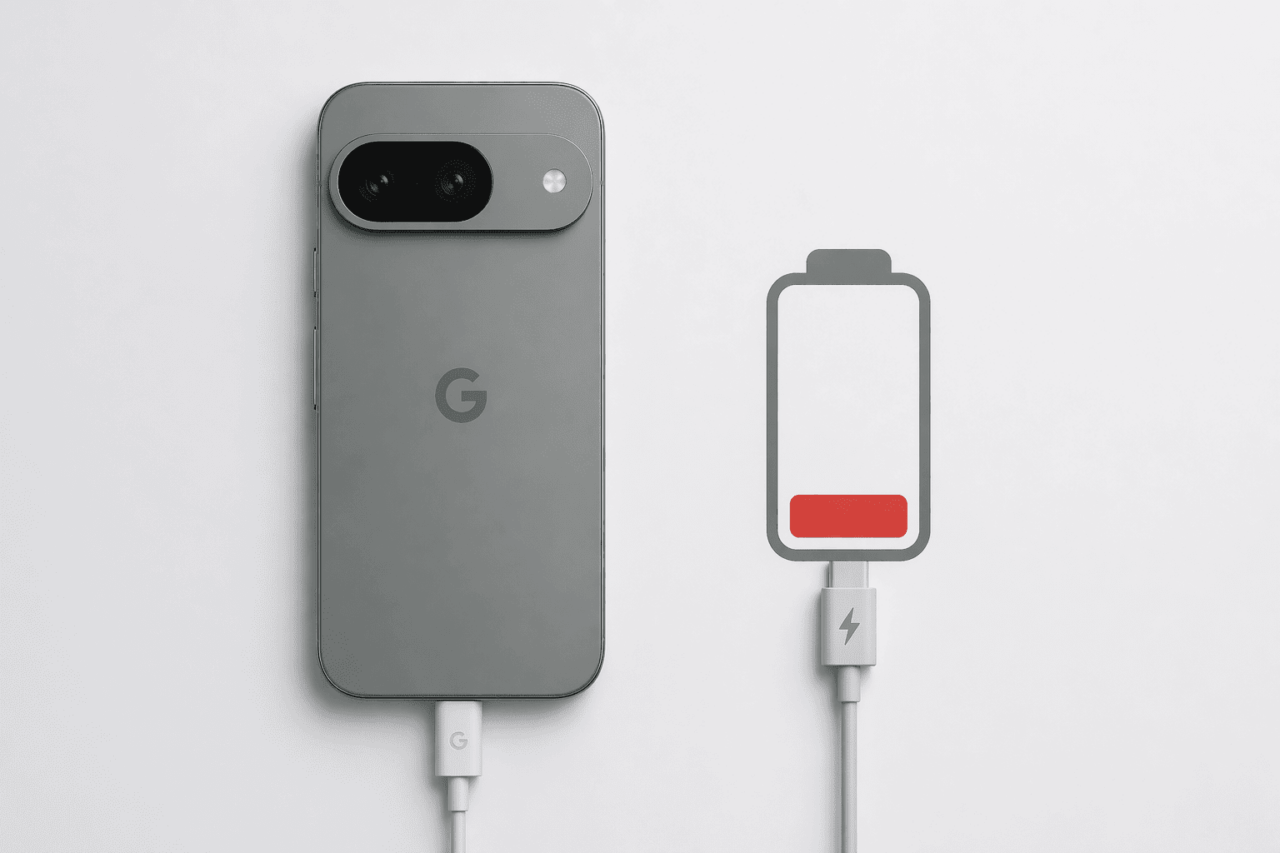
It is 2pm. Your Pixel 10 Pro is at 34%. You have not done anything unusual today.
Meanwhile your friend, who paid $300 for a Redmi, plugged in for twenty minutes this morning and has been at 80% ever since. His phone has been on since 6am and he has not thought about the battery once. You have been mentally rationing screen time since noon.
Something about that comparison does not sit right. So you start looking into it. And what you find is not one answer. It is four or five answers stacked on top of each other, each one explaining a different layer of the same frustrating problem.
Here is the full picture. Or at least, the fullest picture I could put together.
TL;DR: The Pixel 10 Pro has a 4,870mAh battery and charges at 30W. A $300 Redmi packs 5,110mAh and fills up in 21 minutes. The gap comes down to battery chemistry, chip efficiency, deliberate charging limits, and a hidden throttling feature that kicks in after around 200 charge cycles.
The shipping regulation advantage nobody talks about
This one is not a hard ceiling. Apple ships iPhones with 4,400mAh to 4,685mAh batteries globally. Samsung ships large cells too. Shipping regulations do not stop anyone from putting a big battery in a phone.
What they do is change the economics of doing so at scale. And that part is genuinely interesting.
Batteries above a certain energy threshold, around 20 watt-hours per cell, face higher transport costs, more specialised packaging, and heavier paperwork under international air freight regulations.
Chinese brands found a practical workaround: instead of one large cell, stack two smaller cells inside the phone. If neither individual cell exceeds the threshold, the battery qualifies under simpler import and export rules, with lower per-unit logistics overhead.
That makes it significantly easier and cheaper for a Redmi or an OPPO to ship a 5,500mAh or 6,200mAh battery globally without the logistics penalty a single large cell would carry. It lowers the cost barrier for aggressive battery sizing. The Redmi even comes with the fast charger in the box. Google charges you extra for a 30W brick.
Google could adopt the dual-cell approach. The reason it has not is the same reason behind most of the battery gap: retooling production lines is expensive, battery architecture changes affect charging circuits and thermal packaging, and the competitive pressure to chase a mAh number on a spec sheet is lower when your pitch is built around software, cameras, and seven years of updates.
Shipping regulations are a tailwind for Chinese brands, not a wall keeping Google out. The distinction matters.
Silicon-Carbon batteries – China has them, Google does not
This is the biggest gap. Actually, it is not that complicated once you see it.
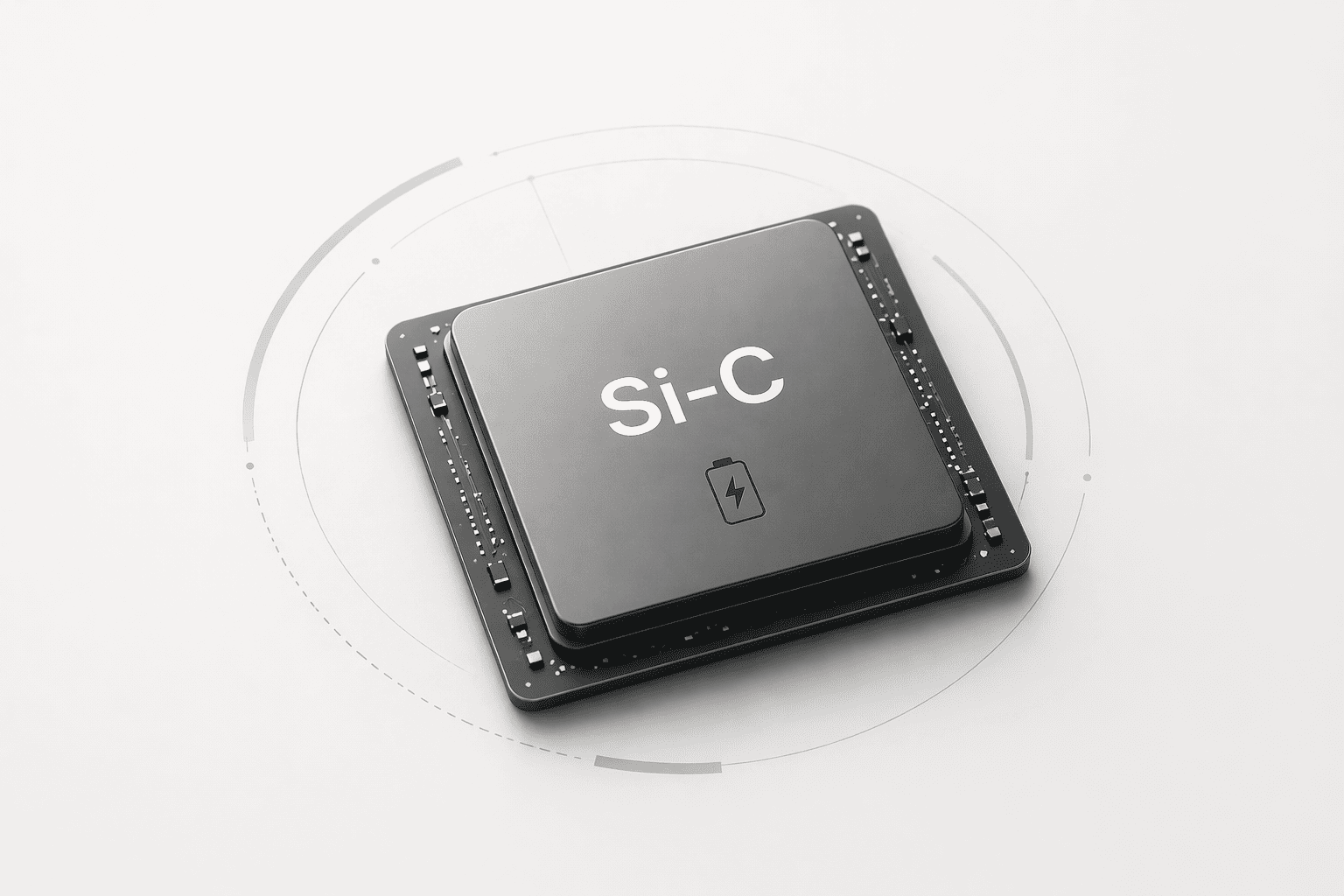
Almost every major Chinese flagship and upper-midrange phone released in the last two years uses silicon-carbon battery technology.
The Xiaomi 17 Ultra, the OnePlus 15, Honor’s current flagships, recent Realme devices: all silicon-carbon, with capacities ranging from 5,500mAh to over 6,000mAh in phones that are not significantly thicker than a Pixel.
Silicon-carbon batteries replace the conventional graphite anode with a silicon-carbon composite. Silicon stores far more lithium ions than graphite, which means the battery holds more energy in the same physical space.
A phone that previously needed a thick chassis to fit a 5,000mAh graphite cell can now fit 6,000mAh or more without growing meaningfully thicker.
Google, as far as can be confirmed from available information, is still on conventional graphite-based lithium-ion in the Pixel 10 series. GSMArena noted in its Pixel 10 Pro review that Google is not advertising the battery chemistry, and the combination of capacity and weight suggests conventional cells rather than silicon-carbon. Google has not said otherwise.
I asked a similar question to someone on the Pixel team at an event last year. The response, paraphrased, was that silicon-carbon batteries are not mature or durable enough for their standards.
Meanwhile I was using an OPPO Find X9 Pro with a silicon-carbon cell that felt like a revelation. Two-day battery. No anxiety. Just a phone.
The real reason Google has not switched is probably the scale problem. Silicon expands and contracts during charge cycles.
For a company shipping tens of millions of units, a small failure rate scales into a very large customer service problem, warranty claims, and the kind of headlines Samsung still has not fully recovered from after the Note 7. That caution is not irrational.
But the technology has been in Chinese phones for two or three years now without major reported issues at scale. The gap between what Pixel users get and what a $300 Redmi offers in raw battery capacity is becoming harder to explain away on safety grounds alone.
The Tensor chip makes the small battery worse

This is the part that catches a lot of Pixel owners off guard. The battery size number does not tell the full story.
Tensor chips from the G1 through the G4 ran warm. Sometimes noticeably warm. I have had a Pixel 6 Pro get genuinely hot during a twenty-minute navigation session. Warm chips draw more power, throttle under sustained load, and drain a battery faster than the raw mAh figure suggests.
Tensor overheating was widely reported as one of the most common reasons older Pixel models were returned.
Google has been slowly increasing battery size. The Pixel 6 launched with 4,600mAh. The Pixel 9 Pro had 4,700mAh. The Pixel 10 Pro has 4,870mAh. That is 270mAh gained over roughly four years of flagships.
Real-world battery life improved, but not proportionally, because a power-hungry chip kept consuming whatever headroom the larger battery provided.
The Pixel 10 made a real change here. Tensor G5 moved to TSMC’s 3nm process, which runs cooler and more efficiently than the Samsung Exynos process used in previous Tensor chips. Reviews report genuine battery life improvements on the Pixel 10 series and Google claims over 30 hours of normal use.
That is actual progress, not just marketing language. But the G5 is still catching up with what Snapdragon 8 Elite devices achieve on comparable or smaller batteries.
Why charging is deliberately slow
The Pixel 10 Pro supports 30W wired charging. The Redmi Note 14 Pro+ does 120W and fills its 5,110mAh battery in about 21 minutes. That difference is not an accident or a cost-cutting measure. It is a deliberate philosophy, and honestly I am still not sure how I feel about it.
Google caps charging speed to protect long-term battery health. High-wattage charging generates heat inside the cell, and heat is the main accelerator of battery degradation.
The argument is: a phone that charges slowly but retains 90% capacity after three years is a better long-term product than one that charges in 20 minutes and degrades faster.
That argument is not wrong. It is just frustrating when you are at 11% and leaving the house in ten minutes.
We have covered the specifics of why Pixel phones charge slowly in detail separately, including how Adaptive Charging adjusts speed based on your habits and schedule. The short version: it is intentional, and the trade-off is real.
The battery health assistance feature is quietly making things worse over time

This is the section most Pixel owners do not know about. And this one genuinely annoyed me when I found it.
The Pixel 10 series ships with a feature called Battery Health Assistance enabled by default, and unlike on some earlier models, you cannot turn it off. According to GSMArena’s testing notes, the feature begins reducing the battery’s maximum voltage, which effectively reduces how much charge the battery will hold, starting around the 200th discharge cycle.
The adjustments continue gradually up to the 1,000th cycle.
What that means in practice: the 4,870mAh you have today is not the same 4,870mAh you will have in 18 months. The battery is being gently throttled in the background, without a clear readout of how much capacity you have actually lost.
The fact that you cannot turn it off is the part that genuinely bothers me. It is your phone. You paid over $1,000 for it.
For context, Samsung, OnePlus, and OPPO typically guarantee 80% capacity retention at 1,600 to 2,000 charge cycles. Google’s approach degrades usable capacity earlier and more gradually, with the stated goal of keeping the cell healthier over a very long period.
Whether that trade-off works out better for someone who keeps their phone for five or six years is genuinely unclear. Probably fine if you do. Most people do not.
If you are noticing your Pixel draining faster than it used to and you are past around 200 charge cycles, this feature is a plausible explanation. It is not a bug. It is working as designed. You just were not told about it loudly.
A lot of what looks like Android battery mystery comes down to things like this. Most people blame background apps for everything, but the real causes are usually more specific. The common Android battery myths are worth going through if you want to separate what actually drains your phone from what does not.
Will the Pixel 11 fix Any of this?
Possibly. The changes being reported are the right ones, at least.
Multiple supply chain leaks and outlet reporting point to the Pixel 11 launching in August 2026 with a Tensor G6 chip built on TSMC’s 2nm process, replacing the 3nm G5.
The move to 2nm should deliver better power efficiency and lower thermal output under load. Both of those things directly address the battery drain problems that have followed Tensor devices since the beginning.
The other significant reported change is a switch from Samsung’s Exynos modem to a MediaTek M90. Samsung’s modem has been a consistent contributor to battery drain and signal instability on Pixel devices.
MediaTek’s M90 reportedly includes power management improvements that could meaningfully reduce idle drain, particularly on 5G.
Neither is officially confirmed as of April 2026. These are leaks.
But the sourcing by 9to5Google, and multiple supply chain reports is consistent enough that it would be surprising if both turned out wrong.
What the Pixel 11 probably will not fix: the silicon-carbon gap. There is no credible reporting that Google has switched battery chemistry for the Pixel 11.
That gap between a $300 Redmi and a $1,000 Pixel in raw capacity and charging speed is likely to persist for at least one more generation.
For anyone on a Pixel 9 or older, the G6 and modem switch together represent a genuine efficiency leap worth waiting for. For Pixel 10 owners, improvements are likely to be incremental. Either way, the battery situation is moving in the right direction.
I am just not sure Google has fully figured out how to communicate any of this to the person at 34% and counting.
Frequently Asked Questions
Why does the Pixel 10 Pro have a smaller battery than much cheaper Android phones?
Mainly because Google still uses conventional graphite-based battery chemistry while Chinese brands have moved to silicon-carbon cells that pack more energy into the same space. Logistics advantages for dual-cell designs also make aggressive battery sizing cheaper for Chinese manufacturers at lower price points.
Does the Pixel 10 Pro support fast charging?
Yes, up to 30W wired charging. That is a real upgrade from earlier Pixel generations but still well below the 65W to 120W speeds common on mid-range Chinese phones.
What is Battery Health Assistance on the Pixel 10?
It is a mandatory feature that begins reducing the battery’s maximum voltage after around 200 charge cycles to protect long-term cell health, which effectively reduces usable capacity gradually over time and cannot be disabled.
Will the Pixel 11 have better battery life?
Leaks point to a more efficient Tensor G6 chip and a new MediaTek modem, both of which should improve real-world battery life, but a major jump in raw capacity or charging speed has not been reported yet.
Why do Chinese phones charge so much faster than Pixel phones?
Chinese manufacturers have prioritised charging speed as a key selling point and include 65W to 120W chargers in the box. Google deliberately limits charging speed to reduce heat generation and protect long-term battery health.