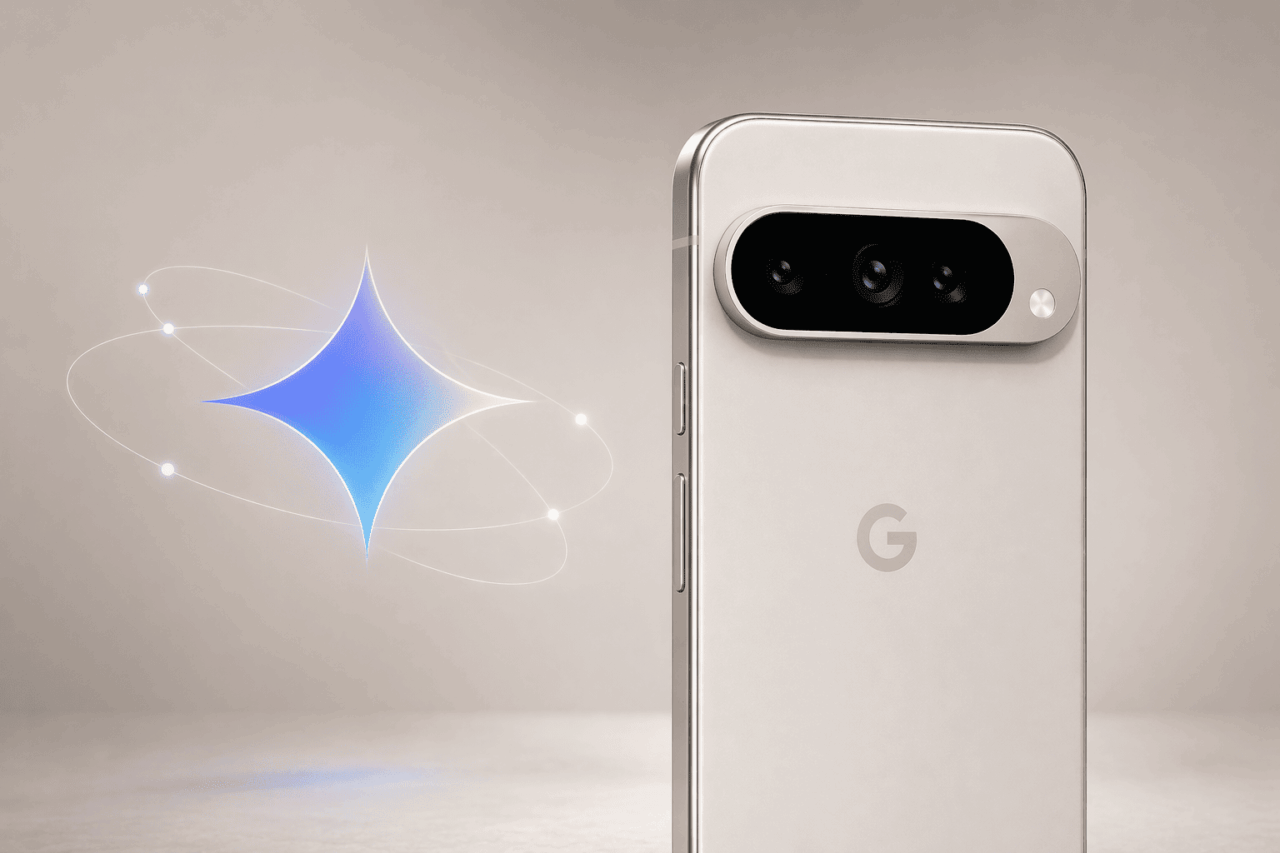
Google has never competed on spec sheets alone. The Tensor chip was always the bet that smarter software could outperform faster silicon, and with the Pixel 11, that philosophy is getting its most ambitious test yet.
Based on leaks and internal documents, the Pixel 11 is shaping up to be the most AI-forward Pixel phone to date. Most of the headlining upgrades are not about megapixels or screen brightness.
They are about what the phone can process, understand, and do on its own, without routing your data through a server.
TL;DR: The Google Pixel 11, expected in August 2026, is set to arrive with the Tensor G6 chip built on a 2nm process. Leaked AI features include on-device Ultra Low Light Video, voice-controlled photo editing, AI video relighting, and health monitoring that runs locally. None of this is officially confirmed yet, but multiple credible sources point in the same direction.
The Tensor G6 is where the AI story starts

Every AI feature on the Pixel 11 runs through the Tensor G6, and the chip itself is a meaningful leap over its predecessor.
According to supply chain reporting cited by Tech Advisor and others, the Tensor G6 is built on TSMC’s 2nm manufacturing process. For context, Apple’s A18 Pro, which powers the iPhone 16 Pro, uses 3nm.
Moving to 2nm means the chip can do more work per watt, which translates to less heat, better battery life, and headroom for more demanding on-device AI tasks.
The CPU layout is also unusual. Instead of the standard 8-core arrangement, the Tensor G6 reportedly uses a 7-core design with one ultra-high-performance core clocked around 4.11 GHz.
That sounds like a step backward on paper, but Google appears to be trading one core for better thermal management and more die area dedicated to AI acceleration.
Benchmark scores from prototype hardware look underwhelming, but that is common for pre-release silicon running unoptimized software.
The chip also includes a secondary nano-TPU designed for low-power background tasks. That is the component reportedly behind the always-on health monitoring features expected with the Pixel 11.
Camera AI features leaked from internal documents
Android Authority obtained documents from Google’s chips division that detailed several AI camera upgrades planned for the Pixel 11 series. These are among the more credible leaks circulating, given the source.
The most notable is Ultra Low Light Video. Night Sight for video already exists on current Pixel phones, but it relies on cloud processing.
The Pixel 11 version is expected to run entirely on-device, designed for environments between 5 and 10 lux, roughly the brightness of a candlelit room. No internet connection required, and no upload delay.
4K Cinematic Blur is another upgrade. The existing Cinematic Blur mode caps out at 1080p. Extending it to 4K at 30fps is a practical improvement for anyone who uses the feature regularly and finds the current output too soft for sharing.
Speak-to-Tweak is the most unusual one. It is a voice-controlled photo editing feature where you can say something like “make this brighter” or “reduce the saturation” after shooting, and the phone adjusts accordingly.
Whether that works reliably in practice remains to be seen, but the underlying idea fits Google’s broader Gemini direction.
There is also Video Relight, which uses what Google internally calls its Cinematic Rendering Engine to adjust the lighting in a video after it has already been recorded. That is a genuinely difficult problem to solve on-device.
If it works as described, it closes a gap that currently requires desktop software to address.
Health monitoring goes On-device
One area that has not received as much attention is health. According to reporting from Tech Advisor, the Tensor G6’s nano-TPU is expected to enable always-on health tracking features including sleep apnea detection and fall detection, both running locally without sending data to a server.
This matters more than it might seem. On-device health processing means the data stays on your phone. It also means the features work without a data connection, which is relevant for sleep tracking where you likely have your phone in airplane mode.
Whether these features will be available at launch or rolled out later is not confirmed. Google has a history of announcing features that arrive in staged software updates rather than on day one.
Gemini gets deeper in Android 17
The Pixel 11 will ship with Android 17 out of the box. Android 17 Beta 4 dropped in mid-April 2026, with a stable release expected in June ahead of the August hardware launch.
Gemini integration runs deeper in Android 17 than in previous versions. Features like Magic Cue, which reads your Gmail, Calendar, and Messages to surface contextual suggestions, are expected to return.
Voice Translate during phone calls, introduced with the Pixel 10, will likely carry over as well.
The broader AI agent framework reportedly coming in Android 17 would allow Gemini to take actions across apps rather than just answering questions.
Think less chatbot, more assistant that actually does things. That is an ambitious claim, and the real-world reliability of such features tends to vary significantly from what gets announced on a stage.
What is still unclear
Worth being direct about: none of the features above are officially confirmed by Google. The AI camera features come from an internal document leak, not a product announcement.
The health features are reported from secondary sources. The Android 17 AI agent framework is based on pre-release betas.
Some of these may change before launch. Some may arrive later as software updates. A few might not ship at all, or ship in a limited regional rollout.
What the leaks do suggest, consistently, is that Google is pushing harder on on-device AI than any previous Pixel generation. Less cloud dependency, more processing happening locally, and features built around Gemini as a core layer rather than a bolt-on.
Whether the Pixel 11 delivers on that in actual use is the question that will not be answered until August.