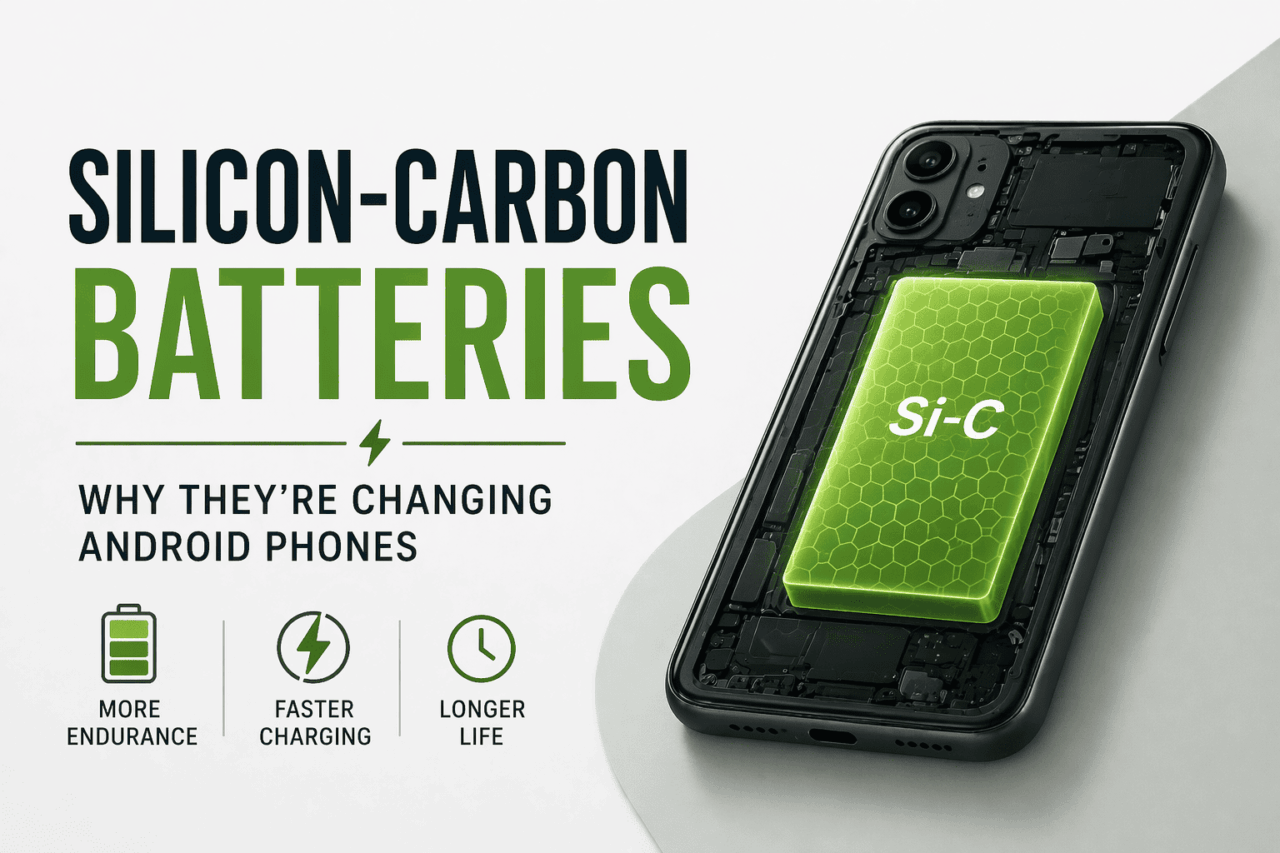
Silicon-carbon batteries are a newer type of lithium-ion battery that replaces the standard graphite anode with a silicon-blended material.
The result is a cell that holds significantly more energy in the same physical space, which is why phones like the OnePlus 15 can pack a 7,300mAh battery into a body thinner than the Galaxy S25 Ultra’s 5,000mAh one
Your Samsung Galaxy S25 Ultra costs over $1,000. It has a 5,000mAh battery and charges at 45W. The Realme P4 Power costs roughly $550, has a 10,001mAh battery, and charges at 80W. On a single charge, the Realme lasted over three days while the Samsung lasted 17 hours and 15 minutes.
That gap is not entirely about price. It is about a fundamental change in what goes inside the battery. Silicon-carbon anodes have redrawn what is physically possible inside a smartphone body, and most of the industry still uses the same graphite chemistry Sony commercialised in 1991.
This article explains what changed at the material level, what that means for a phone you would actually carry, and how silicon-carbon devices compare against the best standard lithium-ion phones in real, independent tests.
TL;DR: Standard lithium-ion phones hit a physical ceiling because graphite can only store so much energy per gram. Silicon-carbon anodes hold roughly 11 times more, letting manufacturers fit larger batteries into the same chassis. The OnePlus 15 (7,300mAh Si-C) lasted over two days on a single charge versus 17 hours 15 minutes for the Galaxy S25 Ultra (5,000mAh Li-ion).. Apple and Samsung have not adopted the technology. Most major Chinese brands have.
Why standard Lithium-Ion batteries stopped improving
The graphite anode in a conventional lithium-ion battery has a theoretical specific capacity of 372 mAh/g. That figure has not changed meaningfully since the 1990s because it is a hard material limit, not an engineering problem waiting to be solved.
By the mid-2020s, graphite was at its ceiling. Manufacturers could improve cathode chemistry, optimise software, use more efficient chipsets, but the anode itself had nowhere left to go.
Take Galaxy S25 Ultra, Samsung’s 5,000mAh cell looked relatively low for 2025, when 6,000mAh had become routine in high-end phones. That is not a pricing decision. It is a direct consequence of who adopted new anode chemistry and who did not.
Understanding what actually drains an Android battery matters here, because the screen and processor are constant across devices. What silicon-carbon changes is the size of the tank, not how fast it leaks.
What Silicon-Carbon actually does to the Anode
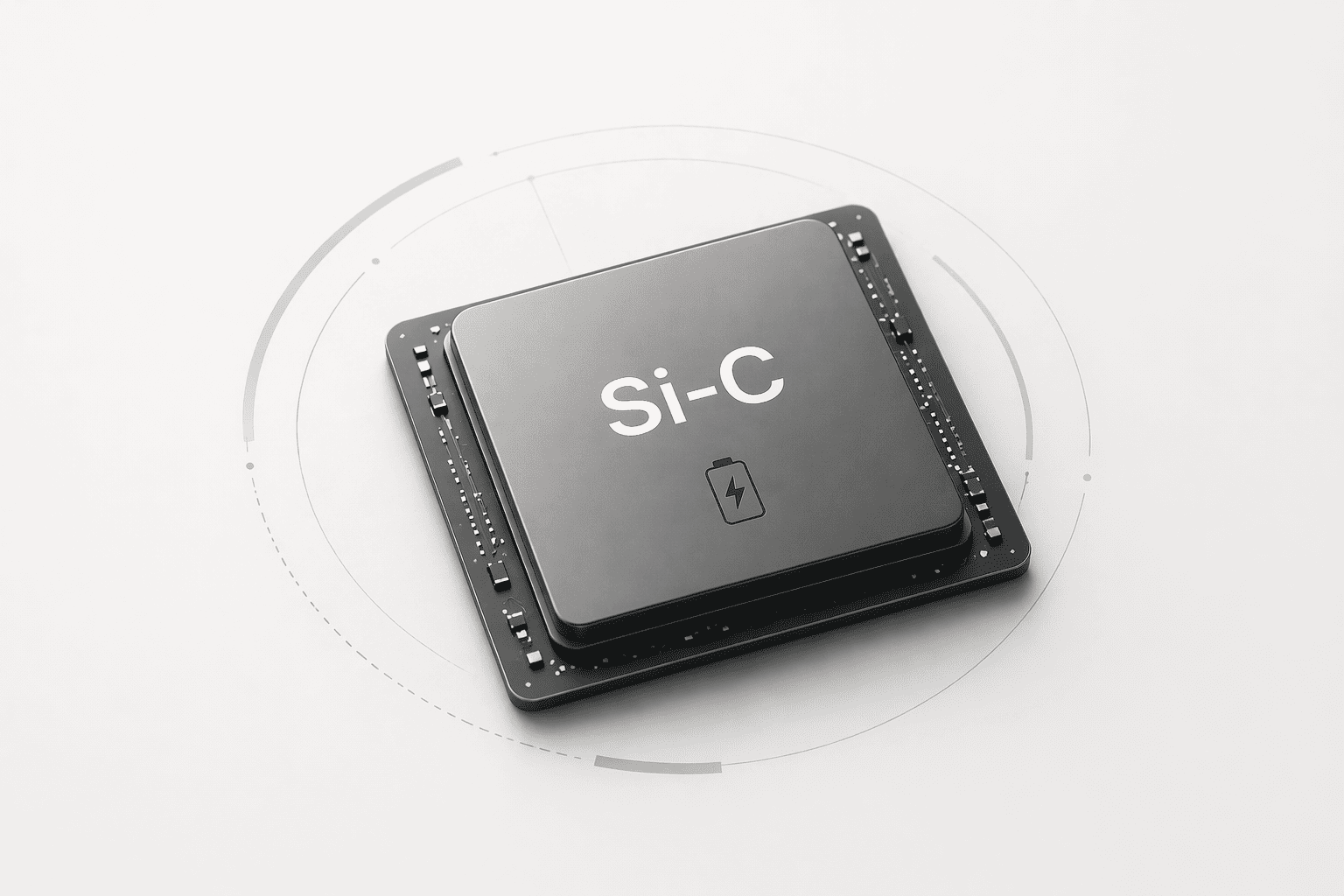
Silicon has a theoretical specific capacity of around 4,200 mAh/g, roughly 11 times higher than graphite. A single silicon atom can bond with up to 4.4 lithium ions, compared to graphite where six carbon atoms are required to host just one. The electrochemical advantage is not marginal.
The problem is physical. When silicon absorbs lithium ions during charging, it expands by up to 300 percent. A pure silicon anode would crack and crumble within a handful of charge cycles, destroying the cell entirely.
Silicon-carbon composites solve this by embedding nano-sized silicon particles inside a carbon matrix. The carbon acts as a cushion, absorbing the stress as the silicon swells and contracts with each charge cycle.
Current phones use between 10 and 32 percent silicon by weight. At those concentrations, expansion drops from 300 percent down to around 10 to 20 percent. That is a range modern cell engineering can handle.
The tradeoff is that some residual expansion remains. It is manageable today. Whether it remains manageable after four or five years of daily charging is the open question the industry is still answering.
According to peer-reviewed analysis published in ScienceDirect, full cells using silicon-carbon anodes achieve volumetric energy densities around 1,080 Wh/L, compared to roughly 750 Wh/L for standard graphite cells. A 44 percent improvement in how much energy fits into a given physical volume.
The practical result: a 7,300mAh OnePlus 15 sits at 8.1mm thick. A Samsung Galaxy S25 Ultra with a 5,000mAh graphite cell is 8.2mm thick. The phone with 46 percent more battery is actually slimmer.
The real-world numbers, verified
These are not manufacturer claims. These are standardised test results from Tom’s Guide and GSMArena.
OnePlus 15 (7,300mAh silicon-carbon): Tom’s Guide recorded 25 hours and 13 minutes in their continuous browsing test, a record for any phone they had tested at the time. A real-world review spanning over a month reported ending most evenings above 60 percent.
In an extended single-charge test, the phone lasted 2 days and 11 hours. GSMArena’s active use score was 23 hours and 7 minutes. Full charge time: 41 minutes at 120W.
Samsung Galaxy S25 Ultra (5,000mAh graphite lithium-ion): Tom’s Guide recorded 17 hours and 15 minutes, the longest-lasting Samsung they had tested to date, achieved through chipset efficiency gains on the Snapdragon 8 Elite rather than any chemistry change. 45W charging, roughly 60 to 70 minutes to full.
The OnePlus 15 outlasted the Galaxy S25 Ultra by approximately 8 hours in standardised testing, with both phones using the same processor generation. On the same chipset generation, the gap is primarily the battery, not the processor.
Realme P4 Power (10,001mAh third-generation silicon-carbon): GSMArena’s active use score was 25 hours and 35 minutes, the highest in their all-time chart at time of testing. Tom’s Guide reported the phone lasting over three days on a single charge in real-world use.
It streams YouTube continuously for over 32 hours. At 5 percent remaining, you still have nearly four hours of calls. 80W charging, 50 percent in 36 minutes, full charge in 79 minutes. The device is 9.1mm thick and weighs 219 grams, comparable to many standard flagships.
The Realme P4 Power is sold in India and select markets only, due to air freight regulations on batteries above a certain energy threshold. It is not available in the US or most of Europe.
| Phone | Battery | Anode | Independent Test | Wired Charging | 0-100% Time |
|---|---|---|---|---|---|
| OnePlus 15 (2025) | 7,300mAh | Silicon-carbon | 25h 13min (Tom’s Guide) | 80W inc. / 120W opt. | 41 min |
| Realme P4 Power (2026) | 10,001mAh | Silicon-carbon | 25h 35min (GSMArena) | 80W | 79 min |
| Samsung Galaxy S25 Ultra (2025) | 5,000mAh | Graphite (Li-ion) | 17h 15min (Tom’s Guide) | 45W | 60-70 min |
| Xiaomi 17 (2025) | 6,330mAh global | Silicon-carbon (16% Si) | Not yet published | 100W | ~40 min |
The real shift is not the battery. It is your charging behaviour
Here is the thing most reviews do not say directly: silicon-carbon batteries do not just give you more capacity. They reveal that your charging habits were the bottleneck all along, not the battery itself.
Most people charge every night because their phone demands it. Not because they thought about it. Or not, because it made sense. Most people charge every night out of habit, not necessity. Years of inadequate batteries created a reflex that a two-day phone simply makes irrelevant.
On the OnePlus 15, tracking battery stops entirely after a few days, because it never manages to kill it in a single day, and regularly goes to bed with 40 to 60 percent remaining. That is not a marginal upgrade over the Galaxy S25 Ultra. It is a different relationship with the device.
Fast charging reinforces this. The OnePlus 15 charges faster than the Galaxy S25 Ultra despite having 46 percent more battery. A 10-minute charge on the OnePlus 15 adds several hours of use.
On the Galaxy S25 Ultra, 10 minutes at 45W adds roughly 10 to 12 percent. The silicon-carbon phone wins on both ends, and that combination is what breaks the nightly charging reflex rather than merely reducing it.
The Realme P4 Power takes this further. Android Central reported it lasting over two weeks on standby with Wi-Fi connected and notifications syncing. Charging to 45 percent in 30 minutes gives you roughly the equivalent of a full normal smartphone’s battery in half an hour.
Most users in testing charged it every other day, not because the phone told them to, but because they happened to be near an outlet.
One important caveat: chipset efficiency is not irrelevant. The Realme P4 Power uses a Dimensity 7400 Ultra, a mid-range chip, which is why its active use score of 25 hours and 35 minutes is not proportionally higher than the OnePlus 15’s 23 hours despite having 37 percent more battery.
A bigger tank and a more efficient engine are different variables. Both matter. If you want to track how your current phone’s cell is ageing over time, checking battery health on Android via tools like AccuBattery shows real capacity versus design capacity as cycles accumulate.
Degradation: What the cycle data actually says
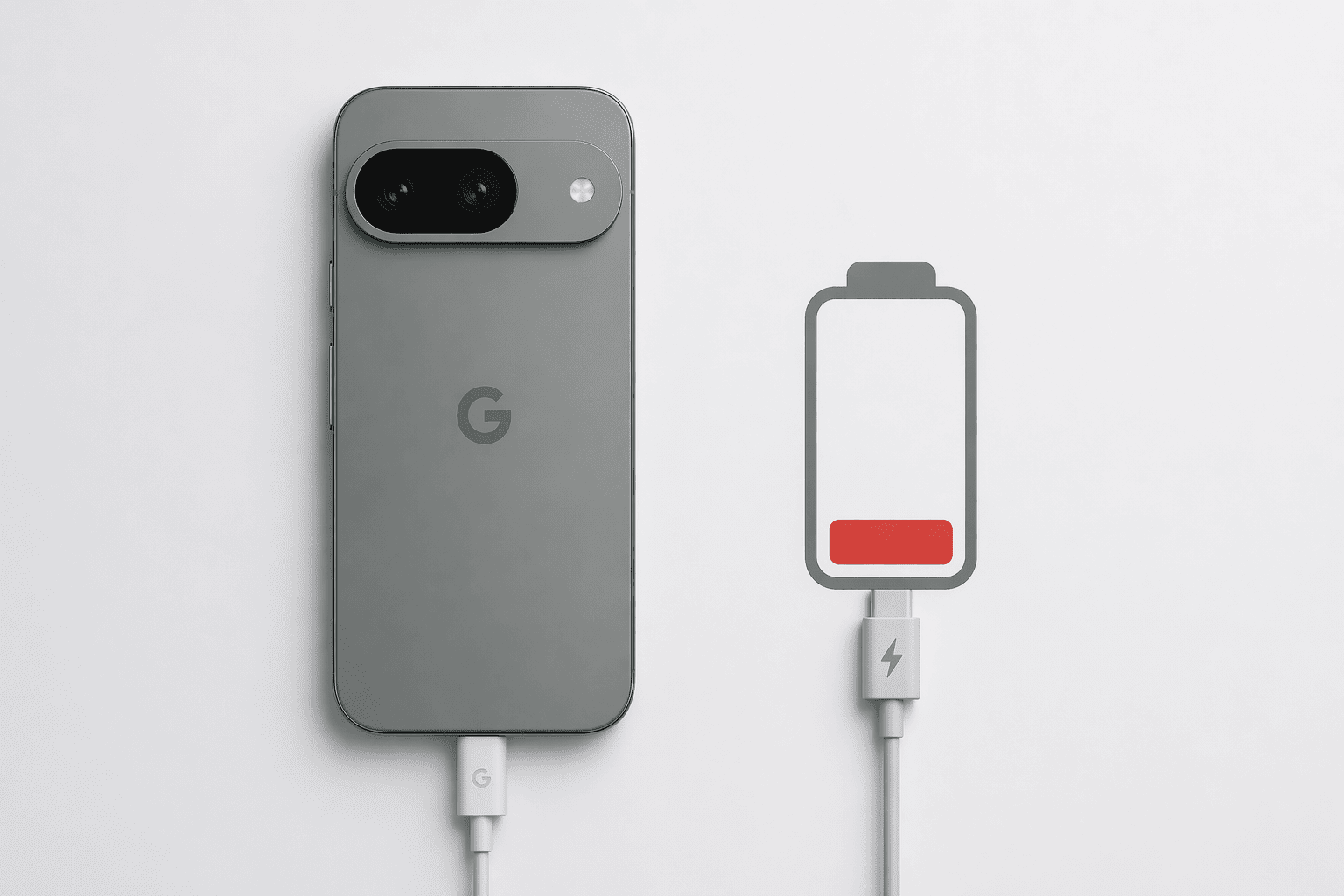
The concern with silicon-carbon anodes is whether expansion, even at reduced levels, causes faster degradation over time.
Manufacturer cycle ratings are consistently higher than for standard graphite cells. Realme rates the P4 Power at 80 percent capacity retention after 1,650 cycles. OnePlus states the same threshold after four years of typical use. Xiaomi rates its 17-series cells at over 80 percent after 1,600 cycles. Standard lithium-ion cells are typically rated at 80 percent after 800 to 1,000 cycles.
The compounding math matters. The average P4 Power user will complete 392 fewer charge cycles over four years because the phone needs charging less often. A phone you charge every other day ages at roughly half the rate of one you charge daily, regardless of chemistry. Silicon-carbon phones benefit from this more than any other category because the capacity headroom is largest.
One honest caveat: long-term degradation beyond three to four years still lacks large-scale independent data. The phones that would provide it are only one to three years old.
The cells use the same cathode chemistry and protection circuits as standard lithium-ion devices.
Where Samsung and Apple Stand
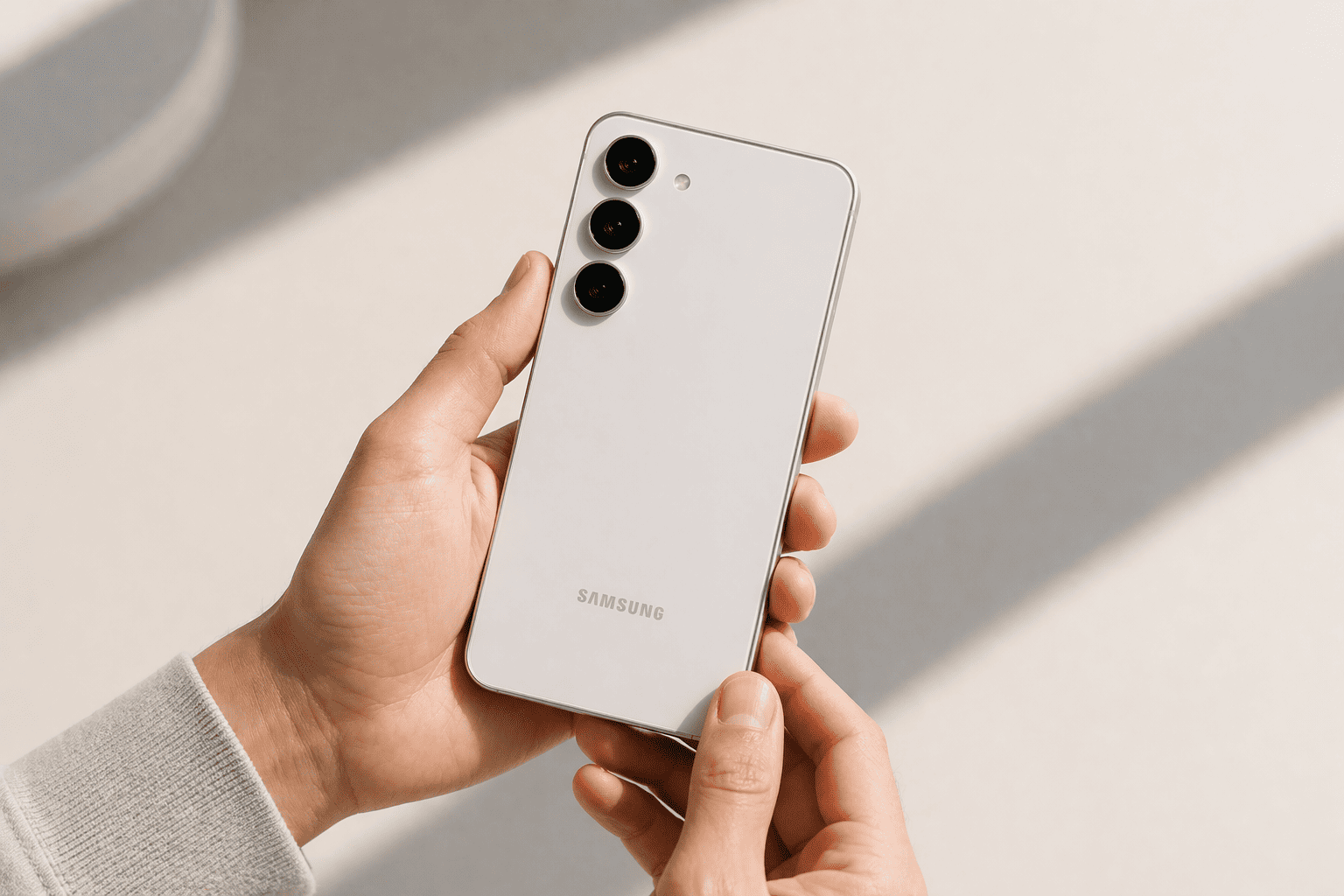
Neither company currently ships a silicon-carbon battery in any consumer device. The Galaxy S25 Ultra uses a standard graphite cell. So does the iPhone 17 Pro Max and Pixel 10 Pro XL.
Samsung’s position is not silence. At Galaxy Unpacked 2026, Sung-Hoon Moon, the company’s Executive VP and Head of Smartphone R&D, was asked directly about the absence of silicon-carbon in the Galaxy S26.
He acknowledged Samsung may have been, in his words, ‘a bit un-innovative on that front.‘ He said silicon-carbon batteries would need to pass the company’s ‘very rigorous validation standards‘ before appearing in a flagship. He then added: ‘for the silicon battery, we are getting it ready.’
That is not dismissal. That is a company with hundreds of millions of customers applying a higher quality bar than brands shipping a fraction of that volume. Part of the caution traces back to the Galaxy Note 7 in 2016, whose battery failures caused a global recall and flight bans.
Silicon-carbon cells still expand more than graphite over time. None of the current silicon-carbon phones have had safety issues, but long-term data at Samsung’s scale does not yet exist.
Apple and Google have made no equivalent public statements. The pattern is the same: conservative battery sizing, no silicon-carbon adoption, chipset and software efficiency used to extend smaller cells instead.
The practical consequence: a OnePlus 15 at $799 outlasts a Galaxy S25 Ultra at $1,299 by roughly eight hours in standardised testing, on the same chipset generation. That is entirely a chemistry gap.
The same logic explains why Pixel phones lag behind on battery and charging: the same graphite ceiling, the same conservative wattage decisions.
Charging Compatibility and Practical Tips
Most silicon-carbon phones fast-charge over USB-C Power Delivery with PPS support. The OnePlus 15 supports 55W over USB-PD PPS, so a third-party PPS charger at that wattage gets you close to stock speeds.
The Xiaomi 17 and Realme P4 Power use proprietary SuperVOOC protocols for peak wattages but work with PPS chargers at reduced speeds. Knowing how to match the right charger to your phone matters more at high wattages, where a mismatched adapter can cut speeds significantly.
A few habits that genuinely help longevity: charge in bursts rather than overnight, since sitting at 100 percent for hours adds unnecessary stress to the anode; avoid draining fully to zero, which accelerates SEI layer formation regardless of chemistry; and use fast charge over slow trickle where possible, as short high-power sessions generate less cumulative heat than long slow ones.
Which Phones to Buy and Why
The OnePlus 15 is the clearest recommendation for most people in markets where it is available. Two-day battery life has been independently verified, 80W charging is included in the box, and at $799 it costs less than the Galaxy S25 Ultra while outperforming it on the one spec that affects daily friction most directly.
The trade-off is that you are an early adopter of a chemistry that is two to three years into mass deployment. For most use cases, the risk-reward balance favours buying now. If you keep phones for five or more years and want proven long-term durability, waiting for Samsung or Apple’s validated version is a reasonable call.
The Xiaomi 17 global variant carries 6,330mAh with 100W charging at a comparable flagship price point and ships to more markets than most. Honor’s Magic V5 and V6 bring the technology to foldables, fitting 6,100mAh and 6,660mAh into devices thinner than their predecessors.
The Realme P4 Power is the most extreme case. If you are in India or a market where it is sold, the endurance case is hard to argue with. Elsewhere, availability is the constraint, not the technology.
If your phone already reaches midnight comfortably, the switch feels incremental. If you are rationing screen time by 2pm, it feels like a different product category. Both are honest. Samsung has essentially committed to adopting silicon-carbon. The question is not whether the technology works.
The question is whether you want it now, while the long-term durability picture is still filling in, or wait until Samsung and Apple have validated it at their scale. The gap in endurance is real either way.
Frequently Asked Questions
Are silicon-carbon batteries the same as lithium-ion?
They use the same lithium-ion chemistry at the cathode and electrolyte level but replace graphite in the anode with a silicon-carbon composite, giving the cell significantly higher energy density.
Do silicon-carbon phones need a special charger?
No. For peak fast-charge speeds, most silicon-carbon phones support either a brand-specific protocol or USB-PD with PPS at the rated wattage. Standard USB-C chargers work at reduced speeds.
How much longer do silicon-carbon batteries last per charge than a standard phone?
In standardised testing, the OnePlus 15 (7,300mAh Si-C) outlasted the Galaxy S25 Ultra (5,000mAh Li-ion) by roughly 8 hours, around 45 percent more endurance on the same chipset generation.
Do Samsung or Apple phones use silicon-carbon batteries?
No. As of early 2026, neither Samsung nor Apple ships a consumer device with a silicon-carbon anode, including the Galaxy S26 series based on confirmed specifications.
Will silicon-carbon batteries degrade faster than lithium-ion?
Manufacturer data rates them at 80 percent retention after 1,600 to 1,650 cycles, higher than the 800 to 1,000 cycle typical rating for standard lithium-ion cells. Charging less often due to larger capacity further slows degradation.