
The Google Pixel 11 is expected to land in August 2026, and for the first time in a while, the leaks are actually interesting. Not because Google is redesigning the phone. It is not.
But because the changes rumored for this generation target the specific things that have made Pixel a frustrating recommendation: the chip that runs warm, the modem that drops signal, the face unlock that disappeared seven years ago.
Four models are expected: the standard Pixel 11, Pixel 11 Pro, Pixel 11 Pro XL, and Pixel 11 Pro Fold. All share the same Tensor G6 chip. The differences between them come down to display size, camera hardware, and RAM.
Here is everything credible leaked so far, with each claim sourced and uncertain details flagged clearly.
TL;DR: The Pixel 11 lineup arrives in August 2026 with a 2nm Tensor G6 chip, MediaTek M90 modem replacing Samsung’s long-criticized unit, Samsung’s new M16 OLED display, and the possible return of under-display face unlock last seen on the Pixel 4. The standard Pixel 11 is expected around $799, Pro at $999, and Pro XL at $1,199 or slightly higher. Nothing is officially confirmed yet.
The Tensor G6 Is a Different Kind of Chip Upgrade
Every Pixel since the original Tensor has carried the same problem: the chip runs warm under sustained load and trails Snapdragon in efficiency benchmarks. Google knows this. It gets written about every year.
The Tensor G6 is widely reported to be built on TSMC’s 2nm manufacturing process, according to supply chain reporting cited by Tech Advisor and multiple independent sources. One early report from Android Authority cited a 3nm N3P node instead, but subsequent supply chain leaks from CTEE and others pointed to 2nm.
The 2nm claim is the current consensus, though it has not been officially confirmed by Google. That is a significant shift. Apple’s A18 Pro runs on 3nm. The Tensor G6 would match the most advanced chip fabrication available in consumer silicon in 2026.
A Geekbench listing tied to the internal codename “Kodiak” revealed an unusual 7-core CPU layout: one Arm C1-Ultra core at 4.11GHz, four C1-Pro cores at 3.38GHz, and two at 2.65GHz. Android Headlines flagged those benchmark scores as extremely low, consistent with early prototype silicon, not a finished chip.
The architecture, though, is deliberate. Google is trading the standard 8-core configuration for 7 cores specifically to improve thermal management and sustained efficiency. Leaked estimates point to a 20 to 25 percent improvement in battery life from the process node alone.
A new Titan M3 security coprocessor, codenamed “Google Epic” internally, is also expected across the lineup, replacing the Titan M2 from Pixel 10. A new PowerVR C-series GPU replaces the previous Mali GPU. All four Pixel 11 models share the same chip.
The MediaTek Modem Switch Is the Most Underrated Upgrade

Google is reportedly replacing the Samsung Exynos modem with MediaTek’s M90, the first modem vendor change in Pixel history since the Pixel 6 in 2021. Multiple reports including Tech Advisor, Geeky Gadgets, and Android Central have corroborated this.
Pixel connectivity complaints have been consistent across generations. Signal instability, faster battery drain on cellular data, and poor handoff behavior in weak signal areas have followed every Pixel since the Tensor platform launched.
The modem is the common thread. If the M90 delivers better power management when paired with the 2nm chip, this could be the single most felt improvement in daily Pixel use.
The M90 reportedly also supports dual SIM dual active, meaning both SIMs on 5G simultaneously. Satellite connectivity for emergency messaging is also possible with this modem, though neither feature has been confirmed for the Pixel 11 specifically.
Display: Samsung’s Best Panel, Before Anyone Else Gets It
The display story is the same across all three non-folding models: the same screen sizes as before, but with a meaningfully better panel inside.
PhoneArena and Tech Advisor both report the Pixel 11 series will use Samsung’s new M16 OLED material, with the iPhone 18 Pro expected to follow in September. The Pixel 11 would be first to market with this technology, ahead of both Apple and Samsung’s own Galaxy phones for 2026.
The M16 panel delivers improved peak brightness, more accurate color, and lower power consumption compared to the M14 used in the Pixel 10 Pro, Galaxy S26, and iPhone 17. The Pixel 10 Pro already reached 3,000 nits peak brightness. The M16 pushes beyond that while using less battery to get there. The practical difference is most visible outdoors and in battery life during screen-heavy use.
Display sizes by model, per leaked CAD renders from OnLeaks via Android Headlines:
- Pixel 11: 6.3-inch LTPO AMOLED, 120Hz
- Pixel 11 Pro: 6.3-inch LTPO AMOLED, 120Hz
- Pixel 11 Pro XL: 6.8-inch LTPO AMOLED, 120Hz
Design: Same Shape, Genuinely Improved Details
The Pixel 11 is not getting a redesign. According to a Bloomberg interview with Rick Osterloh, Google redesigns its hardware on a two to three year cycle. The Pixel 10 was not a redesign year. Neither is the Pixel 11.
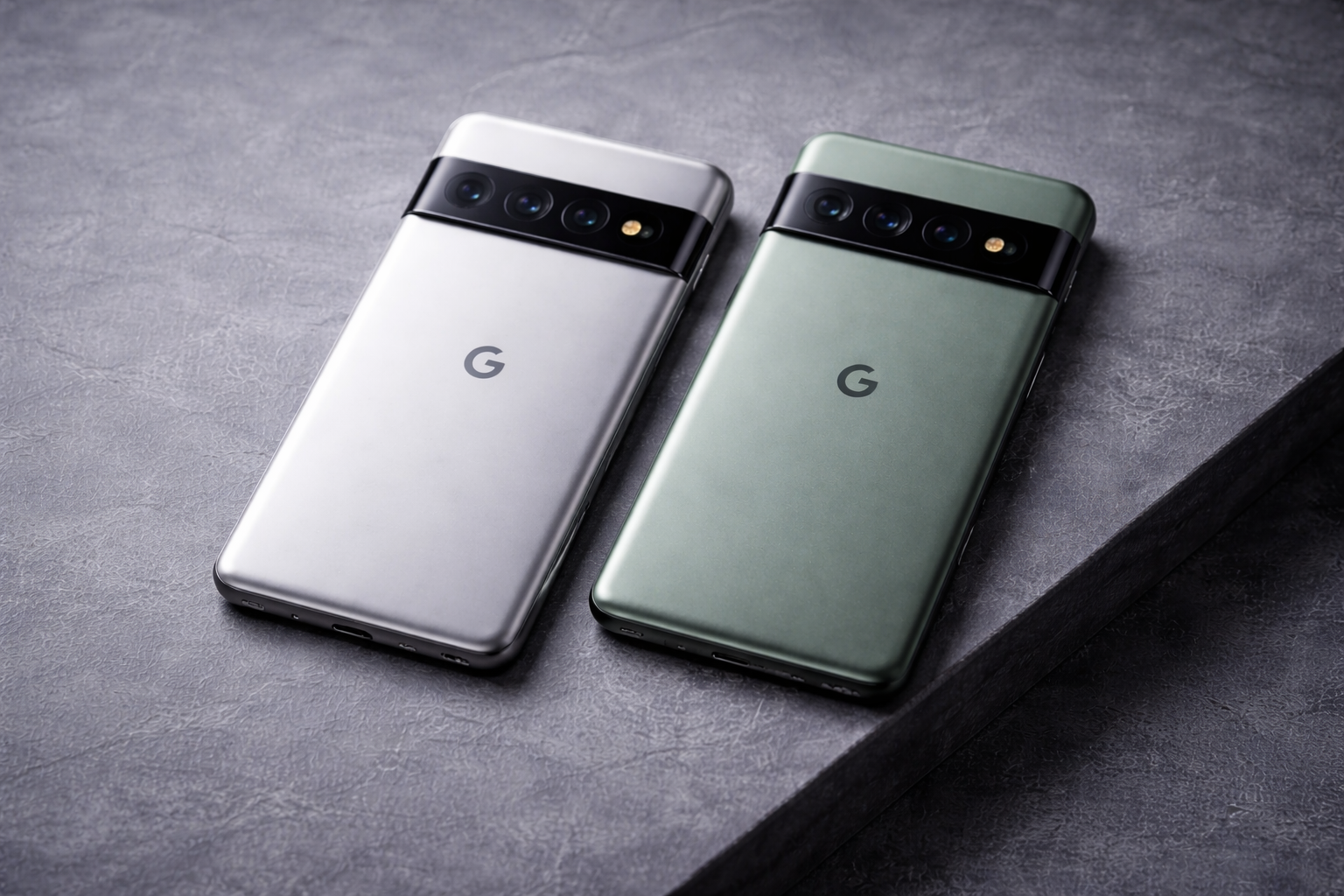
What is changing across the whole lineup is the camera bar. It is now fully covered in a single all-black glass panel, dropping the metallic accents that have defined Pixel phones since the Pixel 6. The camera module protrudes less, which addresses the table-wobble problem Pixel owners have complained about for years. Bezels are thinner across all four sides.
Leaked dimensions from OnLeaks CAD renders:
- Pixel 11: 152.8 x 72 x 8.5mm, same footprint as Pixel 10, 0.1mm thinner
- Pixel 11 Pro: 152.7 x 71.8 x 8.4mm, nearly identical to Pixel 10 Pro
- Pixel 11 Pro XL: 162.7 x 76.5 x 8.5mm, marginally shorter and narrower than Pixel 10 Pro XL
The temperature sensor seen on recent Pro models appears to have been removed, based on the absence of any relevant cutout in leaked renders. It was a niche feature that very few users engaged with.
Camera: What Differs Between the Standard and Pro Models
Camera hardware is where the standard Pixel 11 and the Pro models diverge most clearly, though specific sensor details for the base model have not leaked in detail.
For the standard Pixel 11, PhoneArena notes the camera setup is not expected to change dramatically from the Pixel 10. The Pixel 10 introduced a 5x telephoto lens to the standard model, which was a meaningful step forward. Leaks suggest the Pixel 11 keeps that direction but the specific hardware is still unconfirmed.
The Pro and Pro XL are expected to carry a more defined upgrade. Tipster @_TheJasonC on X reports a triple camera setup for the Pro XL with a 50MP primary sensor, 48MP ultrawide, and a 64MP periscope telephoto lens, up from 48MP on the Pixel 10 Pro. The front camera across the Pro lineup is reported at 42MP, a significant jump from the Pixel 10 Pro’s 10.5MP selfie sensor.
What the Tensor G6 enables on the software side applies to the whole lineup. Leaked details reveal several AI camera features expected across the Pixel 11 series:
- Ultra Low Light Video: Night Sight quality video processed entirely on-device, no cloud connection needed. Designed for environments at 5 to 10 lux, roughly the brightness of a dimly lit room or candlelight.
- Speak-to-Tweak: Voice commands to adjust brightness, contrast, and saturation in a photo after shooting, without opening a separate editor.
- Video Relight: Adjusting lighting conditions in a recorded video after capture, powered by what Google internally calls the Cinematic Rendering Engine in the G6.
- 4K Cinematic Blur: The existing Cinematic Blur feature extended to 4K at 30fps.
If you currently run a GCam port on a non-Pixel Android phone to access Pixel camera processing, these G6-specific features will almost certainly be Pixel-exclusive at launch.
How the Three Models Differ on RAM and Storage
RAM and storage are where the lineup splits, though some of these details are still unconfirmed.
The standard Pixel 11 is expected to come with 12GB of RAM and a base storage of 128GB, according to Android Headlines. There is some hope that Google follows Apple and Samsung in ditching 128GB as a base tier, but it has not been confirmed.
The Pro models are more complicated. The Pixel 10 Pro shipped with 16GB of RAM. Android Central and Android Headlines have both noted that rising RAM costs in 2026 have created genuine uncertainty about whether Google will maintain 16GB or reduce it to 12GB to manage pricing. Tom’s Guide expects 16GB to carry over. No one has confirmed either way.
Base storage on the Pro and Pro XL is widely expected to start at 256GB, dropping the 128GB option that the Pixel 10 Pro offered. Apple and Samsung both made this move with their 2025 flagships, and it would be a welcome change.
Battery and Charging Across the Lineup
Battery capacity figures vary across leak sources and none are locked in. The Pixel 10 shipped with 4,970mAh, the Pixel 10 Pro with 4,870mAh, and the Pixel 10 Pro XL with 5,200mAh, confirmed by official specs. Most Pixel 11 estimates land in a similar or slightly improved range per model.
Charging speed is more consistent across reports. The Pixel 10 Pro XL already supported 45W wired charging. Geeky Gadgets and Tech Advisor both report 45W wired is expected to extend across the full Pixel 11 lineup, which would be an improvement for the standard Pixel 11 and Pro. The Pixel 10 and Pixel 10 Pro officially support up to 30W wired charging, while the Pixel 10 Pro XL supports up to 45W. If the Pixel 11 brings 45W across all models, the standard and Pro tiers would see a meaningful speed jump.
Wireless charging via Qi2.2 is expected across all models. Previously, Qi2.2 was limited to the Pro XL on the Pixel 10 series. If you have dealt with Pixel charging issues in the past, those are typically hardware or software faults separate from the wattage spec.
The efficiency gains from the 2nm chip and M16 display should improve real-world battery life regardless of whether cell sizes increase.
The Two Features That Might Change What Pixel Means
Two rumored additions go beyond typical spec upgrades and could genuinely shift how the Pixel 11 is perceived.
The first is under-display face unlock. Google removed IR face unlock after the Pixel 4 in 2019. Multiple credible sources including Android Authority, Android Headlines, Tom’s Guide, and NotebookCheck report Google is developing an under-display infrared camera for the Pixel 11, internally called “Project Toscana.”
If it ships, it would enable Class 3 biometric authentication for payments and app access without a notch. No visible IR hardware has appeared in any leaked CAD render yet, which is either because renders rarely show internal components or because the feature has not been finalised. Consider it well-sourced but unconfirmed.
The second is Pixel Glow. Code discovered in Android 17 Beta 4 by 9to5Google and detailed by Android Authority describes a feature that uses dedicated hardware lights on the back of the device to provide ambient notification feedback when the phone is face-down. It lights up for calls from favourite contacts, gives visual feedback during hands-free Gemini interactions, and would work as a hardware-based notification system similar in concept to Nothing’s Glyph Interface.
The code confirms the feature requires dedicated physical lights, not a software trick. No current render shows any light hardware on the Pixel 11 rear. Whether it ships with this generation or a future one remains genuinely open.
Android 17 and Software

The Pixel 11 series will ship with Android 17 out of the box. Android 17 Beta 4, the final scheduled beta, dropped in mid-April 2026. A stable release is expected in June, ahead of the August hardware launch.
Gemini runs deeper in Android 17. On-device AI processing for health monitoring via the Tensor G6’s nanoTPU is expected to include sleep apnea detection and fall detection, running locally without sending data to a server. App bubbles, split Quick Settings tiles, and refined multitasking are among the confirmed Android 17 features that will be present from day one on the Pixel 11.
Release Date, Pricing, and Which Model to Choose
Google has launched Pixel flagships in August for two consecutive years. A mid-August 2026 announcement with availability in late August or early September is the consensus across PhoneArena, Tech Advisor, GSMArena, and Tom’s Guide. The Pixel 11 Pro Fold is expected to follow separately in October.
No pricing is confirmed. Analyst estimates based on current market conditions:
- Pixel 11: $799 to $849, up from $799 for the Pixel 10
- Pixel 11 Pro: $999 to $1,049, up from $999 for the Pixel 10 Pro
- Pixel 11 Pro XL: $1,199 to $1,299, up from $1,199 for the Pixel 10 Pro XL
Rising RAM and component costs in 2026 make modest price increases possible. Samsung raised Galaxy S26 prices. Apple held iPhone 17 prices steady. Google’s decision will depend on how aggressively it wants to compete for market share in the premium segment.
Which model makes sense depends on what you actually use. The standard Pixel 11 is the right choice if display size matters and you do not need the largest sensor array. The Pro closes the camera gap considerably with the upgraded periscope lens and higher-resolution sensors. The Pro XL makes sense if you want the biggest screen and the largest battery in the lineup.
If you are on a Pixel 9 or older, the case for waiting is strong. The 2nm chip, new modem, and M16 display together represent a genuine generational step in daily experience. If you have a Pixel 10, the changes are real but incremental. The one possible exception is face unlock, if Project Toscana ships: that would be the decisive reason to upgrade from a Pixel 10 for anyone who cared about that feature on the Pixel 4.
Frequently Asked Questions
When will the Google Pixel 11 launch?
August 2026 is the consensus across multiple outlets, with a mid-August Made by Google event expected and devices available in late August or early September. The Pixel 11 Pro Fold is expected to follow in October.
What chip does the Pixel 11 use?
All four Pixel 11 models use the Tensor G6, built on TSMC’s 2nm process. The chip uses an unusual 7-core CPU layout designed for thermal efficiency and sustained battery life rather than peak benchmark scores.
What is different between the Pixel 11, Pro, and Pro XL?
The standard Pixel 11 has a 6.3-inch display and 12GB RAM with a more modest camera setup. The Pro matches it in size but adds more RAM, a higher-resolution periscope telephoto lens, and a 42MP front camera. The Pro XL has a larger 6.8-inch display and bigger battery.
Is face unlock coming back on the Pixel 11?
Multiple credible sources report Google is developing under-display IR face unlock under the name Project Toscana, but no hardware evidence of it has appeared in leaked renders yet. It is credible and unconfirmed.
Will the Pixel 11 have a better modem?
Yes, Google is reportedly switching from Samsung’s Exynos modem to the MediaTek M90, the first modem change in Pixel history since 2021. This directly targets the 5G signal stability and battery drain complaints that have followed Pixel phones for years.
What is Pixel Glow on the Pixel 11?
Pixel Glow is a hardware lighting feature found in Android 17 Beta 4 code that uses rear-facing lights for ambient notifications and Gemini visual feedback when the phone is face-down. It requires dedicated hardware lights not yet visible in any leaked render, so its inclusion in the Pixel 11 remains unconfirmed.