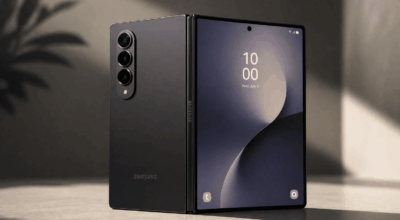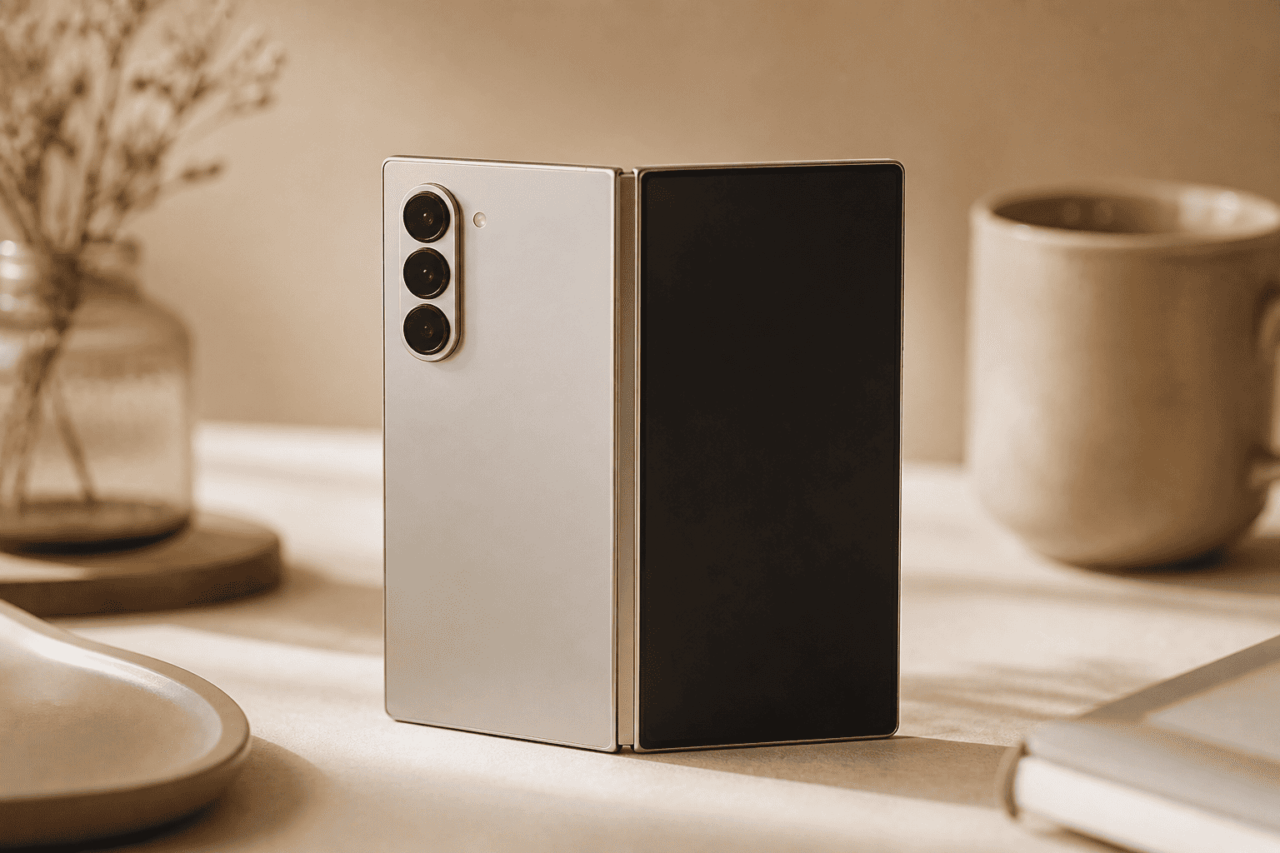
Samsung has been leaking its own upcoming foldables, and at this point the company seems to have given up trying to stop it. Images of both the Galaxy Z Fold 8 and the all-new Wide Fold were discovered inside a build of Samsung’s One UI 9 software by independently spotted by The Cipher Project on Telegram.
The images align closely with previously leaked CAD renders and represent the clearest look yet at both devices ahead of an expected mid-2026 launch event.
The leak is notable not just for what it shows, but where it came from. Finding device renders inside firmware is more significant than a tipster image because it represents engineering work already committed to a shipping software build.
These are likely based on internal development assets rather than external mockups, which gives them more weight than a standalone tipster image.
TL;DR: Images of the Galaxy Z Fold 8 (codenamed Q8) and Wide Fold (codenamed H8) were found in One UI 9 firmware. The standard Z Fold 8 looks nearly identical to the Z Fold 7. The Wide Fold shows a shorter, wider design with a dual rear camera setup and a 4:3 inner display ratio. Neither device has been officially announced by Samsung, and camera specifications for the Wide Fold remain unconfirmed.
What the One UI 9 firmware actually showed
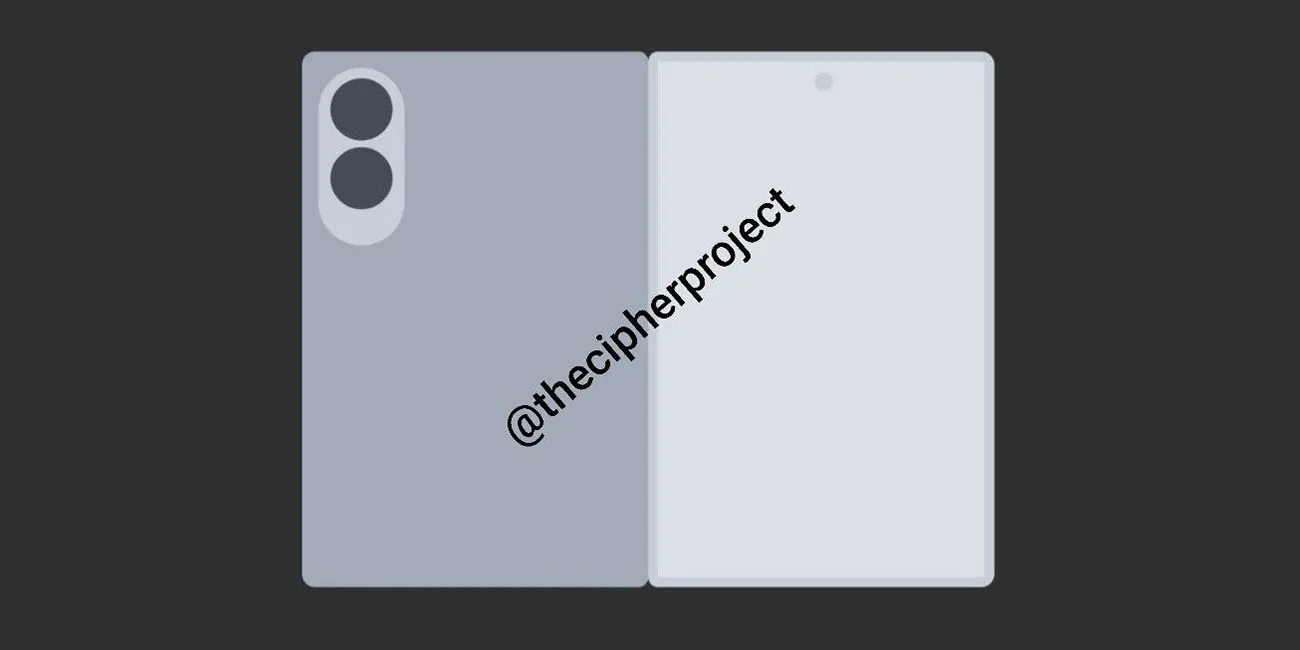
The images were pulled from a One UI 9 build by Android Authority contributor AssembleDebug, appearing as part of what are believed to be settings or onboarding assets within the software.
Both devices were visible, and a separate image compared the two side by side, making the proportional difference immediately obvious.
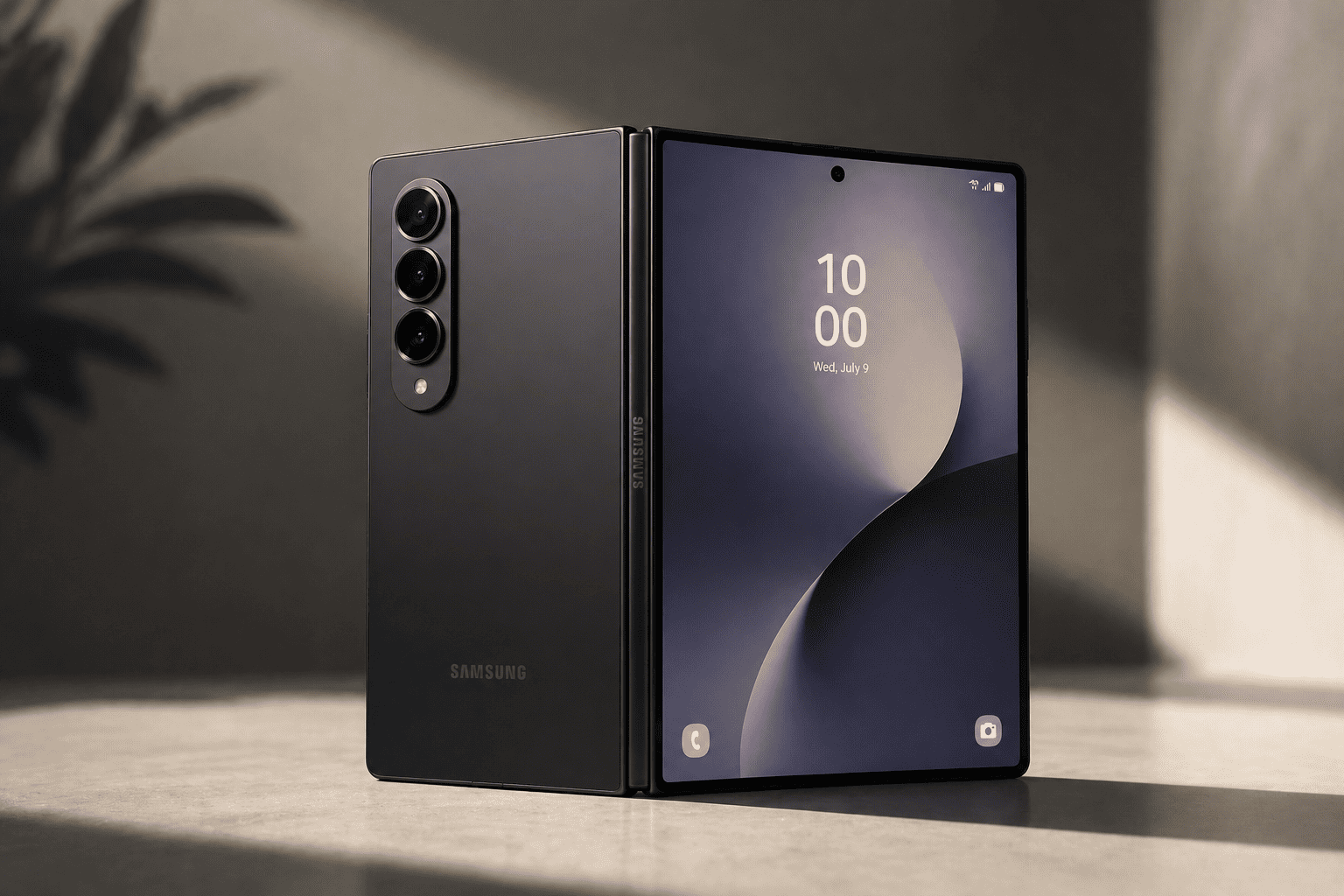
The Galaxy Z Fold 8, codenamed Q8, shows a device that looks nearly identical to the Galaxy Z Fold 7. This matches previously leaked CAD renders suggesting Samsung is prioritizing refinement over redesign for the standard model.
The chassis proportions are consistent with the predecessor. The changes, based on broader leak reporting, are largely internal rather than visual.
The Wide Fold, codenamed H8, tells a different story. The image shows a noticeably shorter and wider body, a rear camera bump styled similarly to the Galaxy S25 Edge, and a squat cover display.
This is also the first firmware image to show the rear cover of the Wide Fold. An earlier firmware animation from February, also found by Android Authority, showed the device’s form factor but not its back panel.
The Wide Fold design: what the leaked dimensions mean in practice
Based on figures reported by SamMobile drawing on multiple leak sources, the Wide Fold is reported to measure approximately 123.9mm tall and 161.4mm wide when unfolded, compared to the standard Z Fold 8 at around 158.4mm tall and 143.2mm wide. These are leak-derived figures and have not been confirmed by Samsung.
When open, the Wide Fold is wider than it is tall. That is an unusual proportion for a book-style foldable and a deliberate design choice.
The inner display is reported to use a 4:3 aspect ratio. For comparison, the Galaxy Z Fold 7’s inner screen runs at roughly 1.11:1, close to square but portrait-leaning. The Wide Fold’s inner display would open into something closer to a small tablet in landscape orientation than any previous Fold device.
The cover display is reported at 5.4 inches, wider in proportion than the narrow cover screens on previous Fold models. Tight cover screens have been among the most consistent criticisms of the Fold line since the original.
If the wider aspect ratio holds, it addresses a complaint that Samsung has never fully resolved across seven generations.
When folded, the Wide Fold is expected to be approximately 9.8mm thick, compared to around 9.0mm for the standard Z Fold 8. The extra millimeter is a reasonable trade-off for the wider hinge geometry.
The Galaxy Z Fold 5 measured 13.4mm folded, so both 2026 models are meaningfully slimmer than that generation regardless.
The camera difference: what the firmware image suggests and what it does not confirm
The One UI 9 firmware image of the Wide Fold shows what appears to be a dual rear camera setup. This is the part of the leak that requires the most caution. A camera module count visible in a firmware asset does not definitively confirm the final hardware configuration, and Samsung has not announced specifications for either device.
That said, multiple independent sources have described the Wide Fold as likely carrying two rear cameras rather than three.
Based on current leak reports, the standard Z Fold 8 is reported to include a 200MP primary, a 50MP ultrawide, and a 10MP telephoto with 3x optical zoom, a system that would match the Galaxy S26 Ultra’s primary sensor in a foldable for the first time.
The Wide Fold, based on current reporting, may carry a 200MP primary and a 50MP ultrawide without a telephoto. Whether that is a meaningful practical gap depends on how often you use optical zoom, but it is worth knowing before choosing between the two.
Both devices are expected to use the Snapdragon 8 Elite Gen 5 for Galaxy, the same chip inside the Galaxy S26 Ultra, though Samsung has not officially confirmed specifications for either device.
Battery and charging: where the two devices diverge further
The standard Galaxy Z Fold 8 is reported by multiple leak sources to carry a 5,000mAh battery with 45W wired charging, up from the Z Fold 7’s 4,400mAh cell and 25W wired charging.
If accurate, that is a meaningful improvement on both counts and one of the more practical reasons to consider upgrading from last year’s model.
The Wide Fold is reported to carry a smaller cell, currently estimated around 4,560mAh with up to 25W wired charging. The smaller battery is consistent with the shorter chassis: a device that is nearly 35mm shorter than its sibling simply has less internal volume to work with.
Whether the different proportions and usage patterns of the Wide Fold translate to different real-world endurance will only be clear after hands-on testing.
What One UI 9 and Android 17 mean for the Wide Fold specifically
Both devices are expected to launch with Android 17-based One UI 9 preinstalled. The large-screen enforcement changes in Android 17 are particularly relevant here.
Apps targeting Android 17 can no longer opt out of supporting proper orientation and resizability. For a device with a 4:3 inner display, that matters more than it does for any previous Fold.
Samsung has no mechanism to force third-party apps to behave correctly on a new aspect ratio. Android 17 does. The combination of a new display proportion and a platform requirement that enforces app adaptability is, quietly, one of the better arguments for why the Wide Fold is launching now rather than in an earlier Android cycle.
You can check the full breakdown of Android 17’s confirmed features to understand what else arrives with both devices at launch.
Both devices are also expected to ship with Samsung DeX, Secure Folder, Knox, and the Galaxy AI features introduced with the S26 series, potentially with additional foldable-specific capabilities that Samsung has not yet detailed publicly.
What is still unconfirmed
Samsung has not officially announced either device, confirmed pricing, or set a launch date. A July 2026 window is based on Samsung’s historical Unpacked timing for foldables and multiple reports pointing toward a possible event in London, but none of this has been confirmed by Samsung directly.
Pricing estimates for the standard Z Fold 8 center around the existing $1,999 starting point. The Wide Fold is harder to estimate without official information. Some reports place it slightly below the standard Fold 8 given the reduced camera configuration and smaller battery, but Samsung’s premium positioning of the foldable line makes a lower price far from certain.
Camera specifications for the Wide Fold remain the most uncertain element in the current leak cycle. A module count visible in a firmware image is a data point, not a spec sheet. Final hardware decisions may not be reflected in software assets built months before launch.
Frequently Asked Questions
What is the Samsung Galaxy Z Fold 8 Wide?
The Galaxy Z Fold 8 Wide is a new wider-format foldable from Samsung, expected to launch alongside the standard Galaxy Z Fold 8. Unlike previous Fold models, it uses a shorter and wider chassis with an inner display closer to a 4:3 aspect ratio, designed for productivity and split-screen use on a more tablet-like canvas.
How does the Wide Fold differ from the standard Galaxy Z Fold 8?
The Wide Fold is significantly shorter and wider. Based on leaked dimensions, it measures approximately 123.9mm tall versus 158.4mm for the standard model, and 161.4mm wide unfolded versus 143.2mm. The inner display uses a 4:3 ratio, the cover screen is wider, and the device appears to carry a dual rear camera setup rather than a triple-camera system.
When is the Galaxy Z Fold 8 expected to launch?
Based on Samsung’s historical Unpacked timing for foldables and multiple reports, a July 2026 launch event is expected. Samsung has not officially confirmed a date, location, or lineup.
What chipset will the Galaxy Z Fold 8 and Wide Fold use?
Both devices are expected to be powered by the Snapdragon 8 Elite Gen 5 for Galaxy, the same processor used in the Galaxy S26 Ultra. Samsung has not officially confirmed specifications for either device.
Will the Wide Fold have the same cameras as the standard Fold 8?
Based on the One UI 9 firmware image and multiple leak sources, the Wide Fold appears to have a dual rear camera setup rather than the triple-camera system reported for the standard Z Fold 8. Camera specifications for the Wide Fold have not been officially confirmed by Samsung.