If you have searched for 1337x recently and found it missing, loading something unfamiliar, or blocked entirely, you are not imagining things. The site behaves inconsistently across regions, networks, and even browsers, and that inconsistency has a clear explanation.
This article explains what 1337x actually is, why it gets blocked so frequently, and what the legal and security risks look like in practice. It is not a guide to accessing the site. It is an explanation of a system that many people encounter without fully understanding what they are dealing with.
The goal is straightforward: if you have seen 1337x mentioned somewhere and want to understand what it is and why it carries the risks it does, this is where to start.
TL;DR: 1337x explained simply: it is a torrent indexing site that lists magnet links and metadata for peer-to-peer file sharing. It does not host files directly, but it has been repeatedly flagged by U.S. and international authorities for facilitating copyright infringement. It is blocked in many countries, carries real legal risk for users who download copyrighted content, and the mirror site ecosystem around it creates additional security problems that are easy to underestimate.
What 1337x actually is
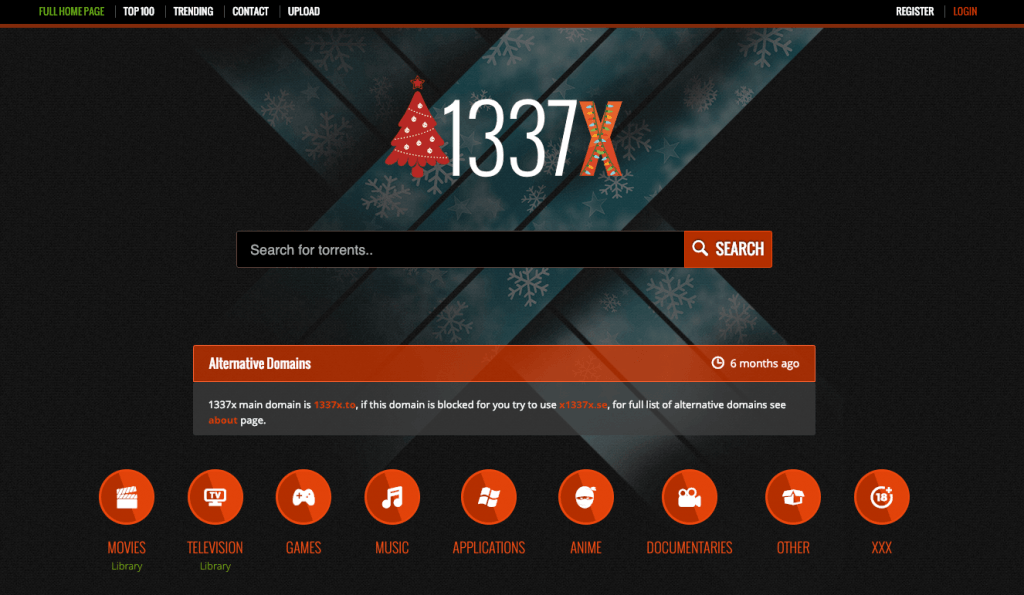
1337x is a torrent indexing website. It does not store movies, software, or music on its own servers.
Instead, it maintains a searchable directory of torrent files and magnet links, which connect users to other people sharing the same content through the BitTorrent protocol. The site itself is the index, not the library.
Categories typically include movies, TV shows, software, games, and music, all uploaded by users rather than managed by any central authority.
That decentralized structure is precisely why the site has persisted for years and why shutting it down completely is harder than blocking a centralized host. It also means there is no quality control, no verification of file safety, and no accountability for what gets listed.
Why 1337x keeps getting blocked
The short answer is copyright enforcement. The longer answer is that enforcement operates at several layers simultaneously.
In the United States, the Office of the U.S. Trade Representative has listed 1337x in its 2024 Review of Notorious Markets for Counterfeiting and Piracy, a federal report that identifies platforms linked to large-scale copyright infringement. Inclusion in that list signals to ISPs, courts, and regulators that the site is a priority enforcement target.
Outside the U.S., the pattern is similar. Courts and regulators across Europe, Australia, and other regions have ordered internet service providers to restrict access to torrent platforms at the network level.
When your ISP blocks 1337x, it is usually because a court or regulator has required it, not because of a technical fault.
This is why the site can load fine on one network and be completely inaccessible on another, even in the same city.
The legal risk is about user behavior, not just the site
One thing that surprises many people is that the legal exposure around torrenting is rarely about which site you visited. It is about what you downloaded.
In the United States, copyright holders can and do pursue individuals who share or download copyrighted content through BitTorrent.
Strike 3 Holdings alone has filed more than 20,000 copyright infringement lawsuits against individual users as of late 2025, tracking IP addresses through its own monitoring software and subpoenaing ISPs for subscriber information.
Under U.S. copyright law, statutory damages for infringement range from $750 to $30,000 per work, rising to $150,000 per work if a court finds the infringement willful. These figures apply to individuals, not just companies.
The legal direction across most jurisdictions is consistent: enforcement is tightening, not loosening, and the focus has shifted toward user-level activity rather than just platform takedowns.
Why the site appears down or unreliable
When 1337x does not load, it is not always offline globally. In many cases, access is restricted at the ISP or DNS level, meaning the site continues to operate in other regions while appearing unavailable locally.
Sometimes the experience is more confusing: cached DNS results, partial blocks, or regional filtering can surface outdated versions or error pages that look like the real site but are not functioning correctly.
What feels like technical instability is usually the result of layered enforcement acting at different points in the network stack.
The mirror site problem is the biggest trap
When the main domain is blocked, mirror sites and alternative domains fill the gap quickly.
Some mirrors are operated by the same people behind the original. Many are not. There is no central registry verifying which domains are legitimate, and search engines sometimes surface clones before the original, particularly in regions where the primary domain is blocked.
Users end up relying on guesswork. That matters because fake mirrors are a common vector for malicious ads, drive-by downloads, and pages that look identical to the original but serve harmful content.
Security risks that are easy to miss
The security problem with 1337x is not the site itself but the files it indexes and the mirrors surrounding it.
Torrent files can be renamed, repackaged, or bundled with hidden executables. A file labeled as a popular application or a recently released film can look completely legitimate in the torrent listing while containing something different.
This is especially common in software and game categories, where fake installers and bundled adware are reported regularly by security researchers and users alike.
Nothing looks obviously wrong until something breaks. That delayed feedback is part of what makes the risk easy to underestimate.
Where this leaves users
Understanding what 1337x is matters because the risks around it are not theoretical. They are legal, financial, and technical, and they affect ordinary users, not just high-volume infringers.
The platform operates in a space where enforcement is active and intensifying, the mirror ecosystem is genuinely unsafe, and the legal exposure from downloading copyrighted content is real and documented.
For users who encounter torrent sites through curiosity or convenience, the most useful thing to understand is that the risks sit at the level of individual behavior, specifically what gets downloaded and from where, not just at the level of which site was visited.
Legal streaming and download platforms have expanded significantly in recent years. In most regions, they now cover the majority of content that drives people toward torrent sites in the first place.
That shift does not eliminate the demand for torrent indexing, but it changes the trade-off in a meaningful way.
This article is for informational purposes only. DigitBin does not endorse or promote unauthorized downloading of copyrighted content.
Frequently Asked Questions
Is 1337x safe to use?
It carries real risks, including malware in files, dangerous mirror sites, and exposure of your IP address to rights holders who actively monitor torrent networks.
Is using 1337x legal in the United States?
Visiting the site sits in a legal gray area, but downloading copyrighted content through it can violate U.S. copyright law and expose you to civil lawsuits with significant damages.
Why does 1337x keep getting blocked?
Courts and regulators in many countries require ISPs to block access to it due to its role in facilitating copyright infringement at scale.
Does 1337x host files directly?
No. It indexes torrent metadata and magnet links rather than storing content on its own servers.
Why do 1337x domains keep changing?
When a primary domain gets blocked, operators or third parties register new domains to restore access, though many of these are unofficial and carry their own risks.