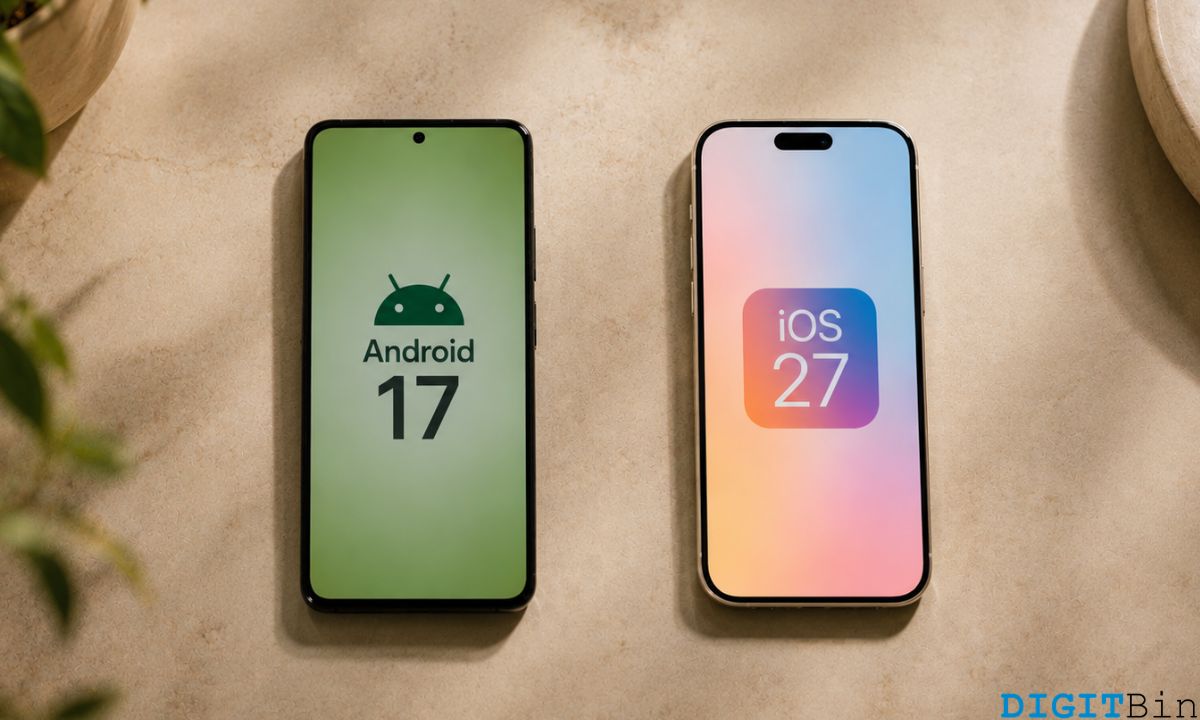
Two major OS updates are landing within weeks of each other this summer.
Android 17 stable is expected in June, with most features previewed at The Android Show on May 12 and formally presented at Google I/O on May 19-20.
iOS 27 gets its official unveiling at WWDC on June 8, with a public rollout following the new iPhone launch in September.
Android 17 vs iOS 27 is not a simple feature list comparison. These two updates are making fundamentally different bets about what a mobile operating system should prioritize in 2026.
Smartphone users across both the ecosystems must understand that split is more useful than counting features on each side.
TL;DR: Android 17 focuses on stability, privacy defaults, and incremental AI integration. iOS 27 is Apple’s most ambitious AI release yet, with a rebuilt standalone Siri app, third-party AI Extensions including Claude and Gemini, AI photo editing tools, 5G satellite connectivity on Pro models, and iPhone Fold multitasking support. Android is polishing what it has. Apple is betting heavily on AI as the next platform shift. iOS 27 carries more risk and significantly more upside.
What Android 17 is actually doing?
Android 17, confirmed at Beta 4 in April 2026, is not trying to impress at first glance. Google has been honest about this cycle being a refinement release.
The headline features are app bubbles, which let any app float over your current screen with up to five running simultaneously, and a set of privacy improvements running mostly in the background.
The Contacts Picker now grants session-based access to specific contacts rather than your entire address book. Local network access is blocked by default for apps targeting Android 17.
SMS OTP messages now have a three-hour delay before programmatic access, closing a gap some apps exploited to intercept verification codes.
Priority Charging, which pauses background CPU tasks to push more power into the battery during a charging session, is confirmed in beta code and expected in the stable release or a quarterly update shortly after.
Gemini gets a dedicated volume slider separate from media audio and tighter Pixel Launcher integration. The foundation for screen automation is being laid, but it is not completely live.
It is a focused Android OS update. Android 17 feels like a platform being tightened rather than expanded, which is not a criticism.
The Android 17 Beta 4 feature breakdown shows a team that identified specific friction points and fixed them cleanly.
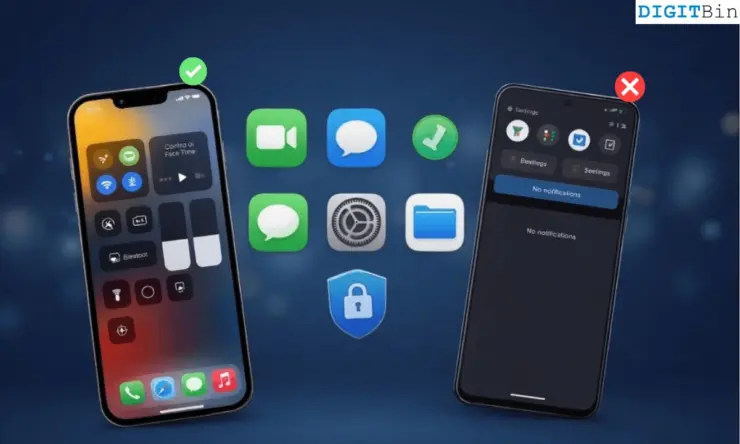
What iOS 27 is actually doing?
iOS 27 is a different kind of release.
Based on reporting from MacRumors and Mark Gurman at Bloomberg, Apple is making its biggest AI push yet, rebuilding Siri from the ground up rather than layering improvements onto the existing architecture.
The centrepiece is a dedicated standalone Siri app, codenamed Campo internally. It will support both text and voice input, maintain a history of past conversations, and present a chatbot-style interface similar to ChatGPT and Gemini.
The Dynamic Island will show a new Search or Ask prompt when Siri is triggered, replacing the current waveform animation.
More significant is the Extensions system.
iOS 27 will allow third-party AI models including Claude, Gemini, and ChatGPT to integrate directly with Siri through the App Store. Users choose which extensions they want active in the Apple Intelligence section of Settings.
Tim Cook confirmed on an earnings call this week that personalised Siri features, delayed since 2024, are arriving this year.
AI photo editing is also confirmed, with three tools: Extend to expand images beyond the captured frame, Enhance for ML-based colour and focus adjustments, and Reframe for shifting perspective on spatial photos.
Visual Intelligence is moving into the Camera app as a dedicated Siri mode alongside existing photo and video options.
On the hardware side, 5G satellite connectivity is expected for iPhone 18 Pro, iPhone 18 Pro Max, and iPhone Ultra models.
The iPhone Fold launching in September will run iOS 27 with two-app multitasking and sidebars, bringing split-screen to iPhone for the first time.
Privacy: Where Android 17 makes real gains
Apple has led on privacy defaults for years. Android 17 makes three meaningful additions that narrow the gap.
The Contacts Picker ends broad access to the address book. Local network permission is now explicit. SMS OTP protection closes a specific exploit path. These are real improvements.
But as the security feature comparison from earlier this month detailed, Android still has no system-level equivalent of App Tracking Transparency on iOS.
The gap between the ecosystems is narrowing on specific permissions, but the platform-level privacy architecture still favours iOS for users who prioritise that.
Design: Two different directions
Android 17 brings Material 3 Expressive to the broader Android platform for the first time, extending what Pixel devices began receiving through Android 16 QPR updates to all OEM builds.
The frosted glass effects, springier animations, and redesigned notification panel are the visible changes most users will notice on day one of using Android 17.
iOS 27 is refining the Liquid Glass aesthetic introduced in iOS 26 rather than overhauling it.
A system-wide opacity slider is reportedly in testing, which would let users adjust the intensity of the glass effect across the entire interface on their devices.
This is a small but welcome flexibility for users wanted to disable the iOS 26 Liquid Glass because it looked too heavy.
Which update matters more for your phone?
If you own an Android phone, Android 17 is worth installing when it reaches your device.
The privacy changes are meaningful and the OS stability improvements are real. It will not change how your phone feels in your hands, but it will make it behave slightly more predictably and safely.
If you own an iPhone, iOS 27 is the more consequential update.
Apple is making a structural bet that AI-powered Siri will become the primary interface for getting things done on iPhone.
If the Extensions system and the rebuilt Siri app land as described, the experience of using an iPhone in late 2026 will be noticeably different from today.
While changes in the Apple’s camp look promising, that bet could also fall flat. Apple has announced ambitious Siri features before and shipped them late or incomplete.
The personalised Siri features Cook mentioned were originally promised in 2024. iOS 27 is where Apple either delivers on that promise or pushes it into a third year.
Android 17, on the other hand, will quietly improve your phone regardless of how that bet turns out.