Free movie download sites have become a major search category as streaming subscription costs keep climbing. Netflix’s ad-supported plan now starts at $7.99 a month, Disney+ Basic sits at $11.99, and many households carry two or three subscriptions simultaneously. The appeal of free alternatives is easy to understand.
This article covers ten places people use to watch or download movies for free, starting with fully legal platforms and moving into the gray-area sites that carry real risks. The goal is not to promote any particular option, but to give you a clear, honest picture of what each one actually involves.
Why People Search for Free Movie Download Sites
Subscription fatigue is a documented trend. In 2025 alone, Netflix raised its prices twice, Disney+ increased its base plan, and several other services followed suit.
The result is that many viewers are looking for exits, whether temporary or permanent. Legal free platforms have improved substantially over the past few years, but they do have real limits around library freshness and content depth.
Understanding those limits is what helps you make the right call.
Legal Free Movie Streaming and Download Sites
These services are fully licensed, cost nothing to use, and are supported by advertising rather than subscriptions.
1. Tubi
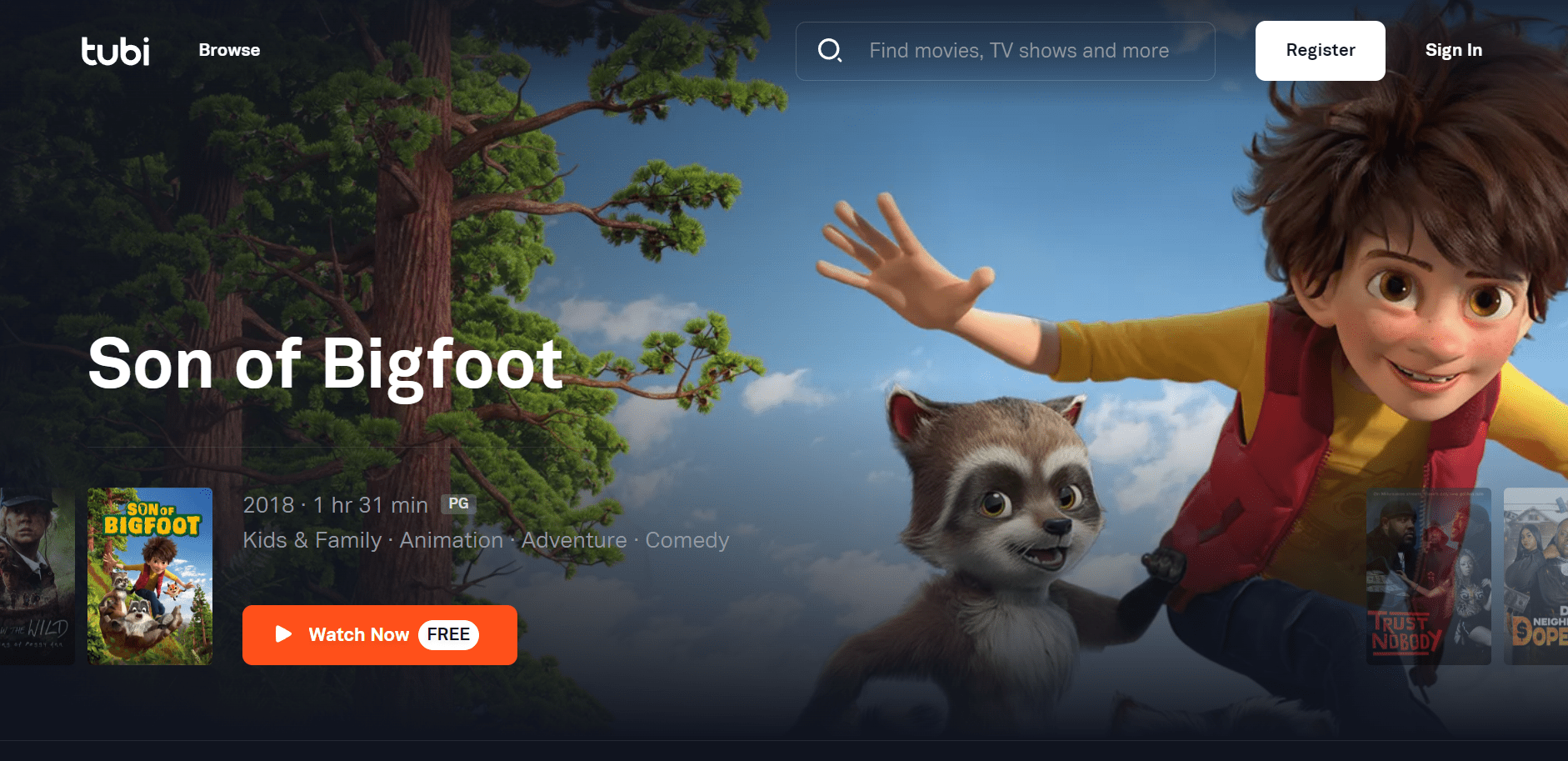
Tubi is the largest legal free streaming service currently operating, with over 300,000 movies and TV episodes in its library as of late 2025.
Owned by Fox Corporation since a $440 million acquisition in 2020, Tubi licenses content from Paramount, Lionsgate, MGM, and more than 250 other providers. No account is required to start watching, though signing up lets you maintain a watchlist and resume across devices.
The library leans toward catalog titles, cult films, and older releases rather than day-and-date theatrical content. Ad breaks are present but spaced at a tolerable frequency. There is no offline download option.
2. Pluto TV
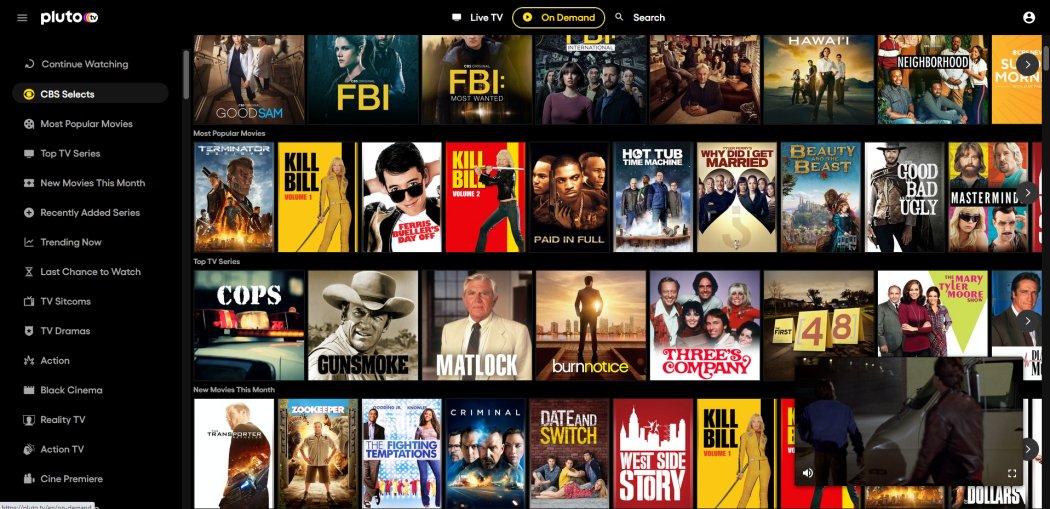
Pluto TV, owned by Paramount Skydance Direct-to-Consumer, takes a live-channel approach rather than pure on-demand browsing.
It offers over 200 themed live channels organized by genre, running content in continuous loops alongside a separate on-demand library. The experience is closer to cable television than Netflix. You are not always choosing a specific title; you are often just tuning into whatever is running on the crime block or the classic sitcom channel.
Ad frequency here is higher than on Tubi, and live content cannot be paused. Registration is optional but enables favorites and cross-device resume.
3. Plex
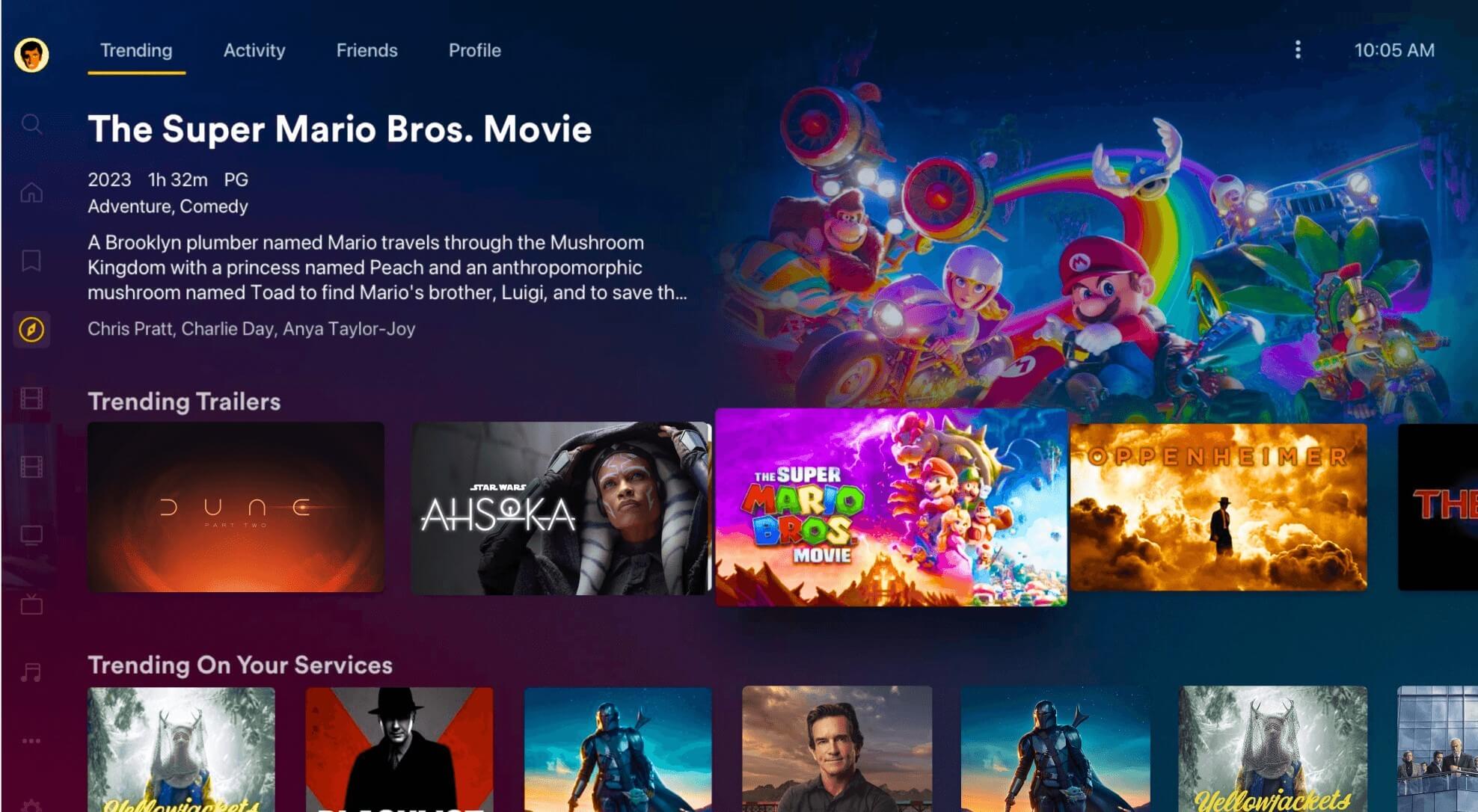
Plex began as personal media server software and has since expanded into a full free streaming platform with over 50,000 on-demand titles and 200-plus live channels in most regions.
Its catalog draws from MGM, Warner Brothers, Lionsgate, and other distributors. The content skews toward older films and library titles, but the breadth is solid for a no-cost service.
One genuinely useful feature: Plex’s search function will tell you which other streaming platform carries a title if Plex does not have it. That cross-platform discovery adds practical value beyond what the library itself offers.
A free Plex account is sufficient for streaming. Premium features like offline downloads require a Plex Pass subscription starting at $6.99 per month.
4. YouTube Free Movies
YouTube maintains a dedicated section of free, ad-supported movies available without a YouTube Premium subscription. The selection varies by region, and the US library tends to be the most populated.
Titles range from older studio releases to documentaries and independent films. The availability of specific titles shifts regularly, so it is worth checking directly rather than assuming a film will still be there.
Paid Services Worth Considering at Scale
For context, the services most people compare against free alternatives are Netflix and Disney+.
Netflix’s ad-supported plan currently runs $7.99 per month in the US. The Standard plan sits at $17.99, and the Premium plan is $24.99. Disney+ Basic with ads is $11.99 per month as of April 2026, with the Premium ad-free plan at $18.99 per month. Pricing for both services has increased multiple times since 2023 and may continue to shift.
Both services offer content you simply will not find on free platforms, particularly recent theatrical releases, originals, and franchise properties. Whether that catalog gap justifies the cost is a personal calculation.
Gray-Area and Unofficial Free Movie Sites
This section covers sites that exist outside the licensed streaming ecosystem. They are widely used, but using them comes with legal and technical risks that are worth understanding clearly.
These sites generally operate by hosting or indexing content without authorization from rights holders. Several communities, including the well-known r/FREEMEDIAHECKYEAH wiki at fmhy.net, catalog and rate these services. The sites listed there are regularly updated as domains go down, get seized, or migrate to new URLs.
5. Stremio with Community Add-ons
Stremio is a media player application that is itself legal and available on most platforms. The controversy comes from third-party add-ons that connect it to unauthorized streams, including via services like Real-Debrid.
The base app functions as a legitimate streaming aggregator. What users do with community-built add-ons operates in a different legal space, one that varies significantly by country and jurisdiction.
Stremio itself does not host content. The legal exposure depends on what add-ons you install and where you are located.
6. Popcorn Time
Popcorn Time is an open-source torrent streaming client that presents pirated content in a Netflix-style interface. It has gone through multiple versions, shutdowns, and community forks over the years.
The original project was shut down but has been revived under various community-maintained versions. Using it means streaming directly from torrent sources, which exposes your IP address to other peers in the swarm. Without a VPN, this is visible to rights holders and ISPs.
It is worth being direct here: Popcorn Time facilitates access to content distributed without authorization. It is not a gray area in the way Stremio is. The legal risk is real and jurisdiction-dependent.
7. Direct Download Sites (xdmovies, ddlbase, and Similar)
A category of sites that has grown alongside streaming fatigue is direct download portals. Sites operating under domains like xdmovies.wtf and ddlbase.com fall into this group. Rather than streaming through a player, they offer downloadable movie files, often in multiple quality options.
The mechanics are straightforward enough. You find a title, click a link, and get a file. No buffering, no unstable streams.
What they distribute is not licensed. These sites host or index copyrighted films without authorization from studios or rights holders. That is not a technicality; it is the entire basis of how they operate.
The practical risks compound that problem. Direct download sites in this category frequently use aggressive ad networks, fake download buttons, and redirect chains that are difficult to navigate safely without an ad blocker and some experience reading which button is real. Sites like videodownloader.site operate in a similar space, packaging download tools or content access in ways that blur the line between utility and unauthorized distribution.
Domain instability is another consistent pattern. The URLs change regularly, either due to hosting issues or enforcement actions. A site that ranks well in search today may be unreachable or redirected to something unrelated within months.
If you use sites like these regardless, keep your ad blocker active, avoid executing any downloaded files that are not video formats, and understand that the legal position varies by country.
8. Archive.org (Internet Archive)
The Internet Archive at archive.org hosts a large and genuinely legal collection of public domain films, including silent-era movies, government-produced content, and titles whose copyrights have expired.
This is not a site for finding recent releases. But for classic cinema, documentary footage, and pre-1928 American films that have entered the public domain, it is one of the most legitimate and well-maintained free resources available.
Downloads are permitted for public domain material. The distinction between public domain and still-copyrighted content matters here, and the Archive labels its collections accordingly.
9. The Roku Channel
The Roku Channel is a free, ad-supported streaming service built into Roku devices but also accessible via web browser. It combines on-demand titles with live channels and includes some Roku-original programming.
Its on-demand library is smaller than Tubi’s, and some content sits behind subscription paywalls rather than being genuinely free. The free tier is real, but it requires some navigation to stay within it.
10. Kanopy
Kanopy is a free streaming service available through public libraries and universities. If you have a library card with a participating institution, you can access a catalog of independent films, documentaries, and classic cinema at no cost.
The service does not carry blockbusters, and availability depends entirely on whether your local library has a Kanopy partnership. But for documentary and arthouse content, the quality and legality of the catalog is hard to beat at zero dollars.
The Real Cost of Unofficial Free Movie Download Sites
The most common risk with unauthorized streaming and download sites is not legal action against individual viewers, though that risk is not zero and varies by country.
The more immediate and practical risk is ad-delivered malware. Many sites in this category rely on low-quality ad networks that have been used to distribute malicious scripts, fake download buttons, and browser-based exploits. An ad blocker is not guaranteed protection, and some sites actively detect and block them.
A second issue is instability. Sites shut down, domains get seized, and libraries evaporate. The r/FREEMEDIAHECKYEAH community exists partly to track these changes, but the churn is constant. A site that works today may redirect to something unrelated in two months.
For anyone who decides to use unofficial services anyway, a reputable VPN and an ad blocker are the minimum sensible precautions. Neither eliminates risk, but both reduce it.
Frequently Asked Questions
Are free movie download sites legal?
Legal free movie sites like Tubi, Plex, Pluto TV, and Kanopy are fully licensed and legal. Sites that distribute copyrighted films without authorization are not legal, though enforcement against individual viewers varies significantly by country.
Can I download movies for free legally?
Public domain films available through the Internet Archive can be downloaded legally. Tubi and Pluto TV do not offer downloads. Plex allows offline downloads through its paid Plex Pass tier starting at $6.99 per month.
Is Tubi actually free?
Yes. Tubi requires no payment or subscription and no credit card. It is supported by advertising, so you will see ads during playback, similar to traditional television.
What is the safest free movie streaming site?
Tubi, Pluto TV, Plex, and Kanopy are the safest options because they are fully licensed, do not rely on questionable ad networks, and are maintained by established companies or institutions.
Do I need a VPN to use free movie streaming sites?
You do not need a VPN for legal services like Tubi or Plex. For unofficial sites, a VPN reduces some risks but does not make illegal streaming legal or eliminate exposure to malicious ads.