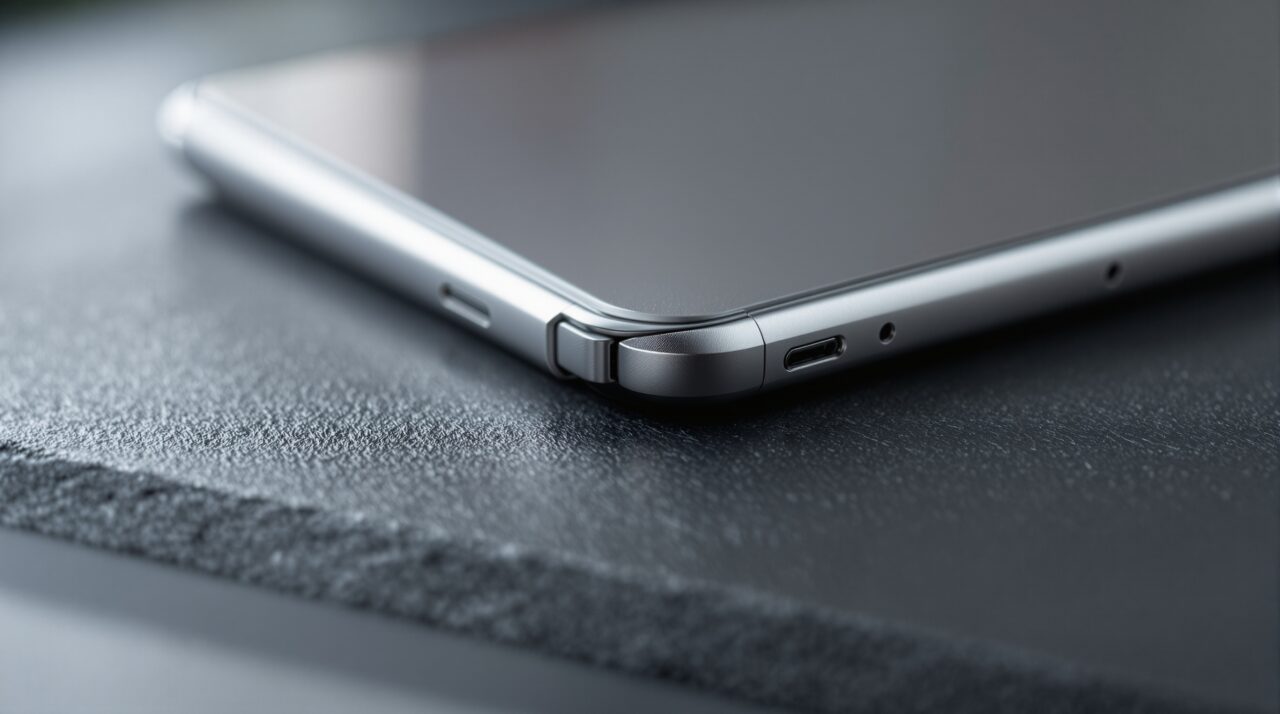
Every foldable phone on the market has two problems Apple watched competitors struggle with for years: visible creases and hinge durability. The Galaxy Z Fold 7 has improved both significantly over seven generations. Apple is arriving with generation one, and its answer is a material most people have never heard of.
According to supply chain reports from Korean Naver leaker yeux1122, leaker yeux1122 on Naver, citing a material company source, Apple’s iPhone Fold hinge will be built from liquid metal, an amorphous metallic alloy the company has held exclusive rights to in consumer electronics since 2010.
Apple partner Foxconn has been testing the material in collaboration with supplier Amphenol, with the hinge cast using a die-casting process that produces parts requiring no further shaping or finishing.
TL;DR: Apple is building the iPhone Fold hinge from liquid metal, an amorphous alloy tougher than titanium that resists bending and deformation across thousands of folds. Combined with a laser-drilled metal display plate from Samsung Display, the goal is a nearly crease-free fold at under 0.15mm crease depth. Apple has held exclusive consumer electronics rights to this material since 2010. The iPhone Fold is expected in fall 2026 above $2,000.
What liquid metal actually is
The name is misleading. Liquid metal parts are not fluid. The term refers to the manufacturing process and the atomic structure of the alloy before it is cast. During production, the metal is rapidly heated and cooled in a way that prevents its atoms from forming the regular crystalline structure found in conventional metals. The result is an amorphous structure with properties conventional titanium and steel cannot match.
Liquid metal is harder, more resistant to deformation, and springs back to its original shape under stress more reliably than standard alloys. F
or a hinge that will open and close tens of thousands of times, those properties matter in a way that is difficult to replicate with traditional materials. EonTec, identified by analyst Ming-Chi Kuo as a primary beneficiary of Apple’s liquid metal decision, specializes in this die-casting process.
Apple has been experimenting with the material for over fifteen years. The SIM ejector tools included with early iPhones were made from it. That is a deliberately small application, partly because manufacturing liquid metal at scale with tight tolerances is genuinely difficult. The hinge on the iPhone Fold is a far more complex component than a SIM tool, which is part of why this is one of the harder engineering problems Apple has had to solve.
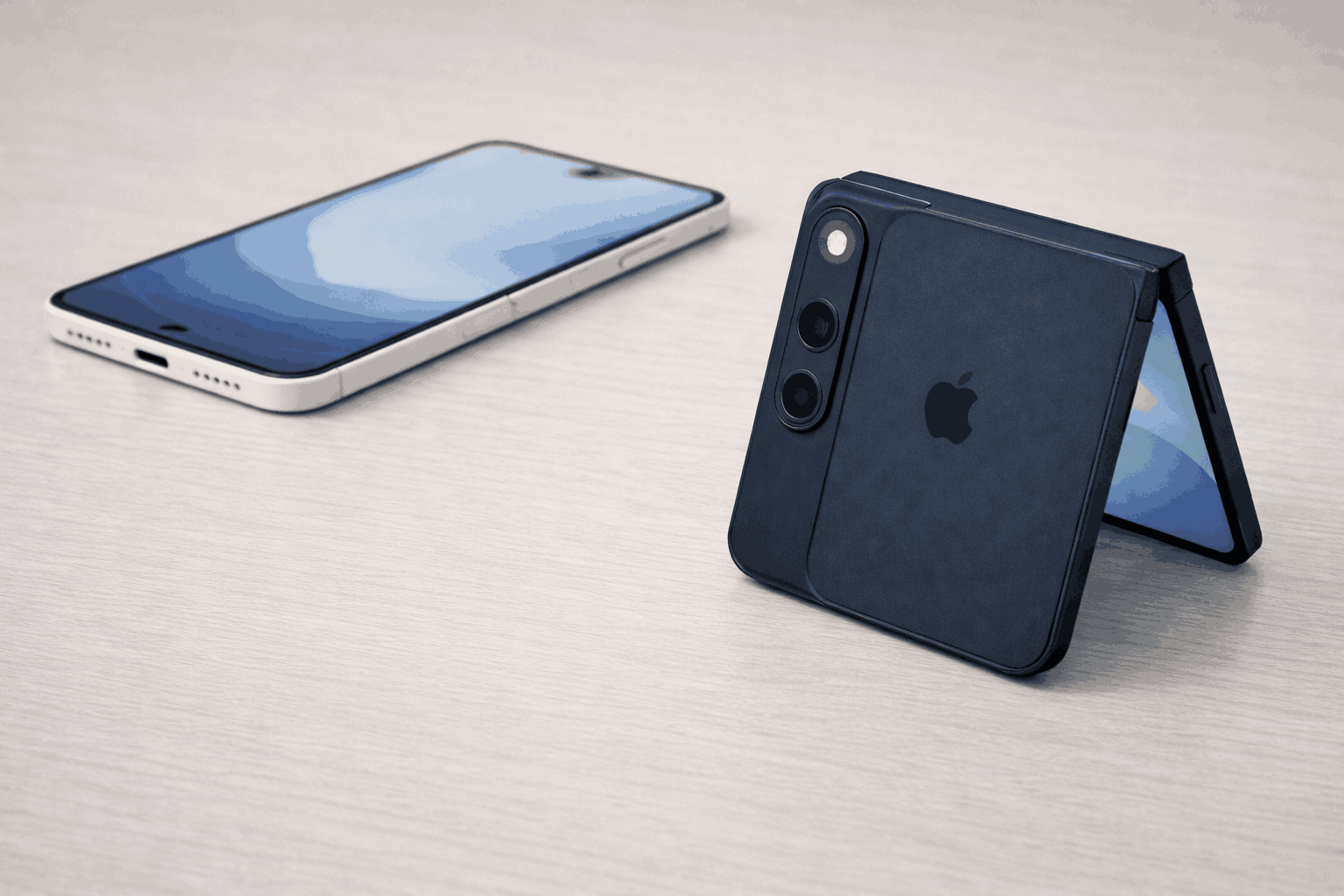
How it connects to the crease problem
The hinge and the display crease are not separate problems. They are the same problem approached from two directions. A stiffer, more precise hinge reduces how much the display flexes unevenly during folding.
Samsung Display’s near-creaseless OLED panel, demonstrated at CES 2026 and expected to supply Apple, uses a laser-drilled metal plate beneath the display that disperses fold stress across a wider area rather than concentrating it at the bend point.
Together, the liquid metal hinge and the laser-drilled display plate are Apple’s two-part answer to the crease. Supply chain sources have reported a crease depth target under 0.15mm and a crease angle under 2.5 degrees.
For context, no foldable currently shipping hits those numbers. Samsung’s Z Fold 7 crease is visible in direct light. Apple’s target is genuinely different.
Whether that target survives mass production is a different question. The iPhone Fold’s production has already encountered setbacks. Nikkei Asia reported engineering difficulties in April 2026, with mass production pushed from June to August. Bloomberg’s Mark Gurman countered that Apple remains on track for a September announcement, though a December launch for actual units is possible given supply constraints.
Why the titanium body change matters alongside it
The hinge is not the only materials story. Leaker yeux1122 also reported that the iPhone Fold’s main chassis will use a revised titanium alloy with improved strength-to-weight ratio compared to current iPhone Pro frames.
At 4.5mm when unfolded, the chassis has almost no room for error. Shaving grams from the frame without losing structural integrity is a prerequisite for fitting a hinge, two displays, a battery over 5,000mAh, and a camera system into a body thinner than the iPad Pro.
The liquid metal hinge and the revised titanium body are connected decisions. Both serve the same engineering goal: maximum durability and minimum weight at a thickness that has never been achieved in a book-style foldable before.

What this means for the buyer
None of this is confirmed by Apple. The liquid metal hinge reports trace back to supply chain sources and a 2025 analyst note from Kuo, neither of which guarantees the final product matches the rumor. Features get cut. Materials get substituted when production targets slip.
What the hinge story signals, if accurate, is that Apple spent the extra years watching competitors not to copy what they built, but to identify exactly what they got wrong. The crease and hinge durability are the two most common criticisms of every foldable on the market. Apple appears to have treated both as non-negotiable rather than acceptable tradeoffs.
Whether that engineering ambition translates into a product that holds up after two years of daily folding is something no leak can answer. That part waits until the reviews come in.