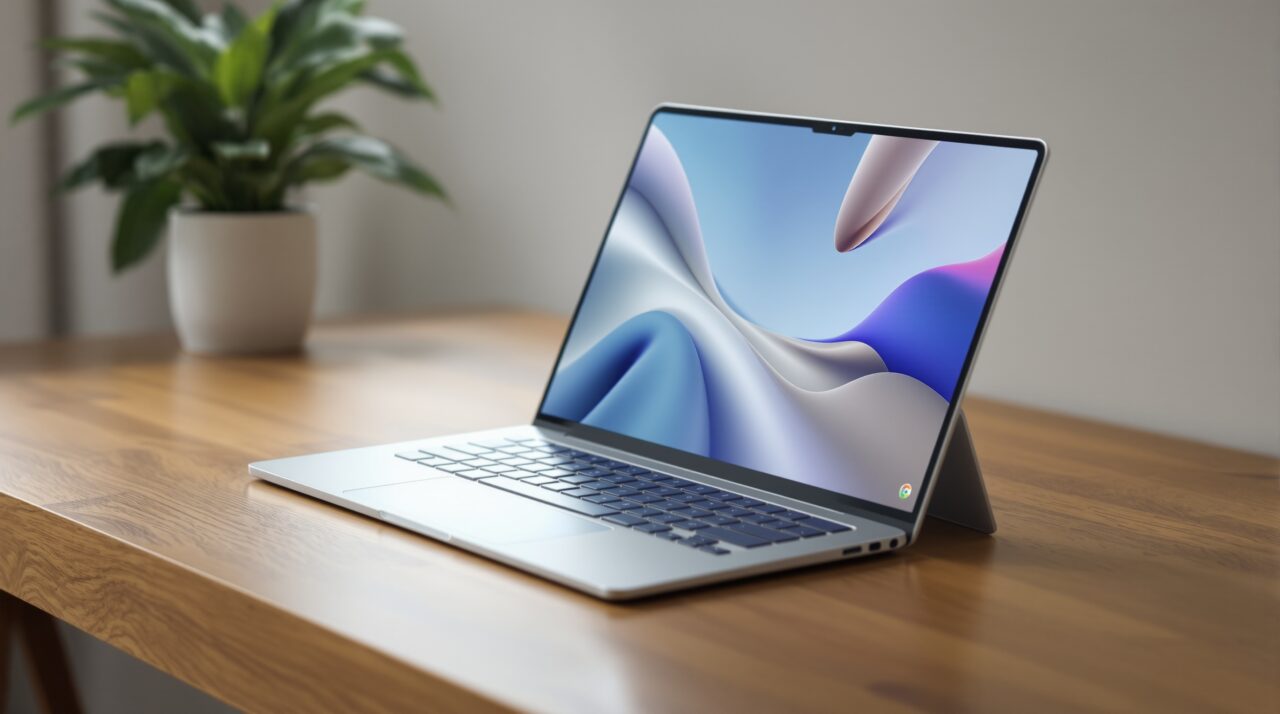
Google has officially unveiled the Googlebook, a premium hardware category running Aluminium OS to succeed the Chromebook. Announced on May 12 at The Android Show I/O Edition, and together they represent the biggest structural change to Google’s consumer software strategy in over a decade.
If you have ever used a Chromebook and quietly wondered why Android apps felt cramped on it, this is the answer Google has been working on. The Chromebook, as a category, is being retired.
TL;DR: Googlebook is Google’s new laptop platform, replacing the Chromebook brand. The laptops run Aluminium OS, a desktop operating system built on top of Android 17 with a custom window manager, native multitasking, and Gemini Intelligence at the OS level. The first Googlebooks arrive later in 2026 from partner manufacturers. For Android phone users, the biggest change is that your phone and your laptop will finally run the same OS.
What Googlebook actually is
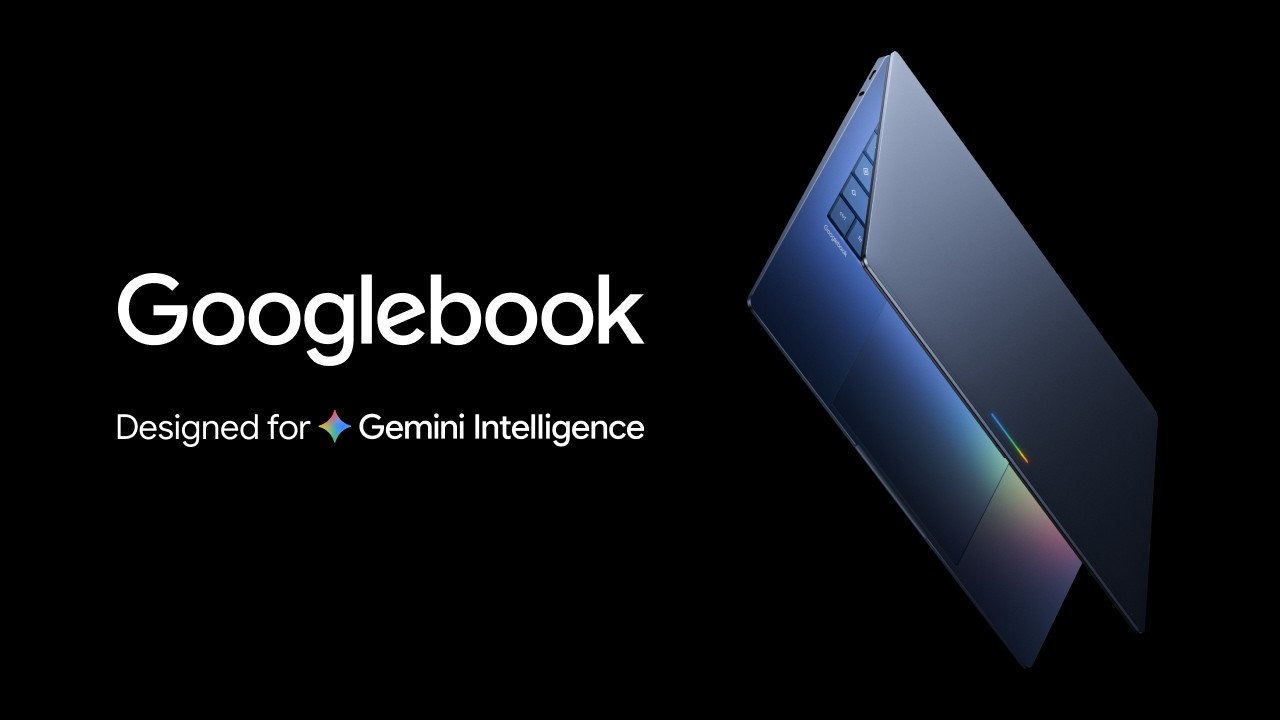
Image credit: Google
Googlebook is the consumer brand. Like Chromebook, it is not one Google laptop but a category of devices built by partner manufacturers. The first wave is expected later in 2026 from the same OEMs that previously made Chromebooks.
The hardware is positioned as premium. According to Bloomberg, Google is targeting the same price tier as MacBook Air and premium Windows ultrabooks, not the budget Chromebook segment. This is meant to be the laptop a serious Android user would buy.
What runs on it is the more interesting part.
Aluminium OS is Android 17, rebuilt for laptops
Aluminium OS, sometimes written as Aluminum OS, is the internal Google name for the OS. It is not ChromeOS with extra steps. It is not Android scaled up to a 13-inch screen.
It is Android 17 with a real window manager, taskbar, multitasking, and Gemini woven into every layer. The Next Web reports that Android apps run natively on Aluminium OS without any compatibility container. They access the file system, interact with desktop windows, and use hardware features the same way they do on a phone.
For a decade, Chromebooks ran Android apps inside ARC, the Android Runtime for Chrome. It was a container, and the container leaked. Apps behaved differently across the two platforms. Aluminium OS eliminates the split entirely. There is one Android, and it runs everywhere.
This is the change Google has been working toward for years. A 2025 job listing for Aluminium OS first surfaced the strategy. The Snapdragon Summit later that year confirmed the Qualcomm partnership to converge mobile and desktop chips. May 12 was the public reveal.
What this means if you own an Android phone
The most immediate practical change is cross-device continuity that actually works.
Cast my Apps lets you open any phone app on the Googlebook screen without downloading it to the laptop. The app runs from the phone, the interface appears on the larger display. Quick Access lets you browse phone files directly inside the Googlebook file manager with no transfer step.
Magic Pointer is the genuinely new feature. Built with Google DeepMind, the laptop cursor becomes a context-aware AI agent. You hover over text and it can summarise it. You drag a file and it can suggest actions based on the file content. It is not a feature you turn on. It is the cursor.
Whether all of this lives up to the demo is the open question. Google has shown cross-device features that quietly disappeared. The difference with Aluminium OS is structural. The two devices are no longer running different operating systems.
Why ChromeOS being retired matters
ChromeOS was Google’s longest-running answer to the Mac and Windows. It started as a browser OS, expanded with Android app support, then sat in an awkward middle for years.
The Chromebook brand survived because it became the default cheap laptop in education. That is also why it never escaped the perception of being a school computer. Google could not push it upmarket without colliding with its own positioning.
Googlebook resets the brand. It is premium from launch. It runs the same OS as Android phones, so the app catalog is no longer a thin Android-on-a-laptop afterthought. Adobe Premiere Pro is coming to Android this summer, and the same build will run on Googlebook natively.
For most Chromebook users, this is good news, but slowly. ChromeOS is not being killed overnight. Google has indicated a multi-year transition. Existing Chromebooks will keep getting updates, with a planned path to migrate to Aluminium OS where the hardware supports it.
The Gemini Intelligence layer
The other reason Aluminium OS is not just a renamed ChromeOS is that Gemini is the interface.
The first wave of Googlebooks ships with Gemini Intelligence built into every layer of the system. The same multi-step app automation that runs on Pixel 10 phones runs on the laptop. The same Android 17 Gemini changes rolling out to phones extend to the desktop with a few keyboard-and-mouse adaptations.
Create My Widget extends to the Googlebook home screen as a real desktop widget. Rambler works in any text field on the laptop. The autofill that reads your passport from Google Photos works in Chrome and in native apps.
For most users, this is the first laptop where the AI is not an app you open. It is the operating system, with a window manager attached.
What we still do not know
A few things were noticeably absent from the announcement.
The first Googlebook hardware partners were not fully named on stage. Pricing tiers were not confirmed. The release date is “later this year,” which usually means Q4 2026 or early 2027 for partner devices.
It is also unclear how much of Aluminium OS will work on lower-end hardware. Flagship Gemini Intelligence features rely on either on-device AI capacity or fast cloud connections. Budget Googlebooks, if they exist, may get a stripped version.
The thing worth keeping in mind
This is the first time in over a decade that Google’s phone and laptop strategies actually point in the same direction.
The Chromebook era was Google running two operating systems in parallel and hoping the world picked up the slack. Aluminium OS ends that. Whether it succeeds against macOS and Windows is a different question. The structural problem of two souls in one ecosystem is finally being solved at the OS layer.
The Pixel 10 in your pocket and the Googlebook on the table will run the same Android. That part is real.