The Pixel 11 Pro is shipping with a smaller battery than the Pixel 10 Pro. The Pixel 11 Pro XL is shipping with a smaller battery than the Pixel 10 Pro XL.
According to the comprehensive Pixel 11 spec leak posted by MysticLeaks on Telegram on May 4, 2026, the reductions run across the Pro tier.
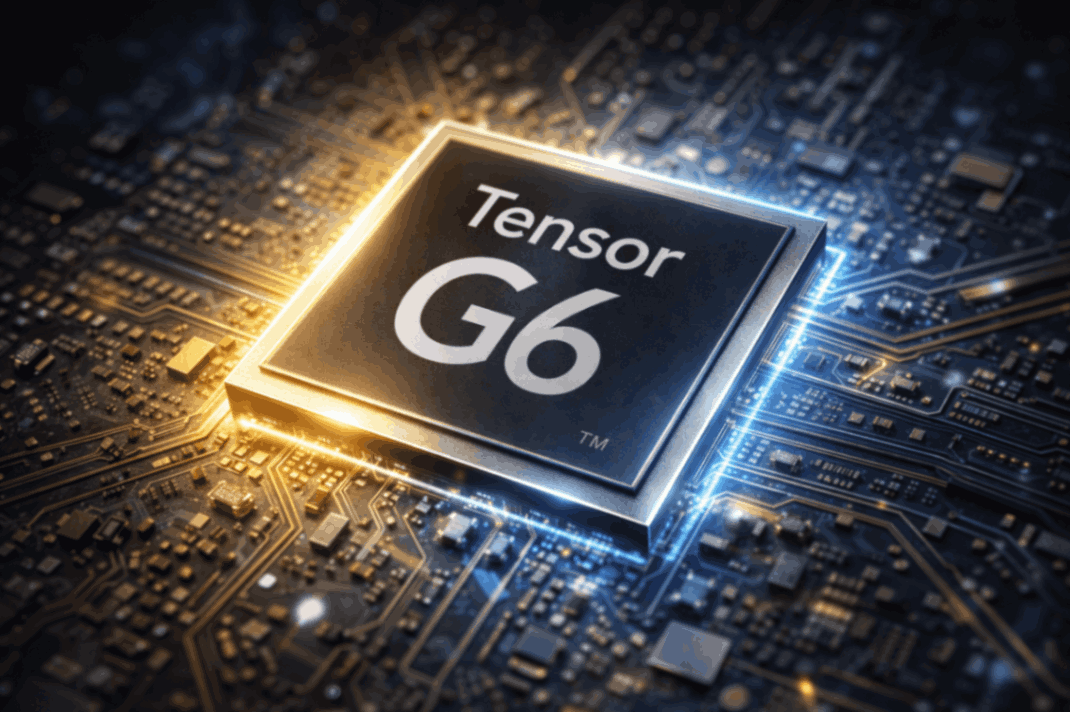
Google’s position is that the Tensor G6 chip, built on TSMC’s 2nm process, draws less power per task than the 3nm Tensor G5 in the Pixel 10, and that the efficiency gain closes the capacity gap. That position might be correct. It is not testable until the phone ships in August 2026.
TL;DR: The Pixel 11 Pro drops from 4,870mAh to 4,707mAh and the Pixel 11 Pro XL drops from 5,200mAh to 5,000mAh, based on the May 4, 2026 MysticLeaks spec leak corroborated by 9to5Google. Google’s Tensor G6 on TSMC’s 2nm process is expected to offset the loss through better power efficiency per clock cycle. The standard Pixel 11 actually gains capacity slightly. The Pro Fold stays flat at 4,658mAh. Whether 2nm efficiency covers the Pro’s capacity reduction cannot be confirmed until the device ships in August.
The battery numbers from the leak
The MysticLeaks spec dump from May 4 covered the full Pixel 11 family: Tensor G6 chipset specs, camera sensors, display panels, RAM configurations, and battery capacities across all four models.
The battery figures for the Pro tier generated the most debate in the Android community, because the direction of the change runs against the typical expectation for a new Pixel Pro release.
| Model | Pixel 10 battery | Pixel 11 battery (leaked) | Difference |
|---|---|---|---|
| Standard | ~4,700mAh | 4,840mAh | +~140mAh |
| Pro | 4,870mAh | 4,707mAh | -163mAh |
| Pro XL | 5,200mAh | 5,000mAh | -200mAh |
| Pro Fold | ~4,650mAh | 4,658mAh | Flat |
The standard Pixel 11 gains capacity and the Pro Fold stays effectively flat. The story sits in the Pixel 11 Pro and Pro XL. These are the two models most likely to be purchased on the basis of all-day performance and heavy workloads, and they are the two models with meaningfully smaller cells.
The 2nm argument Google is making
TSMC’s 2nm fabrication node, which the Tensor G6 uses, is engineered to deliver roughly 15% better power efficiency compared to 3nm at equivalent clock speeds, based on TSMC’s published node specifications.
The Tensor G5 in the Pixel 10 was built on TSMC’s 3nm process. For Google, the arithmetic runs as follows: if Tensor G6 uses approximately 15% less power per task, and the Pixel 11 Pro’s battery is 3.4% smaller in raw capacity, the net power budget at the chip level should still land ahead of the Pixel 10 Pro in endurance terms.
That calculation is not unreasonable in isolation. What it leaves out is display power draw. Screen brightness and screen-on time consume a significant share of daily battery use, and display power scales with panel size and peak brightness rather than chipset generation.
The MysticLeaks dump mentioned new Samsung OLED panels for the Pixel 11 Pro tier, and Samsung’s 2026 OLED technology is expected to deliver higher peak brightness than the panels in the Pixel 10 Pro. A brighter panel draws more power regardless of how efficient the chip below it becomes.
Where the efficiency argument gets complicated
The Tensor G5 on the Pixel 10 was already TSMC’s 3nm process, a major step up from the Samsung 4nm node used on the Tensor G4 in the Pixel 9. The efficiency gain from 4nm to 3nm was substantial because it involved both a fabrication partner change and a process node jump. G5 to G6 is a node refinement on the same foundry.
The improvement from 3nm to 2nm is real but smaller than the jump from 4nm to 3nm, which means Google is asking this generation’s efficiency gain to cover more ground than last generation’s covered.
There is also the Gemini Intelligence workload to consider. On Pixel 10 devices running Android 17 stable, Gemini Intelligence runs on-device using Gemini Nano v3. Local inference for multi-step automation and Create My Widget tasks draws sustained compute in ways that previous Android background processes did not.
The Pixel 11 Pro carries these same AI workloads with a smaller battery cell. How Google has optimized Tensor G6 specifically for continuous Nano v3 inference is not in the MysticLeaks spec dump, and that optimization detail matters more to the real-world battery outcome than the raw mAh comparison.
What the Tensor precedent actually shows
Google’s track record on efficiency claims with Tensor has been mixed generation to generation. Tensor G5 on the Pixel 10 delivered a genuine improvement over G4 in thermal performance and daily endurance, with most reviewers noting the Pixel 10 Pro ran meaningfully cooler and lasted longer under mixed-use conditions than the Pixel 9 Pro.
That was a consequential upgrade. The Tensor G6 to G5 delta is a smaller change by design, which means the efficiency margin it contributes to the battery equation is also smaller.
The Pixel 10 Pro landed in the middle range for daily battery endurance in most published reviews: better than the Pixel 9 Pro, behind the best Samsung flagships, and behind Apple’s iPhone 17 Pro in sustained use. If Tensor G6 closes some of that gap through efficiency, the smaller cell becomes invisible. If the efficiency gains are modest, the 163mAh difference shows up in the last hour of the day for heavy users.
Who this matters to most before August
For moderate users whose Pixel 10 Pro typically finishes the day above 30%, Tensor G6’s efficiency gain will likely cover the 163mAh difference without being noticeable.
For heavy users who push a Pixel Pro through a full day of navigation, video calls, and Gemini Intelligence automation, the smaller battery is the single detail to track most carefully in August reviews.
The Pixel 11 Pro launches roughly three months before the iPhone 18 Pro and the iPhone Fold Ultra. If battery life is a top-three factor in your next phone decision, the Android 17 feature set that ships on Pixel 11 is more complete and deeply integrated than anything earlier Pixels received.
Whether Tensor G6 backs that experience with the endurance to match it is the question August 2026 answers. The pre-launch answer is: probably yes, but narrowly.