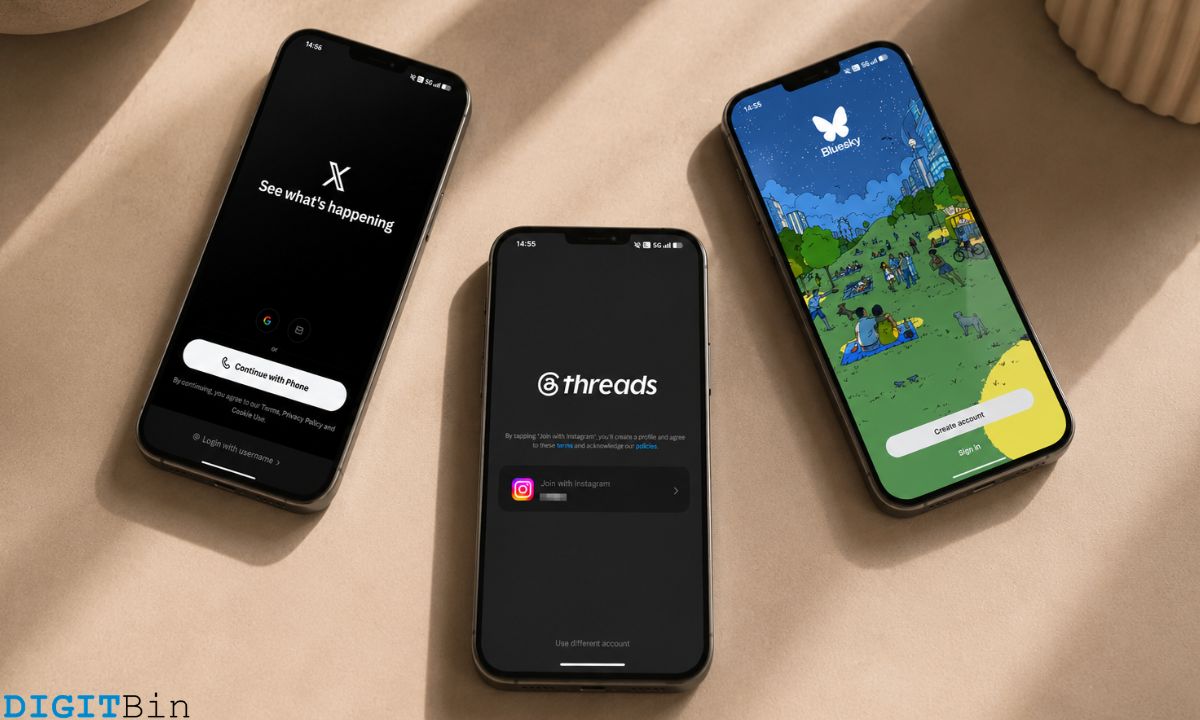
I gave myself a rule: no skipping ahead. One week, all three platforms, posting the same type of content on each, noting what came back.
I spent an equal amount of time on X(previously Twitter), Threads, and Bluesky.
Threads is the Twitter equivalent by Meta. Bluesky is a decentralized social media app founded by Jack Dorsey, who had launched Twitter.
The goal was not to find the best platform in the abstract but to find out which one actually changed something about how I used it. The one that felt like a medium of expression without noise.
A social media app should not feel like an obligation. It should be something I could close the tab on with no real loss, and where users can tell noise apart from fact or expression. The results were not what I expected before I started.
TL;DR: X has 611 million monthly active users and remains the only platform for real-time news and live events. Threads has 150 million daily active users and the smoothest onboarding for anyone already on Instagram, but the algorithmic feed flattens everything into a similar texture. Bluesky has around 42 million total users and 4 million daily active users, the smallest audience by far, but the highest engagement depth and the only truly chronological option. Which one is worth it depends entirely on what you are trying to do.
X: The largest room with the worst acoustics
X still has 611 million monthly active users, according to X (Twitter) Statistics 2026 compiled from Statista and DataReportal.
That number is real, and it matters. The concentration of journalists, researchers, product people, and decision-makers on X is not matched by either alternative.
When something happens in the world, X is where the primary sources post first.
That was true before Elon Musk acquired the platform in 2022, and it remains so in 2026. On the other hand, there has been a decline in the engagement rates, and advertiser confidence has eroded.
The experience of actually using X has shifted. The algorithmic For You feed in 2026 heavily weights accounts that post frequently, engage with controversy, and hold paid verification.
The people surfaced are not necessarily the most interesting or accurate; they are the most active within the engagement mechanics of a platform that financially rewards posting volume.
I spent the first two days of my week on X feeling vaguely aggravated without being able to identify why. I could feel X/Twitter being more of a political tool of expression rather than something that brings in productivity or actual networking.
On the third day, I identified it: I kept reading replies to posts I had not chosen to see, from accounts I had not followed, arguing about things I had no prior context for.
The reply thread has become X’s primary UX surface, and it is exhausting. pretty much what information overload would look like.
It was also confusing, and I often felt the hate speech was appearing at the top replies just because the profile has a blue tick, for which the user has paid.
The Following feed, chronological and limited to accounts you actually chose to follow, is still there.
If you treat X as a Following-feed-only platform and refuse to engage with the For You surface, it still functions reasonably well for what it has always been best at: breaking news, live events, and niche communities with high posting cadence.
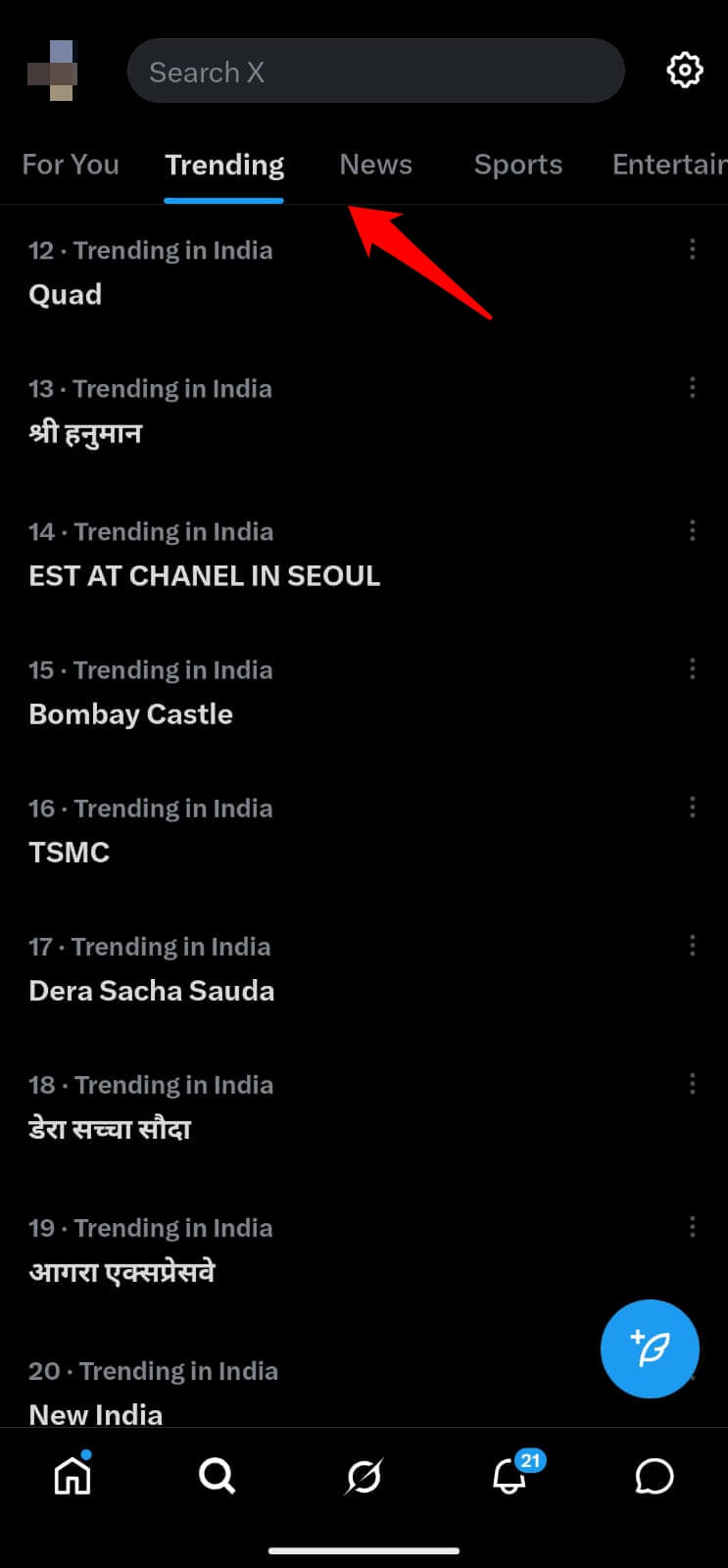
But you have to actively opt out of the default product to get there.
X overall felt noisy. It’s like the algorithm is intentionally pushing negative content just because the users behind them have a paid subscription.
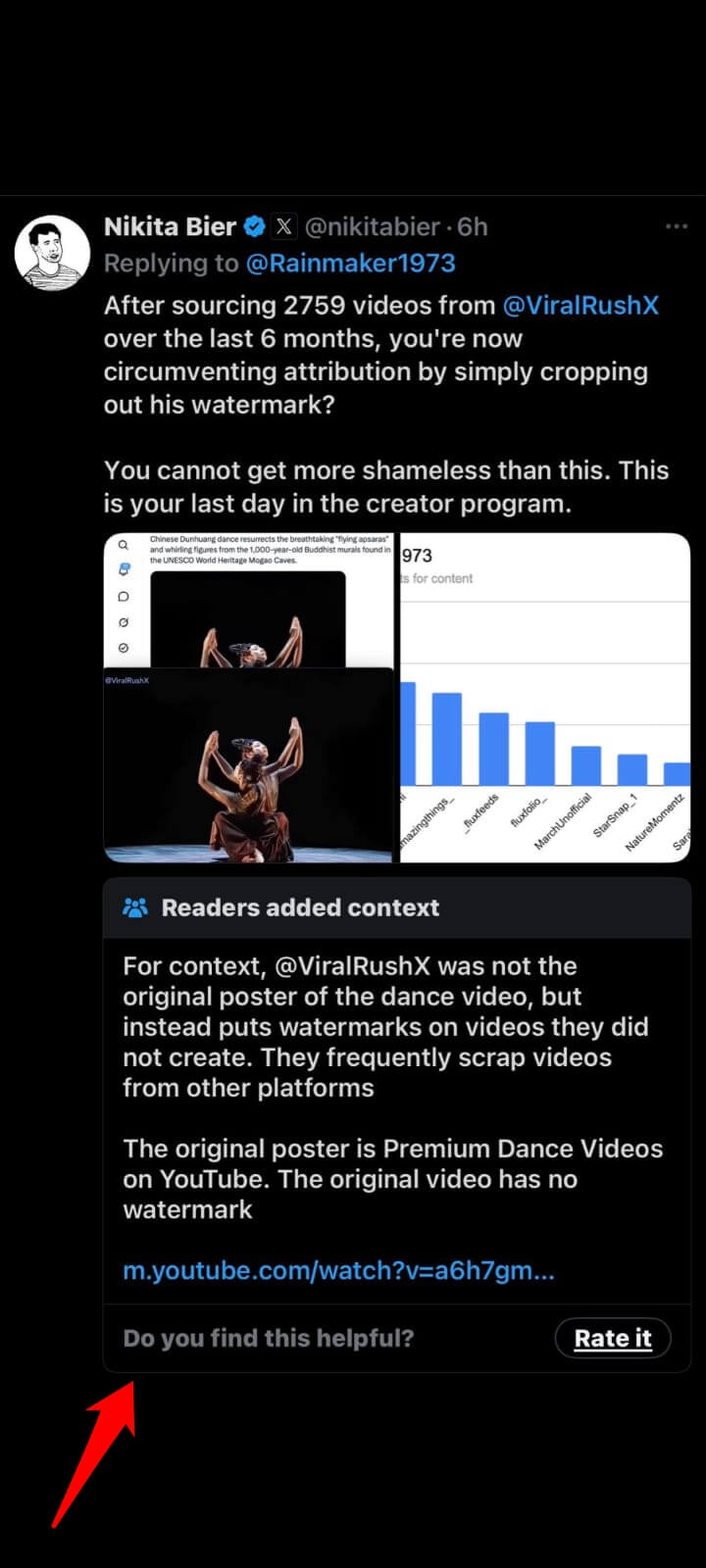
The Community Notes feature on X is something that I found useful. Especially when it comes to tackling misinformation, people use community notes to distinguish fact from fake news.
The X premium subscription not only provides a blue tick verification. You also get to edit your tweets, a longer character limit, and access to monetize content.
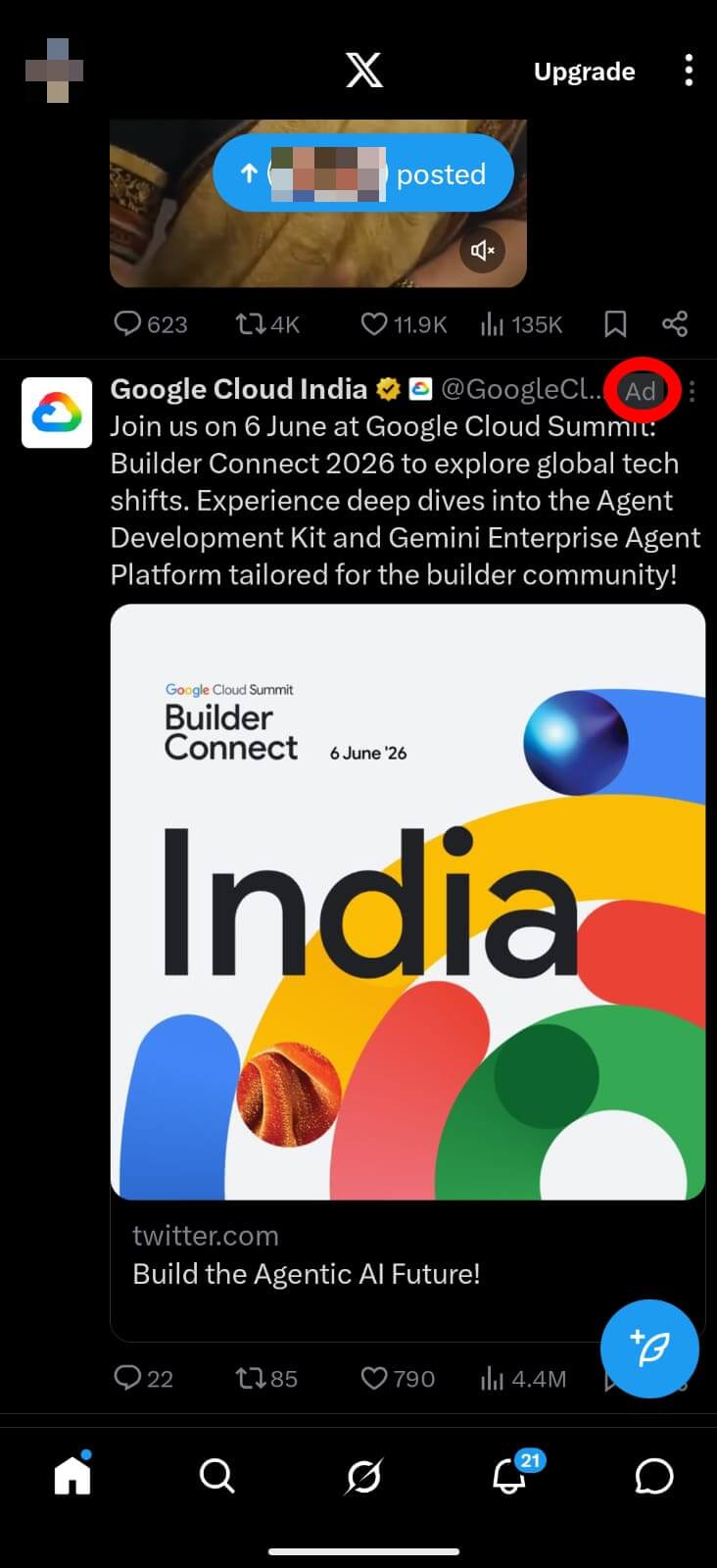
If you don’t have a Twitter subscription, get ready to see ads. That part was annoying. Ads can often confuse of as legit Tweets, though they are tagged as Ads, but most users may not see that when scrolling down the feed.
Also, I observed how X was all about free speech when Elon Musk bought it. Currently, free speech feels like a myth on X.
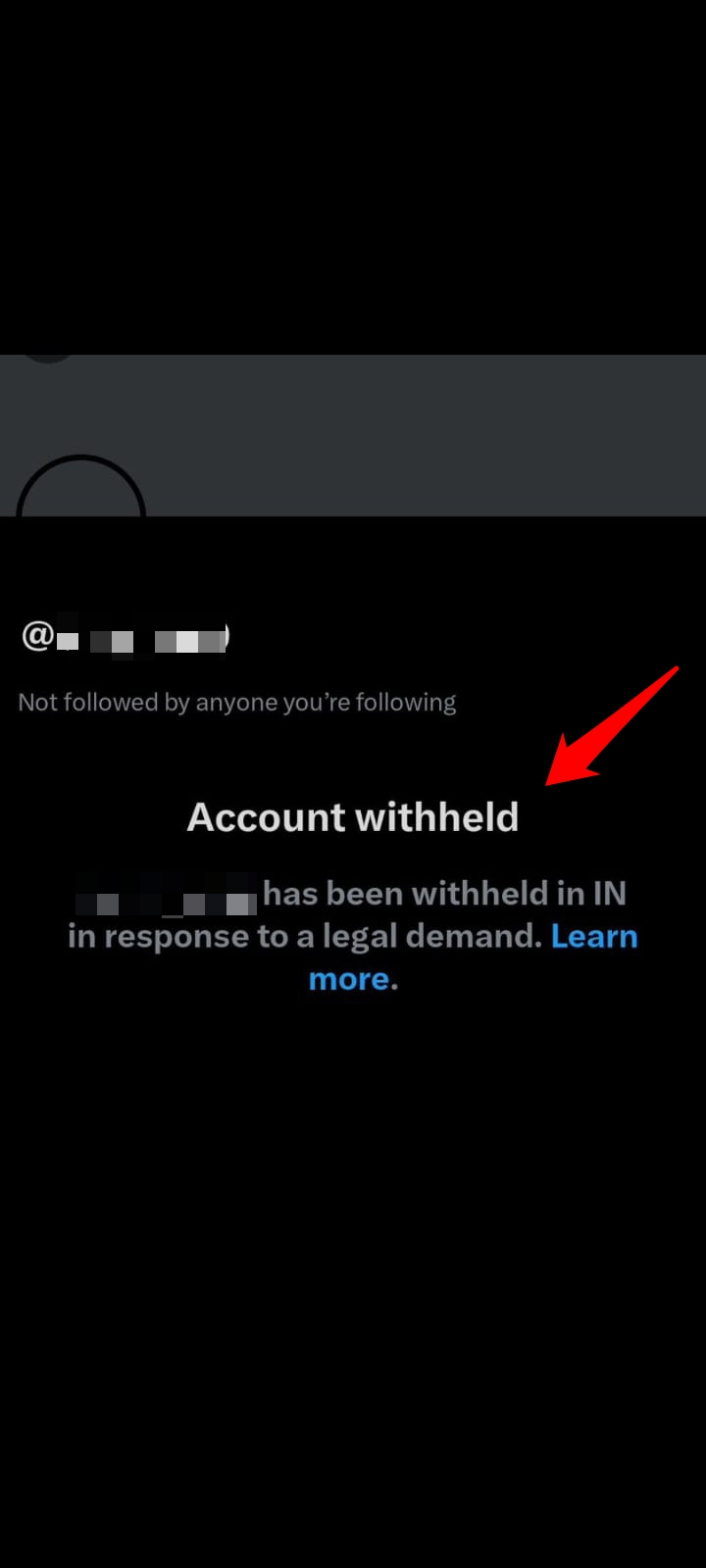
An X account can be withheld easily based on mass reporting or through a government directive based on political or ideological rivalry. Though correctly appealed and challenged, the ban might get revoked.
As a productive individual, I would prefer Reddit over X any day when it comes to finding a community or space for my interests. For me, news is something I can find through Google News or even Reddit.
Though we are not comparing Reddit in this article, the moderation and free speech on Reddit are better compared to X.

Threads: The smoothest onboarding and the flattest feed
Threads launched in 2023 and reached 400 million monthly active users by August 2025.
By June 2025, Similarweb measured 115.1 million daily active users, representing 127.8% year-over-year growth. Those are genuine numbers, and they reflect something real: Threads has the most effortless entry point of any platform in this comparison.
If you have an Instagram account, your follower graph imports automatically. You can have a populated feed within minutes of downloading the app.
That convenience has a cost that only becomes obvious a few days in. The algorithmic feed on Threads, the For You surface that Meta defaults you to, aggressively distributes content from accounts you did not follow.
This sounds like a solid feature. For growing an audience, it is. For consuming content, it creates a feed that feels like Instagram’s Explore tab accidentally became the whole app.
I spent a significant portion of my week on Threads looking at posts from creators with large followings that I had no interest in following, surfaced because they were performing well algorithmically that day.

The content texture on Threads in 2026 trends toward motivational quotes, short opinion takes optimised for saves, and promotional content dressed as personal reflection. That is partly an audience composition issue and partly a feed incentive issue.
What the algorithm rewards shapes what people post. Threads rewards shareable, broadly accessible content. The result is a feed that rarely surprises you in a way that feels personal.
Threads has 500-character posts, five-minute videos, and solid integration with Instagram for cross-promotion.
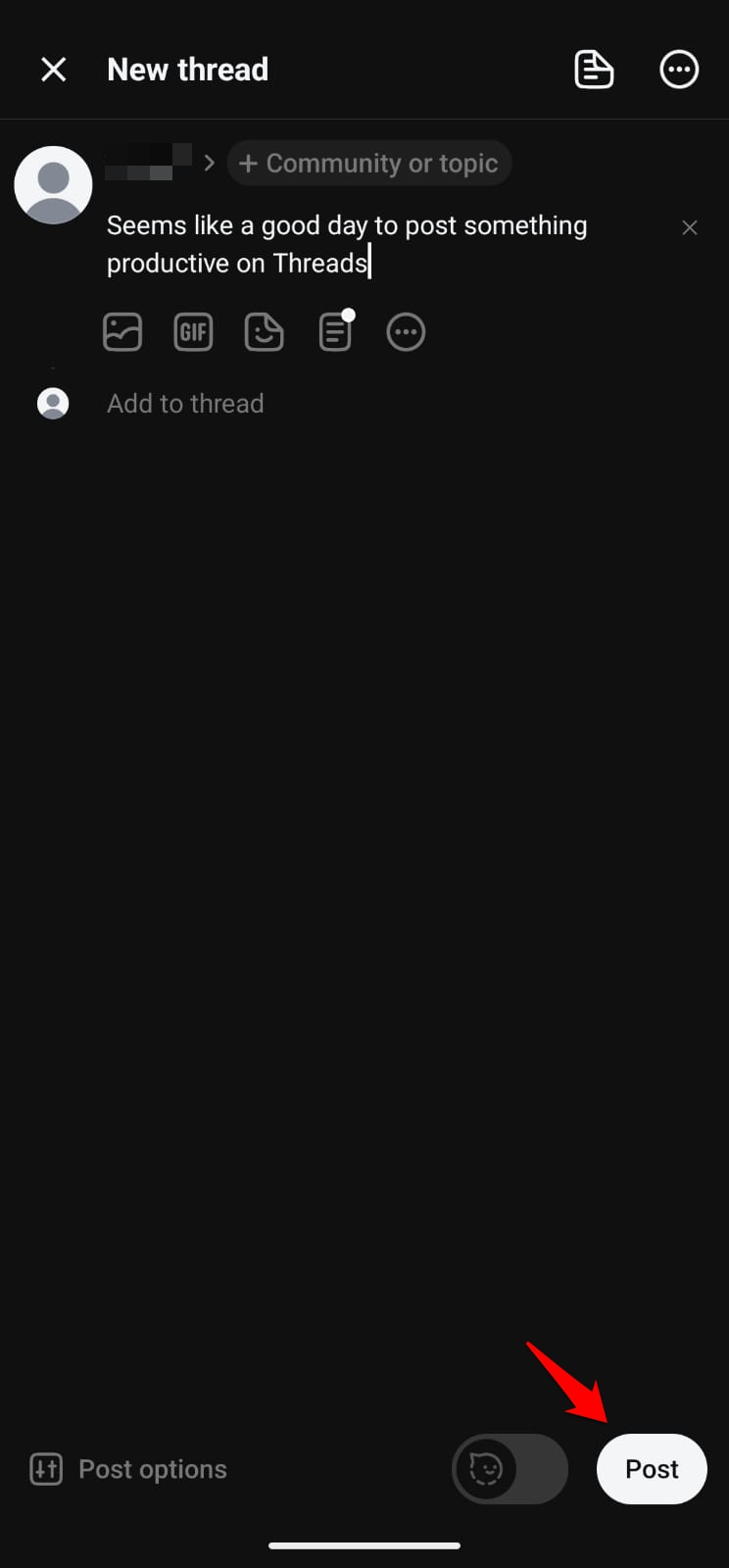
If your goal is to distribute content to a large audience quickly, the Meta infrastructure behind Threads is genuinely useful. If your goal is to find interesting conversations in a specific niche, a close-knit online community based on shared interests, Threads makes that harder than it should be.
Bluesky: the smallest room with the most interesting people
A couple of years ago, I came across the term decentralized social media. I was curious and wanted to know more. Social media that runs on independent servers. No single company controls the product. It cannot even own the user data.
Data hosting and content moderation are distributed across a network. Users have more ownership and privacy of their data. “This is cool,” I remember saying to myself.
Soon, I found myself on Bluesky, a free decentralized equivalent of Twitter. The interfaces share design similarities, but Bluesky has a far cleaner UI.
I came to know that Jack Dorsey is the founder of Bluesky, though he stepped down from the Bluesky board in 2024. Bluesky started as a decentralized social media initiative funded by Twitter in 2019.
Over the years, it saw a gradual rise in users. Bluesky has over 42 million total users and roughly over 4 million daily active users.
Against X’s 611 million monthly users and Threads’ 400 million, that is a small platform. The daily active user ratio of around 9% is low compared to established networks, which means most of the 42 million who registered are not showing up regularly.
The Following feed on Bluesky is purely chronological. No algorithm reordering your timeline. No posts surfaced from accounts you did not choose.
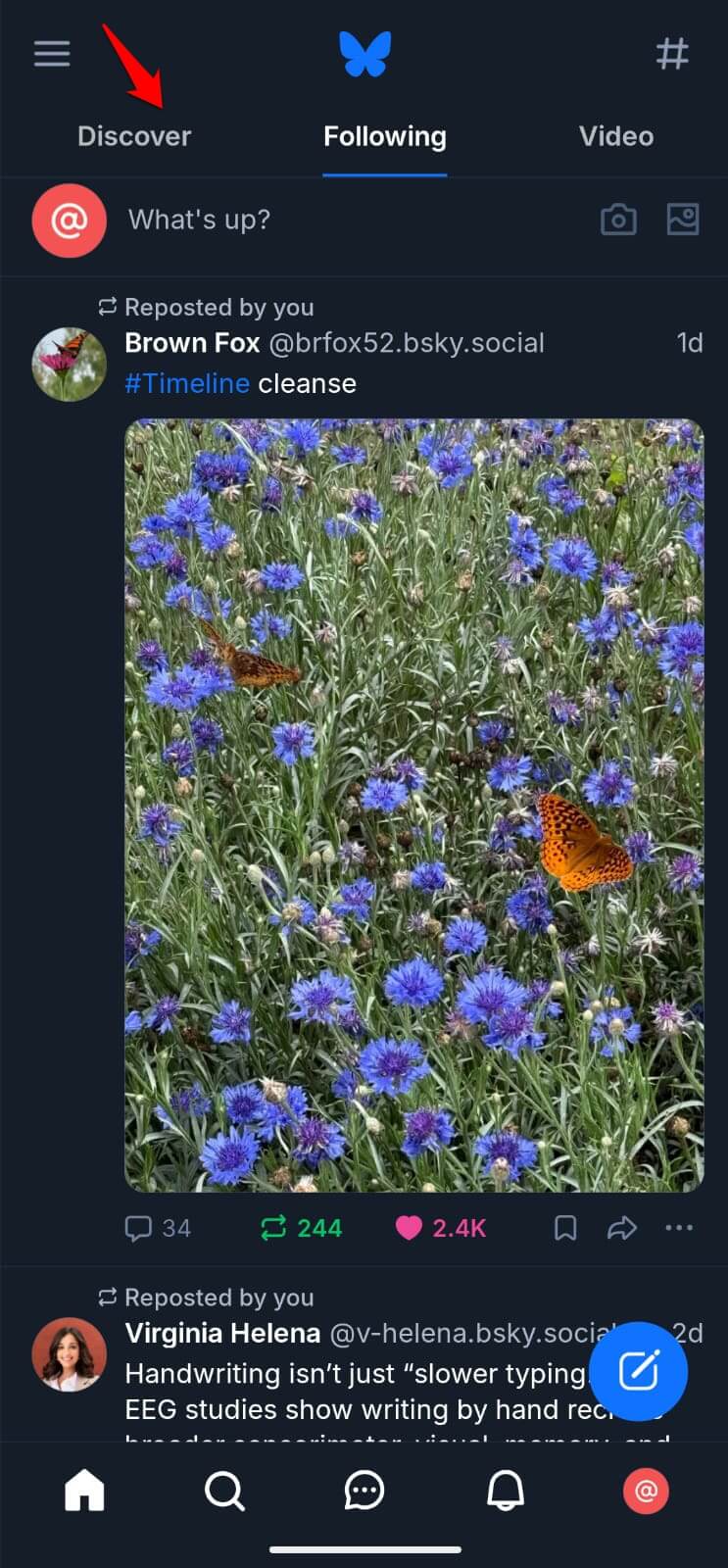
If you follow 200 people, you see the 200 people you chose to follow in the order they posted. That sounds simple because it is simple, and it is also apparently rare enough in 2026 to feel genuinely different.
Also, new accounts get to choose their area of interest based on which they are suggested users to follow and content on their feed.
Discovery on Bluesky works through custom feeds, which are user-built algorithmic filters around topics or keywords, and Starter Packs, curated bundles of recommended accounts you can follow in one tap.
On X, you get recommendations whether you want them or not. On Threads, you get them in your default view. On Bluesky, you find your community by doing the work of finding it, and once you have, the chronological feed keeps it.
After deploying a reply-filtering system that deprioritises hostile replies behind an additional click, Bluesky reported a 79% drop in daily reports of antisocial behaviour. That is a product intervention that changed the social texture of the platform in a measurable way.
The conversations I had on Bluesky in a week felt deeper than those on Threads or X. Not always more interesting in terms of topic, but more substantive in terms of reply quality. Bluesky had faced backlash for being too left-leaning and for stricter moderation.
My experience with Bluesky was good. But I still had a doubt. How meaningfully decentralized is Bluesky? It has been debated on Reddit multiple times. Bluesky is built on the AT Protocol, which is genuinely designed with decentralization in mind.
But design intent and actual decentralization are different things. The protocol allows anyone to run their own Personal Data Server (PDS), essentially owning their data and identity independent of Bluesky.
Your handle can be a domain you own, which is a meaningful portability signal. The data model (repositories, DIDs) is legitimately federated in the architecture.
But there is a caveat. The entire network currently runs through one relay operated by Bluesky PBC. Every post from every server flows through this single point to reach the main index.
If Bluesky shuts it down or decides to exclude your(a user’s) server, you effectively vanish from the network. That’s a profound centralization choke point.
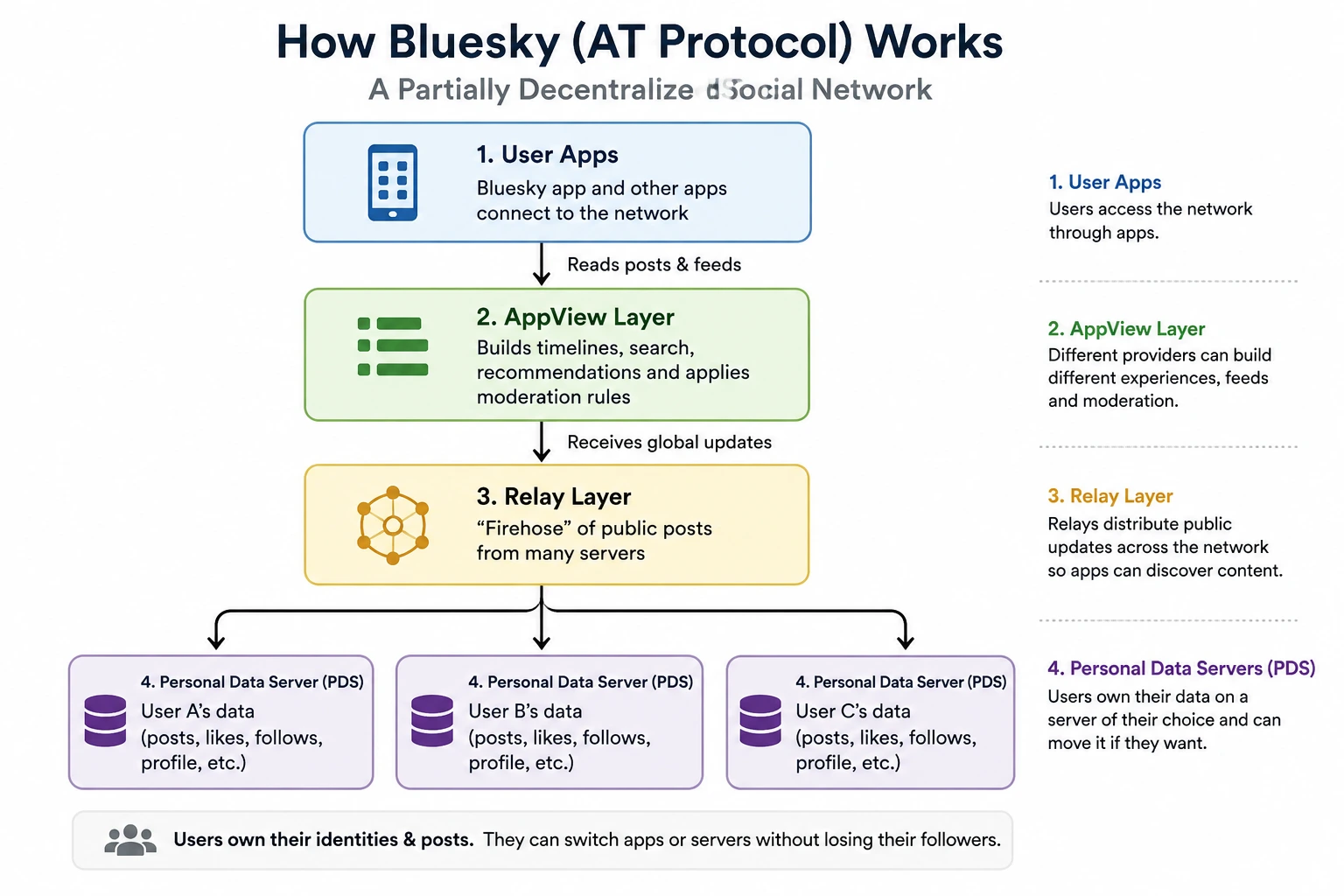
Similarly, the main appview (the thing that actually assembles your feed) is also run by Bluesky. The dominant client is Bluesky’s own app. So the entire stack of relay, index, and app belongs to Bluesky. The protocol is open; the infrastructure is not.
Until independent relays, appviews, and clients meaningfully exist at scale, Bluesky is functionally a Twitter-like service with decentralization as a future promise.
Still, in my experience, Bluesky felt like a breath of fresh air compared to the politically inclined and chaotic conversations of X or the seemingly directionless, randomly curated feed on Threads.
If you are looking for a better, simpler, and truly decentralized platform with crypto support for content creators, try “Nostr”. Interestingly, after Jack Dorsey distanced himself from Bluesky, he backed the Nostr project.

Bluesky vs Threads vs X: Which social media to use
After the week, I did not delete any of them. That surprised me. The more honest answer is that all three serve a different thing, and trying to find one winner misframes the choice.
X is irreplaceable for live events, political follow-ups, and breaking news. If you need to know what is happening right now and what primary sources are saying about it, X is still the answer. Misinformation could be a visible roadblock, and community notes may not be provided for all the cited tweets.
Threads is best for growing an audience among people who already use Instagram. The distribution engine is powerful, and the friction to reach new people is lower than any other platform in this comparison. If you are a creator, a brand, or anyone whose primary goal is reach rather than conversation, Threads gives you that at low cost.
Bluesky was the one I came back to on day eight, when the experiment was technically over. I somehow appreciate its UI. It feels fluid and simple.
Though not truly decentralized, the small userbase, the chronological feed, the lack of algorithmic noise, and the quality of conversation in the specific communities I had found made Bluesky interesting. That’s just me. It might be different for you.