If Google search feels less useful than it did a few years ago, you are not imagining it. The results that show up for the same query in 2026 look meaningfully different from what appeared in 2022, and not always in ways that benefit the person searching.
This is not a rant. The changes are documented, the causes are traceable, and some of them were genuinely well-intentioned. Understanding what actually shifted helps explain both why search feels worse for certain queries and what you can do about it.
Why Google search results are getting worse: The background
Google has always adjusted its algorithm. What changed between 2022 and 2026 is the scale and direction of those adjustments, combined with a structural shift in what the web itself produces.
Three things happened roughly in parallel: Google launched a series of major algorithm updates targeting content quality, AI-generated content flooded the web at a scale the algorithm was not prepared for, and Google redesigned the results page itself to surface more of its own features and less of the open web.
Each of those deserves a closer look.
The Helpful Content Update and what it actually did?
In August 2022, Google launched what it called the Helpful Content Update, or HCU. The stated goal was to reduce content written primarily for search engines rather than for people. A follow-up update in September 2023 expanded its scope significantly.
In principle, that is a reasonable target. In practice, the update hit harder than intended on a specific category of site: independent, specialist publishers that had built genuine audiences over the years.
Sites covering niche topics in health, personal finance, travel, and consumer reviews reported traffic drops of 50 to 90 percent in the months following the September 2023 update.
Some disappeared from the results almost entirely. Google confirmed in early 2024 that the HCU had caused “unintended ranking drops” for some sites and pledged to address it in future updates.
What filled the gap was not always better content. In many cases, it was larger domain authority sites that covered the same topic with less depth, or aggregators that summarized information from the smaller sites that had just been demoted.
The March 2024 core update attempted to correct some of this, and Google claimed it reduced unhelpful content in results by 45 percent. Independent SEO researchers noted the change was real but uneven, with some demoted sites recovering and others remaining suppressed.
AI-generated content and the scale problem
The HCU was designed before generative AI became a mass publishing tool. By 2023, the web was filling with AI-generated articles at a volume no previous spam wave had matched.
The difference from earlier content farms is not just quantity. Earlier spam was often detectable by poor grammar, keyword stuffing, or obvious machine translation.
AI-generated content reads fluently, passes basic quality filters, and can be produced at effectively zero marginal cost per article.
A 2024 analysis by originality.ai estimated that over 50 percent of newly published web content contained substantial AI-generated text. Google’s systems were trained to reward well-written, topically comprehensive content.
AI-generated articles satisfy both of those signals superficially without necessarily providing accurate or useful information.
The result is a category of search queries where the top results are fluent, well-structured, and subtly unreliable. Product reviews that have never touched the product.
Health explainers that are technically accurate but strip-mined from better sources. There are travel guides that are generated from other travel guides.
Google has said it targets the quality of content rather than the method of production, which is the correct policy position. The enforcement gap between that position and what actually ranks is where the user experience has degraded.
Why has Reddit started appearing everywhere in the search results?
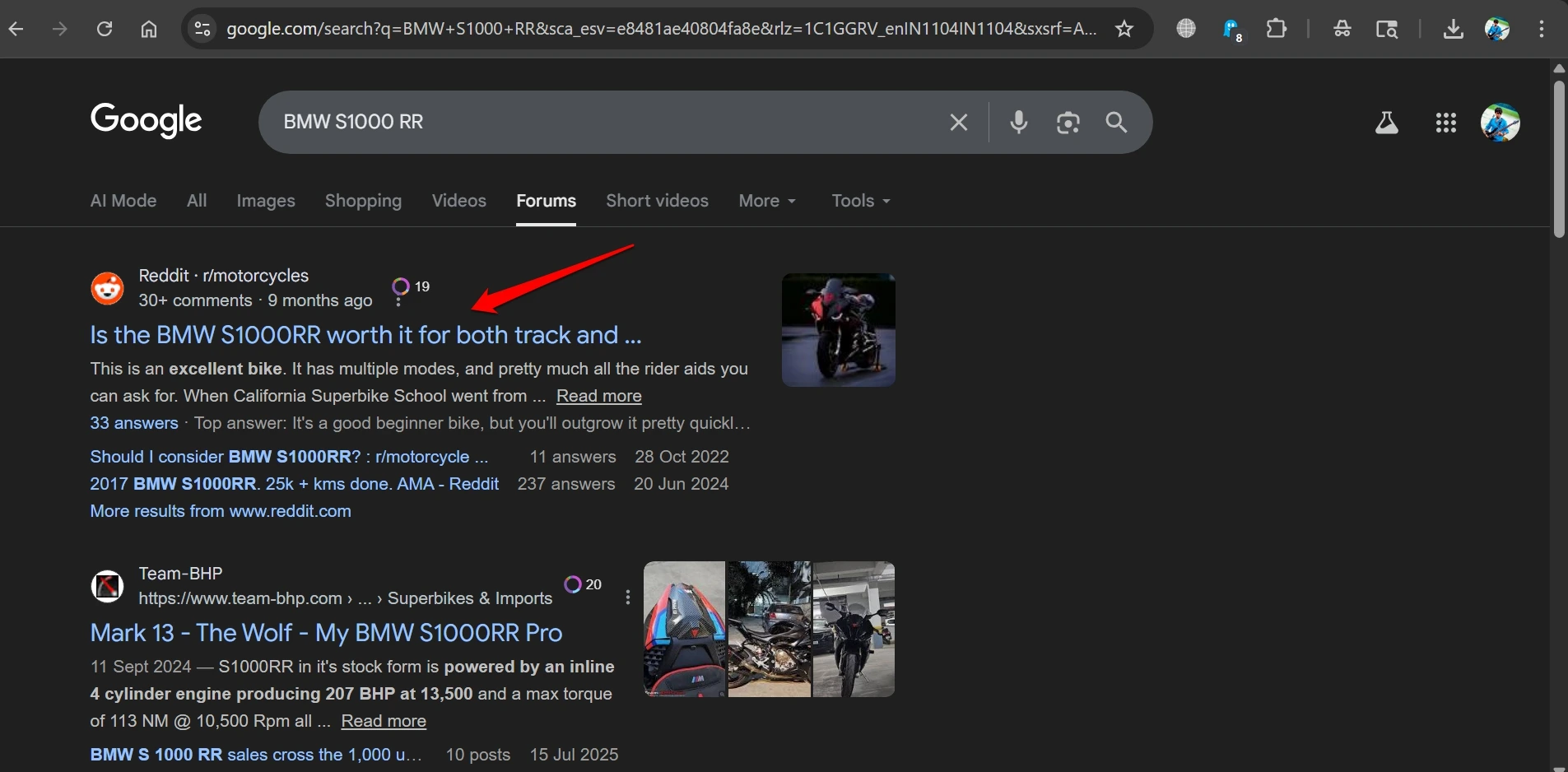
One of the most noticeable changes in results over the past two years is the prominence of Reddit. Searches for product recommendations, software comparisons, personal finance questions, and health experiences now routinely surface Reddit threads in the top five results.
This did not happen by accident. In February 2024, Google signed a licensing deal with Reddit, reported to be worth around $60 million per year, giving Google access to Reddit’s Data API for training AI models.
The timing of Reddit’s increased visibility in search results relative to that deal has been noted by multiple SEO researchers, though Google has not confirmed a direct connection.
I have cited an example to validate this issue through the screenshot you see above. For a term I searched, Reddit discussions regarding the search terms appear at the top of the first page of search results.
The separate explanation Google offers is that users increasingly add the word “Reddit” to their searches when looking for real human opinions, which the algorithm interprets as a quality signal for Reddit content generally.
Both things can be true simultaneously. Reddit threads often contain more authentic, experience-based information than polished SEO articles on the same topic.
At the same time, it cannot be denied that they also contain outdated advice, unverified claims, and arguments that go nowhere.
The promotion of Reddit is not uniformly bad, but it reflects a broader acknowledgment that the open web has a trust problem Google helped create.
How have featured snippets changed?
Featured snippets, the boxed answer that appears above organic results, existed in 2022. What changed is their coverage, their confidence, and the introduction of AI Overviews alongside them.
In 2022, featured snippets appeared for a subset of clearly factual queries and pulled text from a specific source, which was cited visibly.
By 2025, AI Overviews had largely absorbed and expanded this function, generating synthesized answers from multiple sources without always making those sources easy to identify or verify.
A 2025 study by Pew Research found that users were half as likely to click through to a source when an AI Overview was present. For publishers, that means less traffic for content that was surfaced and used.
For users, it means answers that carry the visual authority of a definitive result but lack the accountability of a named, linked source.
The factual error rate of AI Overviews has been documented publicly. In May 2025, Google AI Overview told users that the current year was 2024. Earlier incidents included recommending glue as a pizza ingredient and misidentifying Barack Obama’s religion.
Google has fixed individual errors when they surface publicly, but the structural issue, presenting synthesized answers with high visual confidence, remains.
What Google search looked like in 2022 versus 2026?
Consider a query like “best budget noise-cancelling headphones.” In 2022, that search returned a mix of dedicated audio review sites, long-form buyer’s guides from tech publications, and the occasional Reddit thread.
The top results typically reflected hands-on testing.
The same search in 2026 returns an AI Overview at the top, synthesizing recommendations from sources it does not clearly identify.
Below that sit shopping carousels, ads, and a mix of publisher content ranging from genuine review sites to AI-generated roundups that list products the author has never handled.
Finding a result that combines real testing with current pricing requires more effort than it did three years ago.
This pattern repeats across health queries, software comparisons, local service searches, and how-to content. The page is busier, the AI answer is prominent, and the signal-to-noise ratio of the organic results has declined for a meaningful share of queries.
Not every query type degraded equally. Searches for recent news, navigational queries, and clearly factual lookups still return useful results quickly.
The degradation is concentrated in the research and recommendation space, exactly where users most need reliable information.
What Google got right?
This analysis would be incomplete without acknowledging the genuine improvements.
Spam removal has been real. The March 2024 core update, combined with new spam policies targeting scaled content abuse and expired domain misuse, removed a large volume of low-quality results that had clogged searches for years.
Certain categories of query, particularly local searches and medical information, improved noticeably.
Google’s SafeSearch improvements and its handling of potentially harmful health queries have also been documented positively by public health researchers.
The algorithm is better at not surfacing dangerous misinformation for queries about medication, self-harm, and emergencies than it was in 2022.
The picture is genuinely mixed. The same update cycle that cleaned up spam also caught legitimate publishers in the crossfire. The AI features that sometimes mislead also sometimes save real time.
The honest description is a search engine that is better at some things and worse at others than it was three years ago, with the “worse” category mattering more to the users who relied on it for research.
How to search better right now?
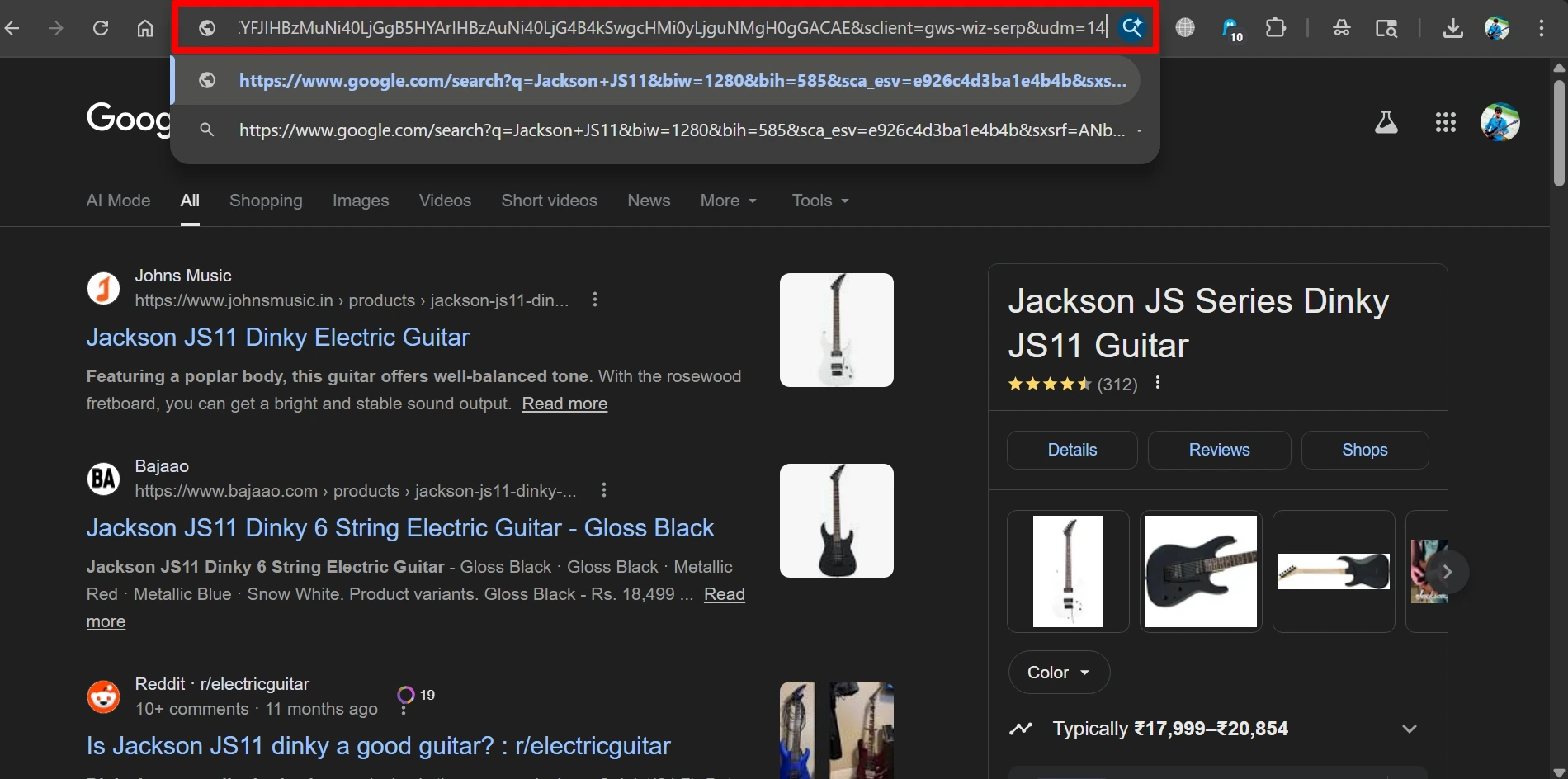
Given where things stand, a few adjustments make a meaningful difference.
Adding &udm=14 to your Google search URL, or setting it as your default search engine in Chrome, forces results into Web mode. This strips out AI Overviews, featured snippets, and most of the clutter, returning traditional blue-link results. It is the single most effective change for research-heavy searches.
For product research, appending “reddit” to your query still surfaces real user experience efficiently, though treat individual recommendations with appropriate skepticism and check the date of the thread.
For health, legal, or financial queries, going directly to primary sources, government health portals, official documentation, and institutional research, bypasses the synthesis layer entirely. Google is a useful starting point for finding those sources; it is less reliable than the source itself.
The broader shift is treating Google as a directory to navigate rather than an authority to trust. That is how it worked best in 2022. It still works that way if you approach it with that expectation.
Frequently asked questions
Did Google’s algorithm updates make search worse intentionally?
No. The documented intent of updates like the HCU was to improve quality. The degradation for some query types was a side effect of imprecise targeting and the scale of AI-generated content entering the web simultaneously.
Is Bing or another search engine better now?
For some query types, yes. Bing’s results for technical and product searches have improved, and Kagi offers a paid alternative with no advertising influence on rankings. Neither has fully closed the gap with Google on breadth, but the gap has narrowed.
What is the udm=14 trick for Google search?
Adding &udm=14 to a Google search URL forces Web mode, which shows traditional link-based results without AI Overviews or most featured content. It can be set as a permanent default in Chrome’s search engine settings.
Why does Google show Reddit results so often now?
Partly because users signal preference for Reddit content by adding “reddit” to searches, which the algorithm treats as a quality signal. A $60 million licensing deal between Google and Reddit, signed in February 2024, has also been cited by researchers as a likely contributing factor, though Google has not confirmed a direct ranking connection.
If you've any thoughts on Google search results feel worse than 3 years ago – What has changed?, then feel free to drop in below comment box. Also, please subscribe to our DigitBin YouTube channel for videos tutorials. Cheers!