Samsung Display’s Investment Review Committee has approved framework construction for a new OLED production line at Asan Campus 2, restarting a project the company shelved years ago over weak market demand.
The new line, internally named A7, opens for bidding this month, with full construction starting next year and completion targeted for early 2028, according to Maeil Business Newspaper. The timing lines up with a foldable phone market that looks nothing like it did five years ago.
Galaxy Z Fold 8 preorders reportedly hit 1.44 million in South Korea within a week of launch, and Apple’s first foldable iPhone is expected to lean on the same Korean supplier for its screen.
TL;DR: Samsung Display is restarting construction at Asan Campus 2, a foldable OLED site it paused years ago. The new A7 line targets completion in early 2028, with bidding opening this month. Galaxy Z Fold 8 demand and Apple’s rumored foldable iPhone, which is expected to lean on Samsung Display for its screen, are the two forces behind the decision. It is the first real movement on this site in years.
Samsung’s OLED factory sat idle for years, until now
Asan Campus 2 has been a paused construction site for most of this decade. Samsung Display began developing it in 2017, then stopped work as smartphone and IT panel demand softened.
Samsung Display CEO Lee Chung confirmed the project was moving again while speaking to reporters at K-Display 2026 in Seoul in July. “We are preparing now,” he said. “It is something we committed to publicly, so we intend to move forward without delay,” according to The Elec.
Campus 2 sits alongside Samsung Display’s existing Asan production lines and forms part of a larger 67 trillion won investment tied to Samsung Group’s 140 trillion won Chungcheong region plan. That is a lot of money to leave idle, and the fact that Samsung is finally spending it says something about where demand has shifted.
| Milestone | Timing |
|---|---|
| Original Campus 2 groundwork | 2017 |
| Construction paused | Early 2020s |
| CEO confirms restart is underway | July 22, 2026 |
| A7 line bidding opens | August 2026 |
| Full construction begins | 2027 |
| Targeted completion | Early 2028 |
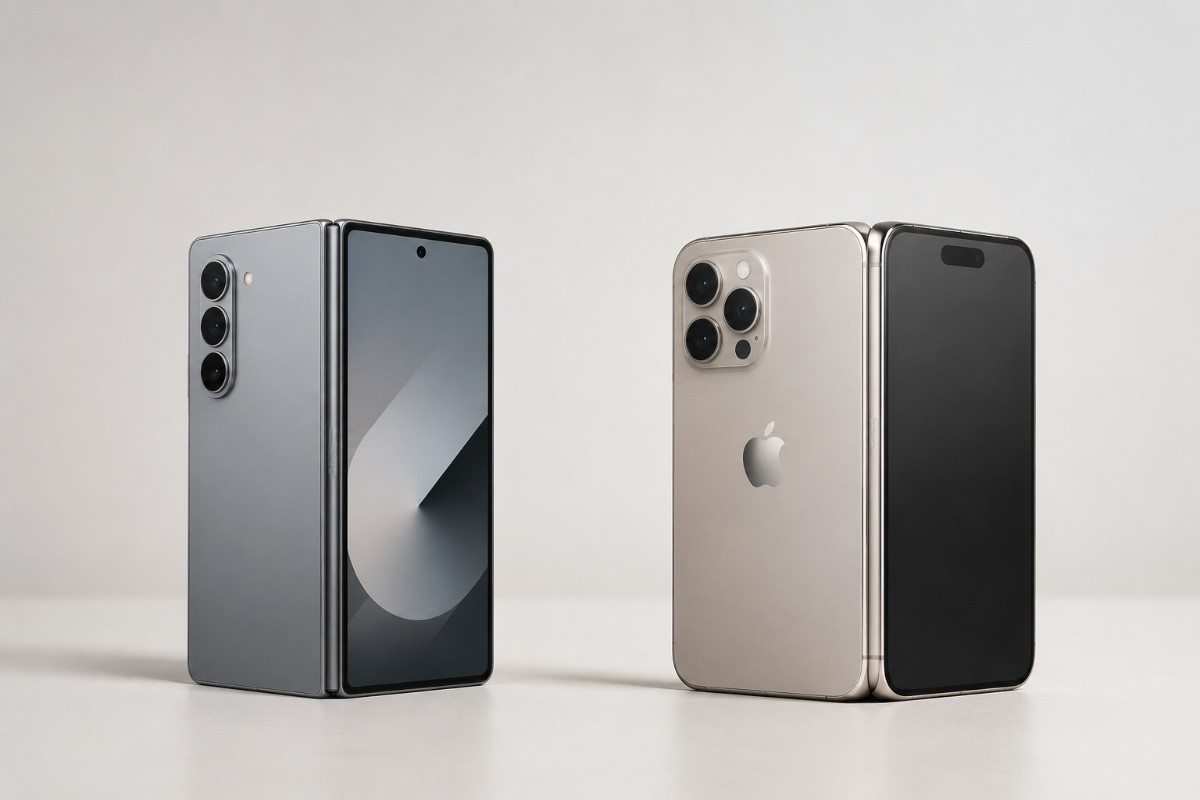
The Galaxy Z Fold 8 gave Samsung the demand it needed
Galaxy Z Fold 8, Z Fold 8 Ultra, and Z Flip 8 preorders reportedly reached 1.44 million within seven days in South Korea, with US preorders for the Fold line running roughly 30 percent ahead of the previous record, according to regional preorder figures cited by Sammy Fans.
That is not a small bump. Foldable panels eat up close to three times the display area of a regular phone screen, so every unit sold pulls harder on Samsung Display’s manufacturing capacity than a standard Galaxy S phone would.
Lee also pointed to a narrower but important claim about where Samsung stands. “Excluding Chinese customers and Chinese panel makers, Samsung Display holds an overwhelming share of the foldable display market,” he said, adding that the company believes it remains ahead on quality, durability, and overall display performance. Recent Galaxy Z Fold 8 and Wide Fold leak coverage suggests Samsung is not slowing down on new form factors either, which only adds to the capacity pressure.
None of that changes the fact that Chinese panel makers keep investing too. Samsung’s factory decision reads less like confidence and more like a company that knows the lead will not hold itself.
Apple’s foldable iPhone raises the stakes for Samsung Display
Apple is expected to unveil its first foldable iPhone at a September 9 event, according to Bloomberg’s Mark Gurman. Samsung Display is widely expected to supply the panel, which would make Apple a second major customer competing for the same production lines Galaxy Z Fold 8 already strains.
That is a different kind of pressure than a typical iPhone launch creates. Apple does not order small batches, and a foldable panel is not something Samsung Display can source from a backup line the way it might for a standard OLED screen.
Apple’s own iPhone Fold hinge design has drawn attention for its liquid metal construction, but the screen underneath it is just as much of a bottleneck. Two flagship foldables launching within months of each other, both leaning on the same Korean supplier, is exactly the kind of demand spike that turns a paused construction site back into an active one.
What this means for foldable phone prices and supply
A factory that will not finish until early 2028 does nothing for anyone trying to buy a foldable phone this year or next. Galaxy Z Fold 8 supply and pricing through 2027 depend on Samsung Display’s existing lines, not the new one.
What it does signal is confidence that foldables are no longer a niche Samsung has to subsidize into existence. When a display maker commits multiple years and a chunk of a 67 trillion won budget to a single product category, that category has moved from experiment to core business.
For buyers, the more immediate effect is indirect. Tighter panel capacity over the next two years, split between Samsung’s own foldables and Apple’s first one, is one more reason foldable prices have stayed firm rather than dropping the way standard flagship phones eventually do.