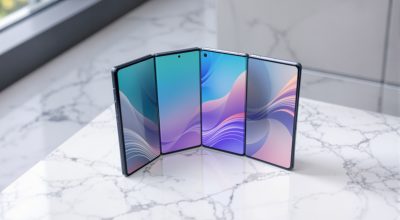
Samsung says the Galaxy Z Fold8 weighs 201 grams, and the company just published exactly how it got there. A new engineering breakdown from Samsung’s Global Newsroom traces the design work behind cutting 52 grams off the Z Fold5’s 253-gram body, without shrinking the battery or dropping a camera. For anyone who has picked up a Z Fold and felt its heft, or skipped one because of it, this is the most detailed look yet at what Samsung actually changed inside the device, down to parts that shed a fraction of a gram.
TL;DR: Samsung’s Galaxy Z Fold8 weighs 201 grams, 52 grams lighter than the Z Fold5, making it the lightest book-style foldable Samsung has shipped. The reduction came from three sources: precision-machined display and hinge parts, new materials like Flex Titanium and Advanced Armor Aluminum, and a review of roughly 270 components down to 0.001-gram savings. The saved weight went back into battery and camera upgrades on the Ultra model, not thinner specs.
Samsung’s foldables have gotten lighter every year since 2019
Samsung’s first Galaxy Fold weighed 276 grams in 2019. The Z Fold5 slimmed to 253 grams, the Z Fold6 dropped to 239 grams, and the Z Fold7 reached 215 grams, a target Samsung set specifically to land lighter than the 218-gram Galaxy S25 Ultra.
The Galaxy Z Fold8 pushes further to 201 grams, a total drop of 52 grams since the Fold5. Samsung’s own comparison against commercially available book-style foldables calls it the lightest fold sold today.
| Galaxy Z Fold generation | Weight |
|---|---|
| Galaxy Fold (2019) | 276g |
| Galaxy Z Fold5 | 253g |
| Galaxy Z Fold6 | 239g |
| Galaxy Z Fold7 | 215g |
| Galaxy Z Fold8 | 201g |
The number itself surfaced in a pre-launch leak months before Unpacked, when a Samsung leaker attached 201 grams to what was then called the Galaxy New Fold. What Samsung published this week is not the number itself, but the engineering behind reaching it.
The precision problem inside a thinner foldable
Making a foldable lighter creates its own physics problem. Every layer inside the display, every metal plate supporting it, and the hinge itself all have to get thinner without losing structural integrity.
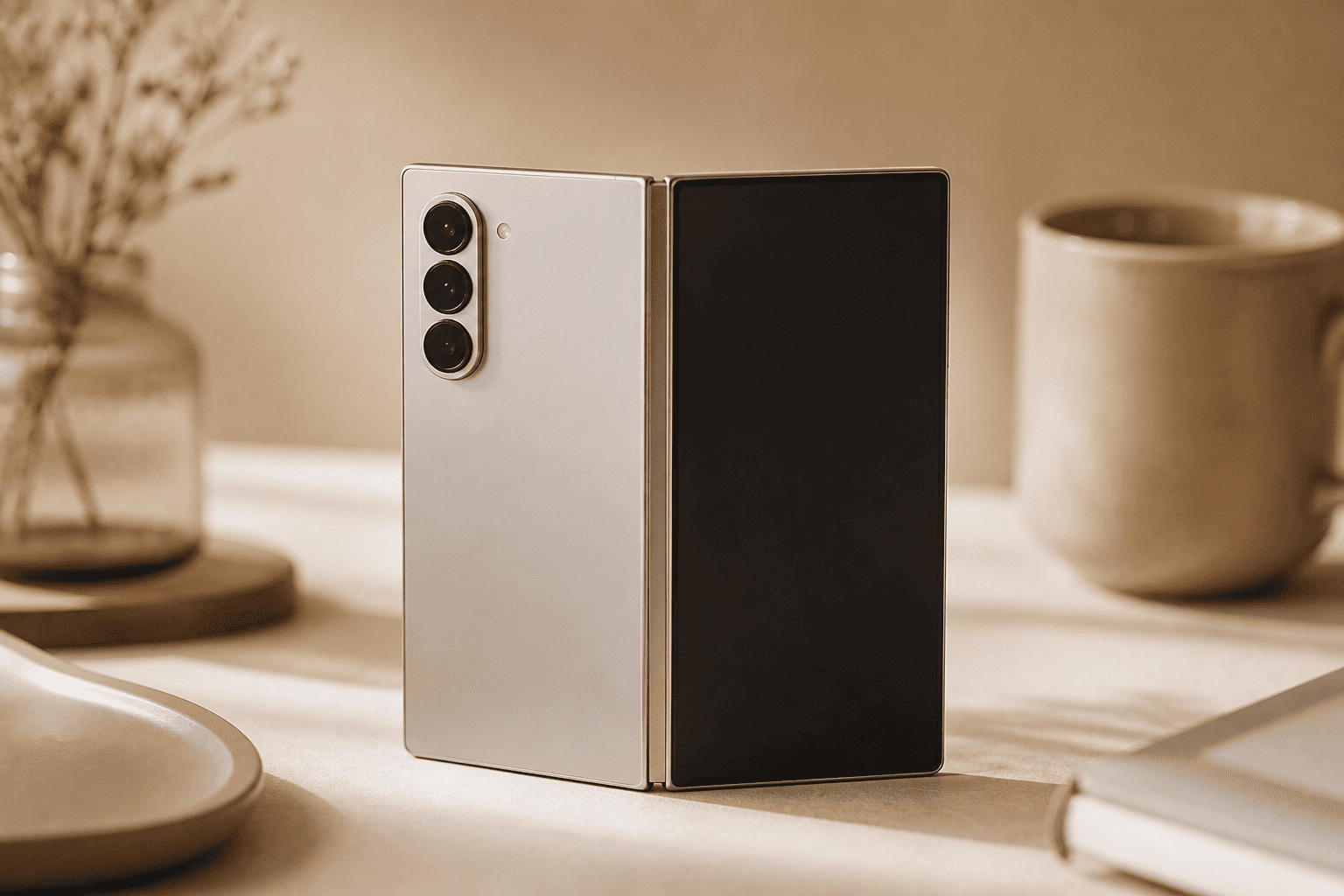
Samsung’s answer for the display layer is Flex Titanium, built around a Titanium Alloy Film roughly one-third the width of a human hair. The metal plate underneath is machined down to about 0.2 millimeters, with the thinnest sections reaching 0.15 millimeters.
Thinner metal warps more easily during machining, so Samsung says it reworked the machining sequence, tooling, and cooling stages to hold shape and flatness at that scale. Apple is chasing a similar thinness problem from a different angle with its own liquid metal hinge on the iPhone Fold. Samsung’s hinge, by contrast, gets engineered per device size rather than scaled down from a larger sibling.
Three materials, each doing a different job
The second lever is materials. Flex Titanium covers the display. Advanced Armor Aluminum covers the exterior frame, aimed at holding strength in a thinner shell.
Thermal management got its own material change. Samsung says it used graphite with improved thermal performance, and in the Z Fold8 Ultra specifically increased the volume of the graphite heat-dissipation layer by about 7% compared with the similarly sized Z Fold7.
Clad Metal, a layered combination of different metals, sits inside the rear of the device to cut weight while keeping heat performance intact. None of these choices are about picking the lightest material available. They are about matching the material to what each part of the phone actually needs to do.
A parts review that reached 0.001 grams
The third source of savings is the least glamorous and, by Samsung’s account, the most labor-intensive. Engineers reviewed approximately 270 components and more than 180 types of auxiliary parts, spanning the display, hinge, cameras, circuit boards, antennas, brackets, tapes, and fasteners.
Roughly 15 of those auxiliary part types were eliminated outright. The remaining 170 were trimmed, reshaped, or consolidated into single structures, with some savings measured in increments as small as 0.001 grams.
The printed circuit board was redesigned to remove unnecessary circuits and shrink its footprint. The MFC antenna was reworked to cut overlap with nearby components. Individually, each change is close to meaningless. Stacked across a device with hundreds of parts, fractions of a gram become whole grams. That distinction, saving weight to spend it elsewhere rather than to hit a headline number, is the detail most foldable coverage skips.
The weight Samsung saved went back into the Fold8 Ultra
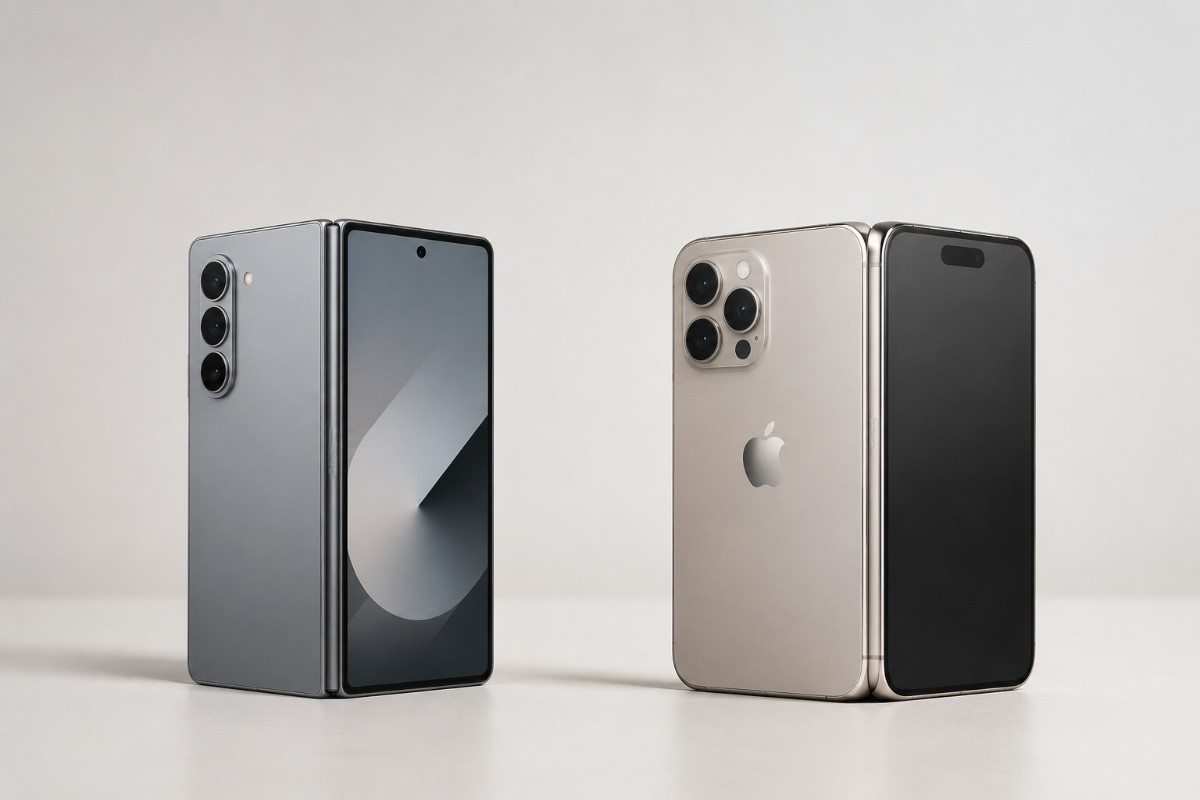
The clearest evidence that this was never just about a smaller number sits in the Z Fold8 Ultra. It shares similar overall dimensions with the Z Fold7 and weighs the same 215 grams, but its battery grew from 4,400 mAh to 5,000 mAh, a jump that on its own adds roughly 6 grams.
Samsung says it found that weight back through the same systematic process applied everywhere else: materials, circuit layout, component placement, and internal space optimization that reduced overlap between the display, circuits, antennas, and surrounding parts.
The result is a Z Fold8 Ultra with a 200MP main camera, the first 50MP Ultra-Wide camera on a Z Fold device, and a larger battery, all inside the same weight class as last year’s model. A 2024 YouGov survey found that bulky, heavy design remained a top reason consumers hesitated on foldables, while battery life and durability topped the list for people already considering one. Samsung’s own numbers suggest this generation was built to answer both concerns at once, not trade one for the other.