OpenAI is rolling out a new voice model for ChatGPT called Bidi 1, and early testing shows it works in a way that the current Advanced Voice Mode does not. The model runs bidirectionally, meaning it can speak and listen at the same time rather than waiting for you to finish before responding.
It is already appearing in the ChatGPT app for a select group of users on iPhone and Android, and a broader release is expected this week according to TestingCatalog, which conducted early tests and spotted it first. For anyone who has talked at ChatGPT only to be cut off or have it lose track of what was said three exchanges ago, the change here goes deeper than a version bump.
TL;DR: ChatGPT’s Bidi 1 voice model lets the assistant speak and listen simultaneously, handling interruptions naturally and retaining context across longer conversations. It sits in the model selector alongside Advanced Voice Mode and turns the voice bubble yellow when active. A select group of Android and iPhone users already have access. A broader release is expected this week. OpenAI has not officially announced it.
What the bidirectional design actually changes
The current Advanced Voice Mode is a turn-based system. You speak, it waits, it responds, then waits again. That structure breaks down the moment a conversation gets natural. You pause mid-thought, and the model jumps in. You want to redirect it mid-sentence, and it finishes the sentence anyway before reacting.
Bidi 1 addresses both. In early testing documented by @testingcatalog, the model gave small, natural acknowledgments when a user slowed down without cutting across them. When asked to count to ten and then interrupted mid-count to reverse the order, it switched immediately rather than completing the original task first. That responsiveness is what the current voice layer has never had.
Context retention is the other fix. Advanced Voice Mode tends to drop earlier context in longer sessions, a weak point that makes extended conversations feel disconnected. Bidi 1 holds the full thread, which is what makes the upgrade feel significant rather than cosmetic.
Where Bidi 1 sits inside the ChatGPT app
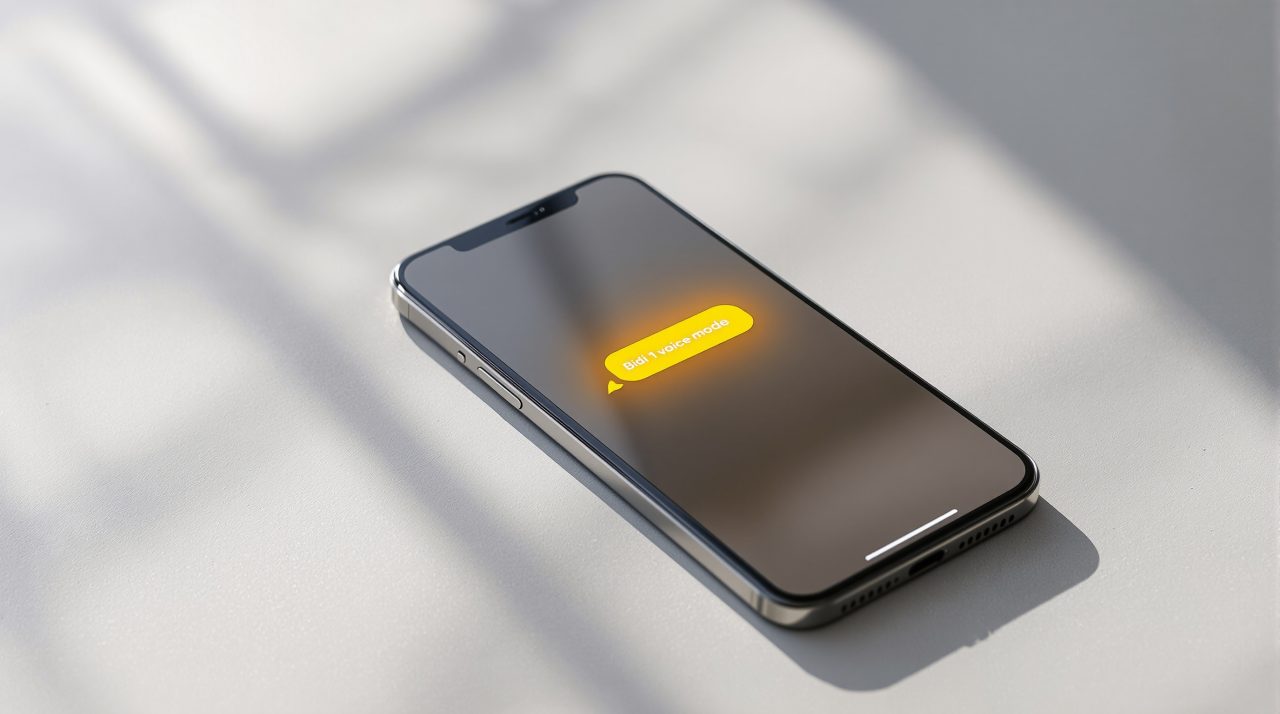
The model appears in the settings model selector alongside the standard and advanced voice options. Selecting it turns the voice bubble yellow, making it visually distinct from the current mode. Users also get three intelligence levels: High, Medium, and Instant, mirroring the tiers already available on the text side of the app.
Researcher @M1Astra, who first spotted code references to Bidi 1 on June 16, noted that the voice bubble can now be dragged to the center of the screen. That UI change reads as part of the same broader redesign that Bidi 1 arrives with, not a standalone tweak.
Real-time translation is also included in what the model can do, expanding ChatGPT voice across multilingual conversations without requiring a separate mode switch. The question that shapes how much this matters is why all of it is arriving now rather than earlier.
Why OpenAI is closing the gap between text and voice now
The text side of ChatGPT moved quickly over the past year. GPT-5.5 and its subsequent iterations pushed reasoning and writing capabilities well ahead of where they were twelve months ago. The voice layer did not keep pace, running on an older audio stack that left spoken conversations a step behind what the same models could handle in writing.
Code references spotted by @M1Astra described Bidi 1 internally as “the next generation of Voice” and “a major leap in intelligence,” unusually direct language for internal labeling. The gap it closes is less about voice quality and more about coherence: a text conversation can hold hundreds of messages in context, while the voice equivalent has historically lost the thread after a handful of exchanges.
Voice is also becoming the primary way people reach AI on phones. Apple shipped a rebuilt Siri AI with iOS 27, and both Gemini and Claude on Android are now positioned as voice-capable alternatives. OpenAI putting real engineering into its audio layer is less about adding a feature and more about staying relevant in the part of the product most people actually use on their phones.
Who gets it and what is still not confirmed
The rollout has already started. TestingCatalog confirmed Bidi 1 is reaching a subset of ChatGPT app users on Android and iPhone ahead of a broader release expected this week. OpenAI has not officially announced the model, shared timing details, or confirmed which user tiers get priority access.
Users in the EU may wait longer for access, though that has not been officially confirmed by OpenAI. The current Advanced Voice Mode will coexist with Bidi 1 as a separate option in the selector, meaning existing users are not being moved over automatically. Choosing Bidi 1 will be an opt-in switch, at least at launch.
Codex, OpenAI’s coding environment, is also expected to receive its own separate voice upgrade in the weeks after the Bidi 1 launch. API access for developers has no confirmed timeline.
What actually changes if you use ChatGPT voice on your phone
If you use ChatGPT voice regularly, you probably know the two moments that consistently break it. The first is the model jumping in during a longer pause before you have finished your thought. The second is realizing, eight or ten messages deep, that it has lost track of what you said at the start of the conversation.
Bidi 1 is designed to fix both. Whether the interruption handling holds up across a full unscripted conversation rather than a structured test is something that will only become clear at wider release. The gap between a controlled demo and daily use has tripped up voice AI before, and that is worth keeping in mind before resetting expectations entirely.