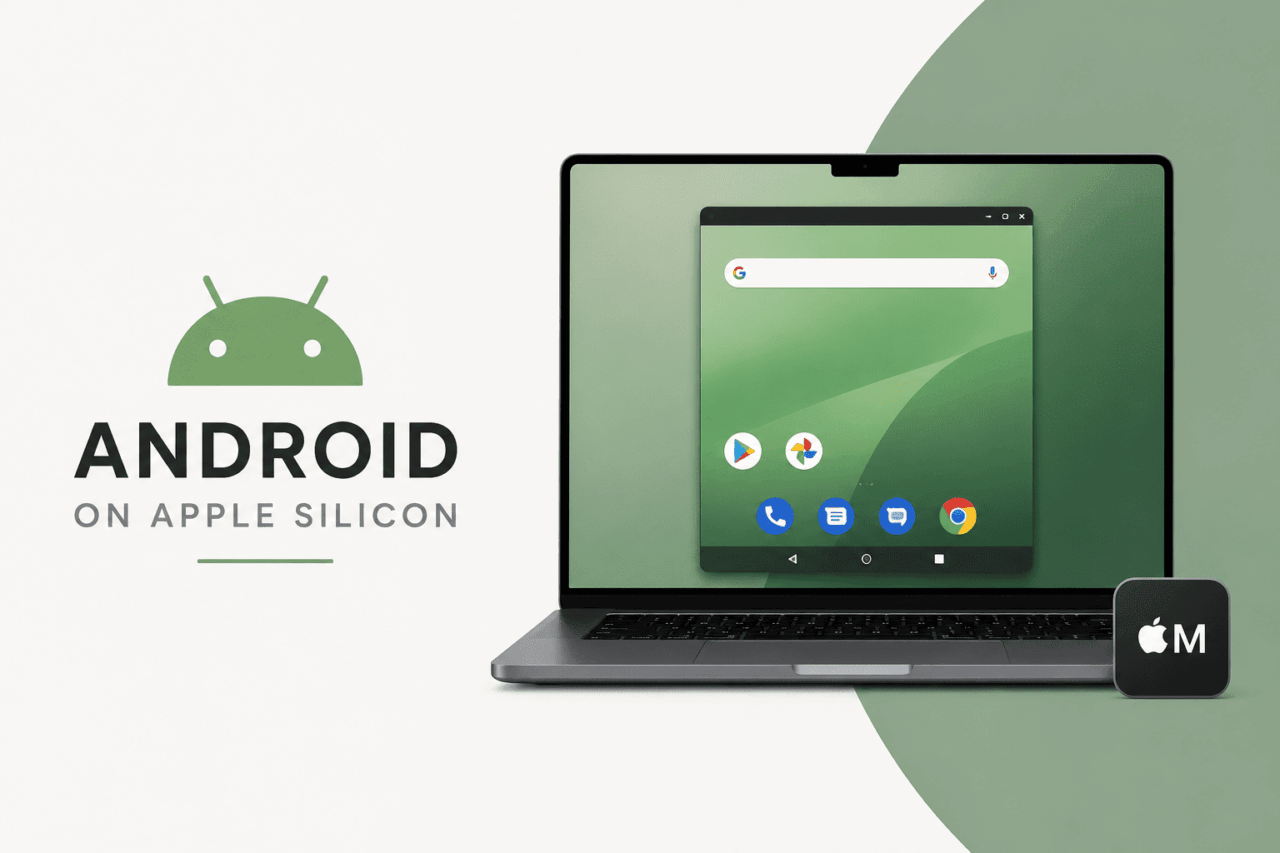
Finding an Android emulator that genuinely works on an Apple Silicon Mac is harder than it looks. Most roundup articles still recommend options that either never adapted to ARM, require workarounds nobody explains clearly, or technically launch but fall apart the moment you try something demanding.
The situation in 2026 is better than it was after the M1 debut, but the honest answer is still: the list of android emulators for Apple Silicon Mac that hold up under real use is shorter than most guides admit.
Apple Silicon changed the emulation math in ways that still confuse people. The M-series chips use ARM architecture, the same architecture Android phones use. That is good news in theory. But the emulators built for Intel Macs relied heavily on x86 virtualization tools that do not translate to ARM.
NoxPlayer, for instance, is confirmed dead on Apple Silicon. The underlying technology it depends on has no ARM equivalent, and running it through Rosetta 2 does not help either. The virtualization layer it needs cannot be shimmed that way.
What follows is not a list padded with tools that technically download and install. Every emulator here has been evaluated against current sources, developer threads, and gaming communities who actually use M1 through M4 machines. If there is real doubt about whether something works, it is not here.
TL;DR: On Apple Silicon Macs in 2026, the Android emulators that reliably work are Android Studio Emulator, MuMuPlayer Pro, BlueStacks Air, Genymotion Desktop, and UTM. For gaming, MuMuPlayer Pro and BlueStacks Air are the strongest choices. For development, Android Studio Emulator remains the most accurate and stable option. Genymotion suits QA teams who need sensor simulation and automation. UTM is for power users who want full VM control. No single option wins across every category.
1. Android Studio Emulator: the one developers actually rely on
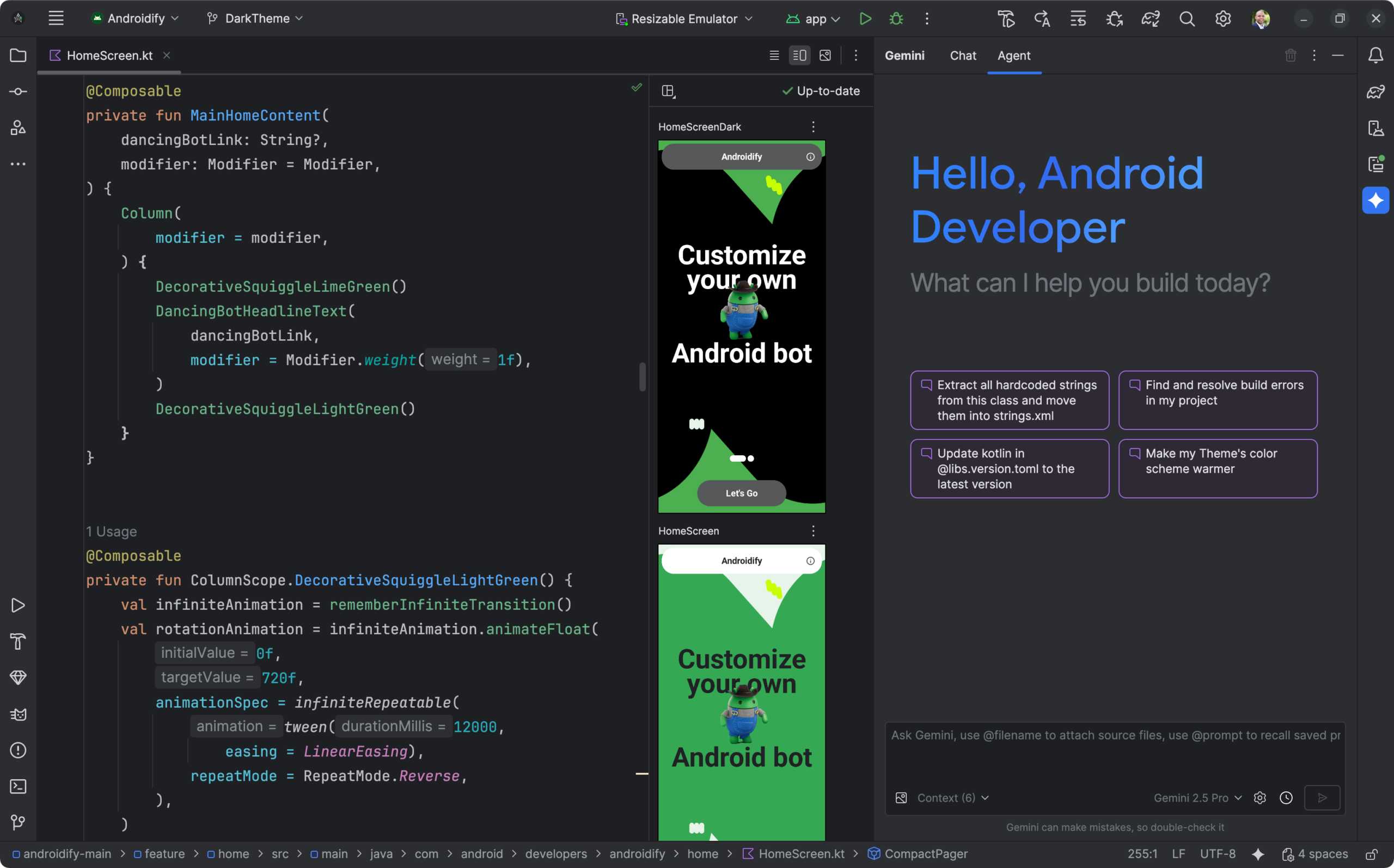
Google’s official Android emulator is still the best overall choice for anyone who needs accuracy over convenience. It also has the most dramatic before-and-after story on Apple Silicon.
On Intel Macs, running an Android emulator during a live Gradle build was enough to make the machine audibly complain. Fans ramped hard. Cold boot times stretched past 45 seconds on some configurations.
Developers described the experience as something you tolerated rather than enjoyed. The emulator was slow enough that many developers kept a physical Android phone on their desk specifically to avoid waiting for the AVD to catch up.
On Apple Silicon, native ARM64 system images removed most of that overhead. The emulator uses Apple’s Hypervisor framework directly, which means Android runs closer to the metal rather than through layers of translation.
A cold boot on a Pixel 9 AVD on an M2 MacBook Air with 16GB of RAM takes roughly 8 to 15 seconds. Warm boot is often under 5 seconds. During a normal development session, without a concurrent Gradle build running, RAM usage sits around 2.5GB to 4GB depending on the device image selected.
The silence is the thing you notice first. MacBook Air models run an active Android emulator session without any thermal cue at all. On older Intel MacBooks, the fan ramped within two minutes of booting an AVD. That absence takes a few days to stop feeling like something is wrong. You keep expecting a sound that does not come.
Multiple Android developer communities on Reddit describe the performance difference between Intel Macs and M-series machines for emulator work as significant enough to influence hardware purchasing decisions outright.
At least one developer thread documented a switch from a Windows AMD machine to an M1 MacBook Air specifically because the emulator performance gap was that noticeable.
What Android Studio Emulator does not do well is gaming. It was never designed for that. Titles like Genshin Impact or PUBG Mobile behave inconsistently depending on GPU translation layers and how the specific game handles the ARM graphics path. Lighter games are generally fine. Anything that pushes graphics hard will stutter compared to emulators built around gaming workloads.
Storage is the other honest problem. Android Studio accumulates quietly. SDKs, multiple device images, Gradle caches, and AVD snapshots can push the total installation toward 30GB to 50GB without anyone noticing until disk space warnings appear.
On 8GB Macs, the experience is manageable for light sessions but uncomfortable when Chrome, Xcode, and Slack are also running. The consensus across developer forums is that 16GB is the practical minimum for comfortable Android development on M-series hardware.
Best for: Android developers, app testers, foldable device testing, Android 15 and 16 preview builds.
Not ideal for: Gaming, casual Android app use, anyone who wants a simple setup.
2. MuMuPlayer Pro: the gaming emulator that earned its reputation
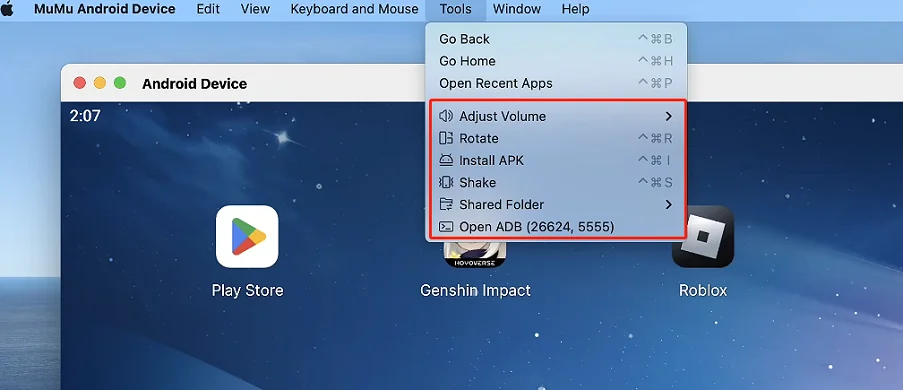
MuMuPlayer Pro is made by NetEase, one of the largest gaming companies in the world, and that lineage shows in how the emulator behaves on a Mac. The macOS version was built specifically for Apple Silicon from the ground up, not retrofitted from a Windows codebase. NetEase describes it as the first Android emulator to adapt natively to Apple Silicon chips, and based on the release timeline, that claim holds up.
The startup speed is genuinely surprising the first time. MuMuPlayer Pro reaches a usable Android desktop faster than Android Studio Emulator initializes its graphics stack. After a few days of using it, you stop noticing how fast it is. It only becomes obvious again when you open Android Studio for a quick test and feel the difference return.
Gaming performance on M-series hardware is the main argument for MuMuPlayer Pro. Mobile Legends runs at a consistent 60fps on an M2 MacBook Air. Brawl Stars stays smooth through team fights without frame drops.
Heavier titles like Honkai Star Rail are playable at medium settings on M2 and above. The emulator supports custom key mapping, controller input, macro recording, and multi-instance support, which means running two accounts of the same game simultaneously is possible if your Mac has enough RAM.
Thermal behavior is better than expected on laptop hardware. Older gaming emulators on Intel MacBook Pros created genuine heat concerns during long sessions.
MuMuPlayer Pro still warms an M2 MacBook Pro during heavy gaming, but MacBook Air users running the emulator at moderate settings reported quiet, cool sessions for standard play. Pushing high-frame games at maximum settings for 90 minutes will tell you the chip is working.
The interface carries some design decisions that feel more at home in a Chinese gaming client than a standard macOS app. Some menus and tooltips translate awkwardly. There are occasional compatibility issues with specific games depending on how aggressively anti-cheat software monitors the ARM emulation environment.
A small number of titles refuse to launch entirely. MuMuPlayer Pro supports Android 12, requires macOS 11 Big Sur or later, and runs only on Apple Silicon. Intel Mac users are excluded. The base experience, including all gaming features, is free.
Best for: Android gaming on M-series Macs, competitive mobile titles, long sessions with controller support.
Not ideal for: App development, users who want a fully polished Western-style interface.
3. BlueStacks Air: the easiest emulator to actually keep using
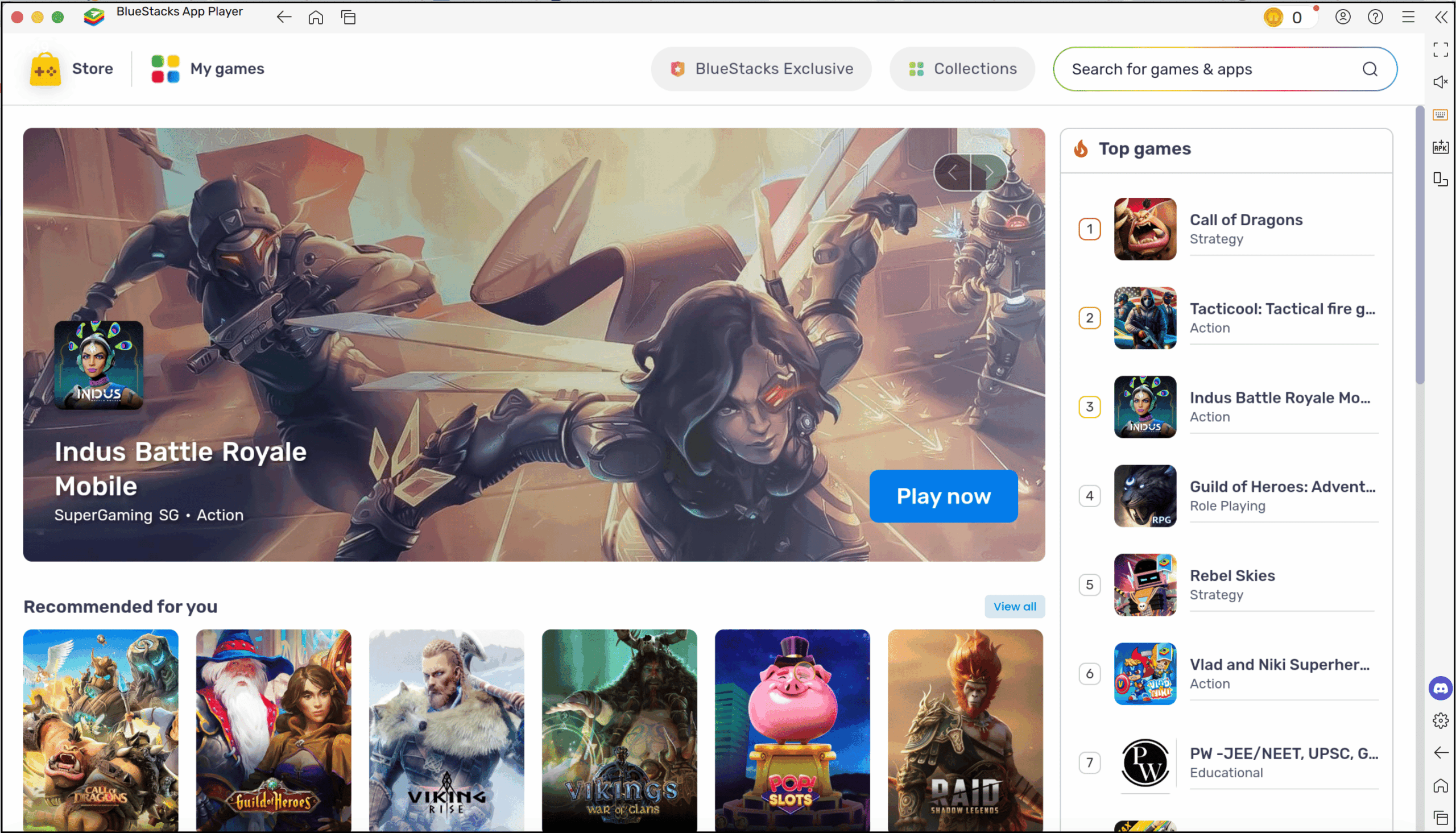
BlueStacks spent years as the default Android emulator recommendation on Windows. BlueStacks Air is the Apple Silicon-native version, launched in December 2024 after a limited beta and updated consistently through 2025 and into 2026.
The distinction from older BlueStacks versions matters: those releases do not work on M-series Macs. The error message when you try is explicit. BlueStacks Air is a separate product built for ARM from scratch.
The install experience is the smoothest of anything on this list. Download the .dmg, drag to Applications, open it. The first launch takes longer while it configures the Android environment, but after that, opening BlueStacks Air stops feeling like launching a virtual machine and starts feeling like launching an app. That psychological shift matters more than most benchmarks.
For gaming, BlueStacks Air supports Vulkan graphics and targets 60fps across M1 through M4. Clash of Clans, Clash Royale, and Pokémon TCG Pocket run without obvious friction.
The emulator includes pre-mapped controls for popular games, which reduces setup time compared to configuring key mappings manually. Google Play Services are fully included, so games that require account login or Play authentication work correctly.
Fortnite support arrived in the April 2025 update, but the recommended configuration is a MacBook Pro or Mac Mini with at least 16GB of RAM. MacBook Air users trying Fortnite will need to lower settings and manage expectations. That is not a knock on BlueStacks Air; it reflects the thermal constraints of fanless hardware under sustained gaming load.
Where BlueStacks Air pulls back is under heavier workloads. MuMuPlayer Pro edges it on raw gaming frame consistency in comparative testing.
Some users in gaming communities reported occasional crashes with specific titles, though the update cadence is active. The base emulator is free. BlueStacks Prime removes ads at $4.99 per month but does not change core gaming performance.
If the goal is running Android apps and games on a Mac without configuring anything technical, BlueStacks Air is the most accessible path. It feels like a consumer product rather than a tool, and for many users that is exactly the right fit.
Best for: Casual and mid-level gaming, running Android apps without technical setup, first-time Mac emulator users.
Not ideal for: App development, users who want the absolute best competitive gaming frame rates.
4. Genymotion Desktop: built for testers, not gamers
Genymotion has been a professional testing tool for Android developers longer than most emulators on this list have existed. On Apple Silicon, setup requires one additional step: Rosetta 2 must be enabled on the Mac before Genymotion Desktop will run. This is documented in Genymotion’s official setup guide, so it is not a hidden issue, but it is worth knowing before you start.
The emulator uses a QEMU-based hypervisor internally. Version 3.9.0, released in April 2025, fixed a compatibility issue that had prevented devices from starting on M4 chips and added Android 15 device images. The cloud component received native arm64 ADB Tunnel support in a separate update, removing the Rosetta 2 dependency for that specific workflow on macOS.
What Genymotion does that no gaming emulator does is sensor simulation. You can set battery level, GPS coordinates, network conditions, and accelerometer input from a dedicated control panel.
This is genuinely useful for testing apps that behave differently depending on device state: a navigation app that only activates certain features in low-battery mode, a fitness app that changes behavior based on sensor input, or an e-commerce app that modifies layout based on reported network speed. For QA engineers and developers building context-aware apps, this is not a nice-to-have.
The cloud version connects to a remote fleet of Android devices and integrates with CI/CD pipelines and automation frameworks like Appium and Firebase Test Lab.
Version 3.9.0 added a tab on the main desktop interface that lists active cloud instances alongside local ones, beginning what the team describes as deeper integration between local and cloud workflows.
Genymotion is not free for professional use. Individual and team plan pricing is available on the Genymotion website. For QA teams running continuous testing across multiple Android versions, the paid plans are justified. For someone who wants to run a game or test a single app casually, Genymotion is the wrong tool.
Gaming on Genymotion is technically possible but frame rates are inconsistent and the interface does not support gaming-focused input mapping. Nobody using Genymotion for gaming is using the right emulator for that job.
Best for: QA engineers, automation testers, developers building context-aware or sensor-dependent apps, CI/CD pipeline integration.
Not ideal for: Gaming, casual Android app use, users who need a free solution.
5. UTM: full VM control, real setup friction
UTM is not a gaming emulator or a polished development tool. It is a full system virtualizer and emulator for macOS, built on QEMU and maintained as open-source software by Turing Software. The stable release as of September 2025 is version 4.7.4. It is free to download from GitHub, with a paid version on the Mac App Store that receives automatic updates.
On Apple Silicon, UTM uses Apple’s Hypervisor framework to run ARM64 operating systems at near-native speeds. That means you can load an Android ARM system image and run a full Android virtual machine. Not a curated gaming environment. A real Android OS with full system access.
This appeals to a specific kind of user: someone who wants complete control over the environment, does not mind reading documentation, and has a specific reason why the other options on this list do not fit.
The setup process is honest about its complexity. You download an Android system image separately, configure virtual machine settings manually, and work through an initialization sequence that assumes basic familiarity with virtualization concepts. Getting to a working Android VM typically takes 30 to 60 minutes for a first-time UTM user. That is several steps removed from download and open.
Once running, the experience feels heavier than purpose-built emulators. UTM does not support GPU virtualization. DirectX and OpenGL acceleration are unavailable, which makes it a poor fit for graphics-intensive games. Animations inside the Android environment do not feel as immediate as they do in MuMuPlayer or BlueStacks Air.
For tasks like running an Android-only app with no iOS equivalent, testing specific system behavior in a clean environment, or experimenting at a level no other emulator on this list allows, UTM gets the job done.
For gaming, UTM is not the answer. That is not a criticism. It is simply not what the tool was built for.
Best for: Power users who need full VM access, developers testing OS-level behavior, anyone who values open-source tooling and does not mind setup friction.
Not ideal for: Gaming, development workflows requiring polished ADB integration, users who want a configured environment out of the box.
What does not work on Apple Silicon, and why
NoxPlayer is the most commonly recommended Android emulator that has no path to Apple Silicon compatibility. The virtualization layer it relies on is x86-specific and cannot run through Rosetta 2.
There is no ARM version and no confirmed development roadmap. Any guide recommending NoxPlayer for M-series Macs is outdated.
LDPlayer has no native Apple Silicon support as of 2026. Mac use requires cloud streaming or remote setup workarounds, which puts it in a different category entirely. It remains a strong choice on Windows but is not an Apple Silicon Mac emulator in any practical sense.
MEmu Play is similarly Windows-first. Some older lists include it for Mac, but native M-series support is absent. Running it through compatibility layers introduces enough overhead to undermine the performance reasons people usually choose it.
PlayCover appears on many Apple Silicon emulator lists and deserves a clear note: it is not an Android emulator. PlayCover lets you run iOS apps on Apple Silicon Macs using the Mac’s native ARM compatibility with iOS binaries.
If a game has an iOS version, PlayCover can sometimes run it on the Mac with keyboard and mouse mapping. That is genuinely useful, but it solves a different problem entirely. Including it in an Android emulator comparison confuses two separate use cases.
Which one actually fits your situation
The question is not which emulator is best in the abstract. It is which one matches the work you are actually doing.
If you write Android apps, Android Studio Emulator is the answer. It is the most accurate, the most integrated with development tools, and the most thoroughly tested against real Android behavior.
The fact that it now feels quick on Apple Silicon rather than punishing is a genuine quality-of-life improvement. Developers who have been on the platform for years are still quietly adjusting to it. At first it feels like the emulator is not doing enough, because nothing is making noise.
If you want to play mobile games on your Mac and the setup should take ten minutes rather than an afternoon, start with BlueStacks Air. It covers the widest range of popular titles without configuration and feels like a consumer product. If you play games competitively or want better frame pacing and more control, move to MuMuPlayer Pro. The gap between them is real but not dramatic for casual gaming.
If you run QA testing for an Android app, Genymotion Desktop gives you tools the others do not. Accept the Rosetta 2 requirement and move on. It is not a meaningful performance penalty for testing workloads, and the sensor simulation features are not available anywhere else on this list.
If you want a full Android virtual machine and you know what that means, UTM is there. Expect setup work and accept the graphics limitations. The tradeoff is access and control that no other option here provides.
One observation that only becomes clear after spending real time with all of these: the emulator question on Apple Silicon has moved from genuinely frustrating to genuinely functional. Not perfect. Some compatibility gaps remain, storage demands are real, and a small number of apps will still misbehave in ways no emulator can fix.
But the era of watching a MacBook spin up its fans the moment an AVD booted is a different chapter now. The quiet is still the thing that surprises people most when they first run an Android emulator on an M-series Mac. It takes a few days to stop feeling like something is missing.
| Emulator | Native ARM | Free tier | Gaming | Dev / ADB | Sensor sim | Best for | Limitations |
|---|---|---|---|---|---|---|---|
| Android Studio Emulator | Yes (ARM64 images) | Yes | Weak | Best | Yes | App testing, foldable AVDs, Android 15/16 previews | 30–50 GB storage; 16 GB RAM recommended; slow cold boot on 8 GB Macs |
| MuMuPlayer Pro | Yes (Apple Silicon only) | Yes | Best | Basic ADB only | No | Competitive mobile gaming, multi-instance, controller support | Intel Macs excluded; some anti-cheat conflicts; UI partly untranslated |
| BlueStacks Air | Yes (M1 to M4) | Yes (Prime $4.99/mo) | Good | No | No | Casual gaming, easiest setup, pre-mapped controls | Frame pacing behind MuMuPlayer; Fortnite needs 16 GB RAM and MacBook Pro |
| Genymotion Desktop | Via Rosetta 2 | Limited (paid for teams) | Weak | Yes | Yes (GPS, battery, network) | CI/CD pipelines, Appium, sensor-dependent app testing | Rosetta 2 required; M4 needed v3.9.0+ fix; not for casual use |
| UTM | Yes (QEMU Hypervisor) | Yes (free or App Store paid) | Poor | Manual | No | Full Android VM, OS-level access, open-source control | No GPU acceleration; 30-60 min setup; heavy feel; not for gaming |