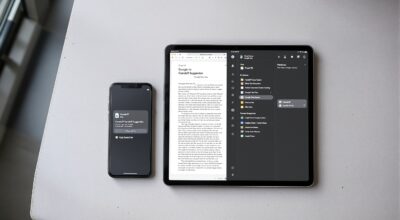
Verizon will charge $10 a month for iPhone Handoff, the iOS 27 feature that lets one phone number run on two iPhones, according to Verizon’s own news post from October 16, 2026. That is double the $5 a month T-Mobile asks for the same feature, and Verizon has not said when it will switch on.
If you are weighing an iPhone Duo to carry next to another iPhone, this is a recurring cost the phone price does not show. Over a year it comes to $120 on Verizon and $60 on T-Mobile.
TL;DR: Verizon plans to charge $10 a month for iPhone Handoff, which lets one number work on two iPhones running iOS 27. T-Mobile charges $5 a month and already offers it, while Apple’s support page still lists only T-Mobile and Telekom as carriers. Verizon calls the feature coming soon but gives no date, so compare the yearly cost, $120 against $60, before choosing.
What iPhone Handoff costs on Verizon and T-Mobile
Verizon says iPhone Handoff will cost $10 a month on compatible iPhones running iOS 27. Customers keep full access to its 5G network and can switch which phone is active at any time, and the page names the iPhone Duo and iPhone 18 Pro as examples. It lists no taxes or extra fees for the feature, and the section is marked coming soon.
T-Mobile’s launch post from September 10, 2026 introduces the feature at $5 a month. Its iPhone page shows the feature available from September 14 on iOS 27, limited at launch to postpaid consumer and sole proprietor accounts, with one active number or eSIM on both phones.
| Carrier | Price | Status | Yearly cost |
|---|---|---|---|
| T-Mobile | $5 a month | Available from September 14 on iOS 27 | $60 |
| Verizon | $10 a month | Coming soon, no date given | $120 |
The yearly figures are the monthly prices multiplied by 12, before any taxes or fees. Not a dramatic gap, but an honest reason to check your carrier before you buy a second phone. It also helps to know what that monthly fee actually covers.
How iPhone Handoff works on two iPhones
Apple’s support page says iPhone Handoff needs two iPhones on iOS 27 or later, both on Wi-Fi and signed in to the same Apple Account. FaceTime and iMessage must be on, and Messages in iCloud must be enabled. Our iOS 27 device list shows how many iPhones can run it.
Setup runs through Settings, then Cellular, then Set Up Cellular or Add eSIM, where you choose Use Number on This iPhone and Another. The number is active on only one iPhone at a time.
Unlock the other phone and calls, voicemail, messages and Find My location move to it, and a Switched to this iPhone message confirms the switch. Picture a work trip with a spare iPhone: you unlock whichever one is in your hand, and your calls and texts follow it.
That one-at-a-time rule shapes the rest of the small print.
Why Verizon is not on Apple’s list yet
Apple’s page names only two carriers, T-Mobile in the United States and Telekom in Germany, and says the feature works with eSIM only. Verizon is absent from that list, which fits its own coming soon label.
So the $10 is a price without a start date. Until Verizon sets one, there is nothing to buy, and Apple’s carrier list is the place to watch for a change.
Timing makes this more than a footnote. Verizon’s page says iPhone Duo pre-orders began October 16 and lists wide availability on October 23, so a Duo bought from Verizon could arrive before the carrier has said Handoff is ready.
What to check before you add the second iPhone
The main iPhone is the only one that manages Call Forwarding, Caller ID and your carrier account, so Apple says to make it the phone you use most. An Apple Watch does not follow the active iPhone, so pair it to the phone you carry most.
Some apps follow their own rules. Apple says third-party apps may sign you out on one phone when you sign in on the other, and banking apps may need approval on your existing device first. Payment cards added during setup work on both phones, but some transit passes, IDs or badges may work on only one at a time.
Apple also warns that carrier fees may apply when you enroll. Deleting the eSIM from an iPhone does not stop the charges, so you have to ask the carrier to end the service. That matters the day you sell the second phone, because removing the eSIM alone leaves the monthly fee running.