Apple has published an EU energy label for the iPhone Duo, and it lists a rated battery capacity of 4,883 mAh. It is the first capacity figure for the foldable, and it lands days before the phone ships on October 23, 2026.
If you pre-ordered one, the label is worth reading closely. It says as much about repairs and durability as it does about hours of use.
TL;DR: Apple’s own energy label for model A3720 rates the iPhone Duo battery at 4,883 mAh, with at least 1,000 charge cycles and no user replacement. Apple’s marketing promises up to 31 hours of video on the inner display and 44 hours on the outer one. The label also gives the phone a repairability class of C.
What the iPhone Duo battery label actually says
The sheet for model A3720 gives a rated capacity of 4,883 mAh and an endurance of 51 hours 30 minutes per cycle. It also states a lifetime of at least 1,000 charge cycles under default settings, and it marks the battery as not user replaceable.
Apple’s label shows one total, not a split between cells. Apple describes the phone’s dual battery architecture as the reason for all day battery life, but it does not break the capacity down in the pages I checked.
| Label field | iPhone Duo (A3720) |
|---|---|
| Rated battery capacity | 4,883 mAh |
| Endurance per cycle | 51 hours 30 minutes |
| Lifetime at default settings | At least 1,000 cycles |
| User replaceable | No |
| Energy efficiency class | A |
| Drop resistance class | B |
| Water and dust rating | IP68, 6 meters |
| Repairability class | C (2.65 out of 5) |
That 51 hour figure will tempt some people into a comparison with Apple’s marketing numbers. It would be a mistake, because the label appears to be measured under a different method.
How the label compares with Apple’s video playback claims
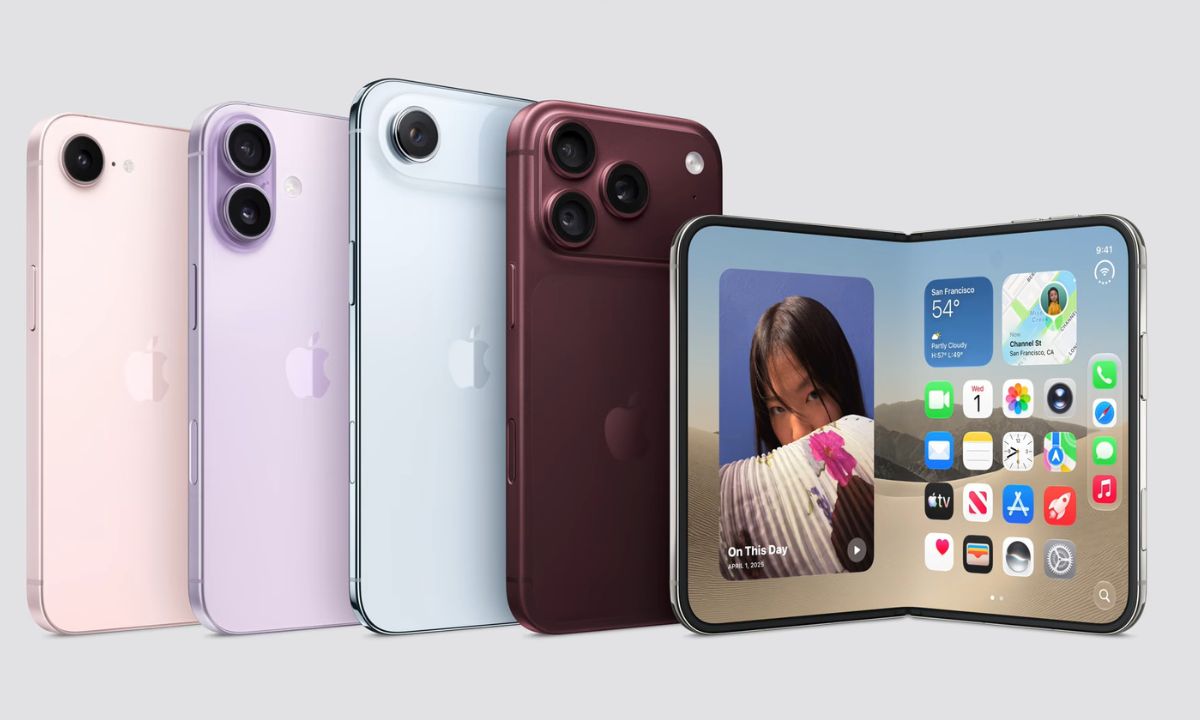
At its September 9, 2026 announcement, Apple promised up to 31 hours of video playback on the inner display and up to 44 hours on the outer display. When both screens are used equally, the company says to expect up to 24 hours of use per charge.
The spread between those figures is the useful part. A phone that lives mostly closed, for messages and maps, should land near the outer display number, while someone who unfolds it for video all afternoon will see something closer to 31.
That gap between the two screens matters more than the capacity number on its own.
Charging, repairs and what the label gives away
The label lists a required charger output of 5 W over USB-C, which is only the minimum it needs to work. Apple says the phone can reach 50 percent in around 20 minutes with a 60W capable adapter, or in around 30 minutes on a MagSafe or Qi2 wireless charger.
Repairability is where the label is less flattering. The phone scores 5.00 out of 5 for spare parts and for repair information, but only 1.12 for tools, 2.24 for fasteners and 1.00 for software updates, which lands it in class C overall. Our earlier look at the iPhone Duo delay noted how long buyers had to wait, so a battery that cannot be swapped at home is worth knowing about before you commit.

What this means before October 23
The label also lists IP68 protection at 6 meters, a drop resistance class of B, and a minimum of five years of security and functionality updates. The drop figures are 140 falls without defect, and 35 with the phone fully extended.
None of this changes the price, which Apple lists from $1,999 for the 256GB model. It does tell you the battery is not something you swap at home, so plan any future replacement around Apple’s service options.
Real battery tests will matter more than any label once reviewers get units. Until then, the 4,883 mAh figure is a solid starting point, not a verdict.