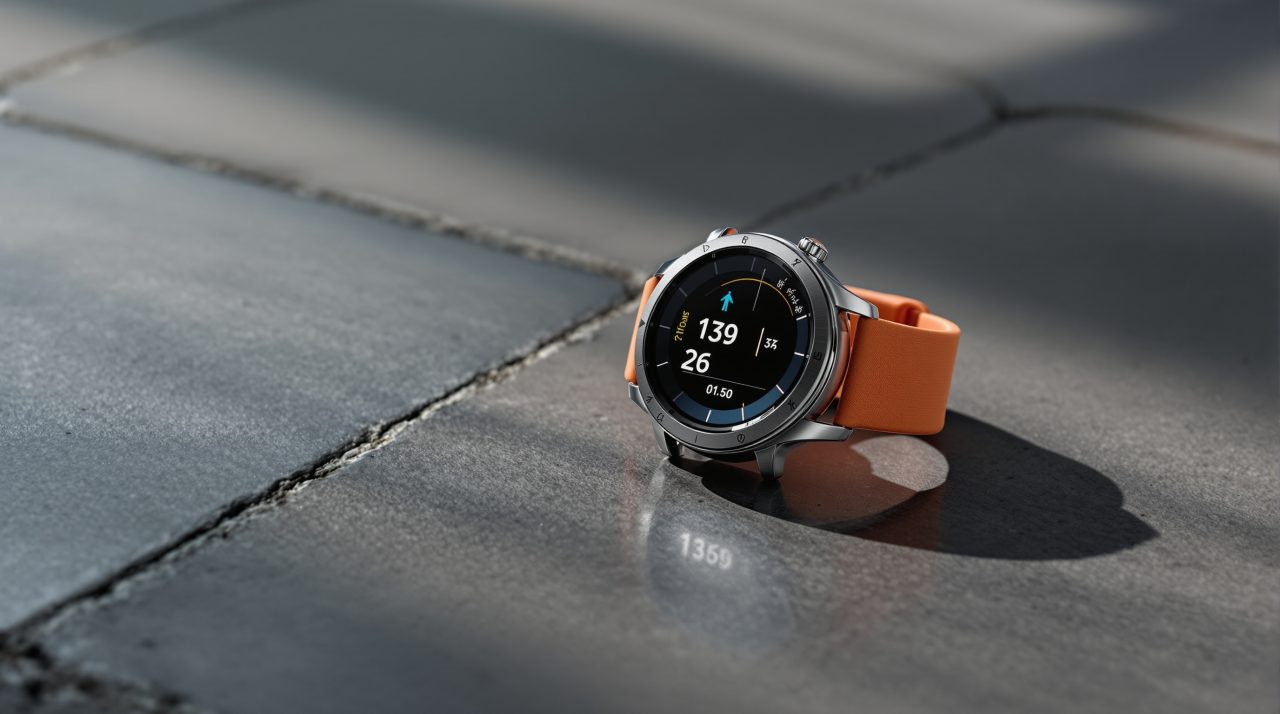
Samsung’s decision to drop Exynos silicon from the Galaxy Watch 9 and Watch Ultra 2 now comes with real performance numbers behind it. A leaked Geekbench listing shows Qualcomm’s Snapdragon Wear Elite chip outscoring Samsung’s own Exynos W1000 by more than 50 percent across single core, multi core, and GPU tests.
A separate spec leak from WinFuture’s Roland Quandt fills in the rest of the picture, including battery figures that walk back an earlier report claiming every model would get a bigger cell. For anyone who has felt a Galaxy Watch lag mid workout, this is the first real evidence the Galaxy Watch 9 Snapdragon Wear Elite switch will actually be felt, not just read about on a spec sheet.
TL;DR: Leaked Geekbench scores show Qualcomm’s Snapdragon Wear Elite beating Samsung’s Exynos W1000 by up to 56 percent across CPU and GPU tests, according to SamMobile. A separate leak from WinFuture’s Roland Quandt corrects earlier battery claims: the 40mm Galaxy Watch 9 keeps its 325mAh cell, the 44mm model rises to 445mAh, and the Watch Ultra 2 jumps from 590mAh to 800mAh. Both watches keep 2GB of RAM with 32GB or 64GB storage, arriving at Unpacked on July 22, 2026.
Galaxy Watch 9 Snapdragon Wear Elite benchmarks show a real performance jump
A Geekbench 5 listing for a chip codenamed Vienna surfaced this week, and SamMobile traced it directly to the Snapdragon Wear Elite expected inside the Galaxy Watch Ultra 2. The listing describes a five core layout: one Cortex A78C performance core running at 2.11GHz, paired with four Cortex A55 efficiency cores at 1.96GHz, plus an Adreno 622 GPU.
Those specs translate into a real gap against Samsung’s current wearable chip. The Snapdragon Wear Elite scored 573 points in single core testing versus 371 for the Exynos W1000, a 54 percent lead. Multi core testing showed a similar pattern, 1,069 points against 683, a 56 percent improvement.
| Benchmark | Snapdragon Wear Elite | Exynos W1000 | Change |
|---|---|---|---|
| Single core | 573 | 371 | +54% |
| Multi core | 1,069 | 683 | +56% |
| GPU compute | 1,459 | 993 | +47% |
The GPU gap was smaller but still substantial. Adreno 622 scored 1,459 points in Geekbench’s compute test compared to 993 for the Exynos W1000’s Mali G68 GPU, a 47 percent advantage. Samsung’s supply chain had already pointed to an Exynos to Snapdragon switch on the Watch 9 ahead of Unpacked, but this is the first evidence of what that switch actually buys in daily use.
One detail complicates the picture. The Geekbench listing shows the test unit running 4GB of RAM, double what Quandt’s separate report says the retail watches will carry, which points to an engineering sample rather than the shipping configuration.
The battery numbers just walked back what an earlier leak promised
An earlier certification filing suggested every Galaxy Watch 9 and Watch Ultra 2 variant would get a battery up to 33 percent larger than last year’s models. Roland Quandt’s newer report on WinFuture says that is only partly true.
The 40mm Galaxy Watch 9 keeps the same 325mAh battery Samsung has used for several generations, according to the report. The larger 44mm model gets a moderate bump to 445mAh.
The Galaxy Watch Ultra 2 sees the biggest jump, rising from 590mAh to 800mAh, a 36 percent increase. That split matters for anyone deciding which case size to buy.
Faster silicon can offset some of that gap through better power efficiency, but a flat battery on the smallest Watch 9 model means the performance leap from Snapdragon Wear Elite is doing more of the work than a bigger cell would.
Storage doubles while RAM and displays stay put
Quandt’s report lists 2GB of RAM across every Galaxy Watch 9 and Watch Ultra 2 configuration, with storage options of 32GB or 64GB depending on the model. That storage range is a real jump from the 16GB and 32GB tiers Samsung shipped on the Galaxy Watch 8 line.
Display sizes carry over unchanged from last year, at 1.3 inches with a 438 by 438 pixel resolution on the smaller case and 1.5 inches at 480 by 480 on the larger one.
Materials split by tier. The Galaxy Watch 9 uses an aluminum case rated to 5 ATM, while the Galaxy Watch Ultra 2 gets a titanium case built to withstand water pressure down to 100 meters.

Why the chip switch outweighs the price increase this year
Samsung already faces a leaked price increase across the Galaxy Watch 9 lineup, and that story understandably drew attention first. The chip switch is the more consequential one, since it changes how the watch actually performs rather than just what it costs.
None of this is official yet. Samsung has not published specs, pricing, or a release date beyond the expected July 22, 2026 Unpacked event in London, and Geekbench listings can still shift before a chip reaches production hardware.
Anyone weighing an upgrade from a Galaxy Watch 7 or 8 now has two leaks pointing the same direction: a faster chip backed by real benchmark numbers, and a battery story that only partly lives up to earlier promises. The One UI 9 software rolling out across Samsung’s 2026 lineup should make the hardware upgrade feel more consistent than in past years, even if the battery gains on the smallest model are more modest than hoped.