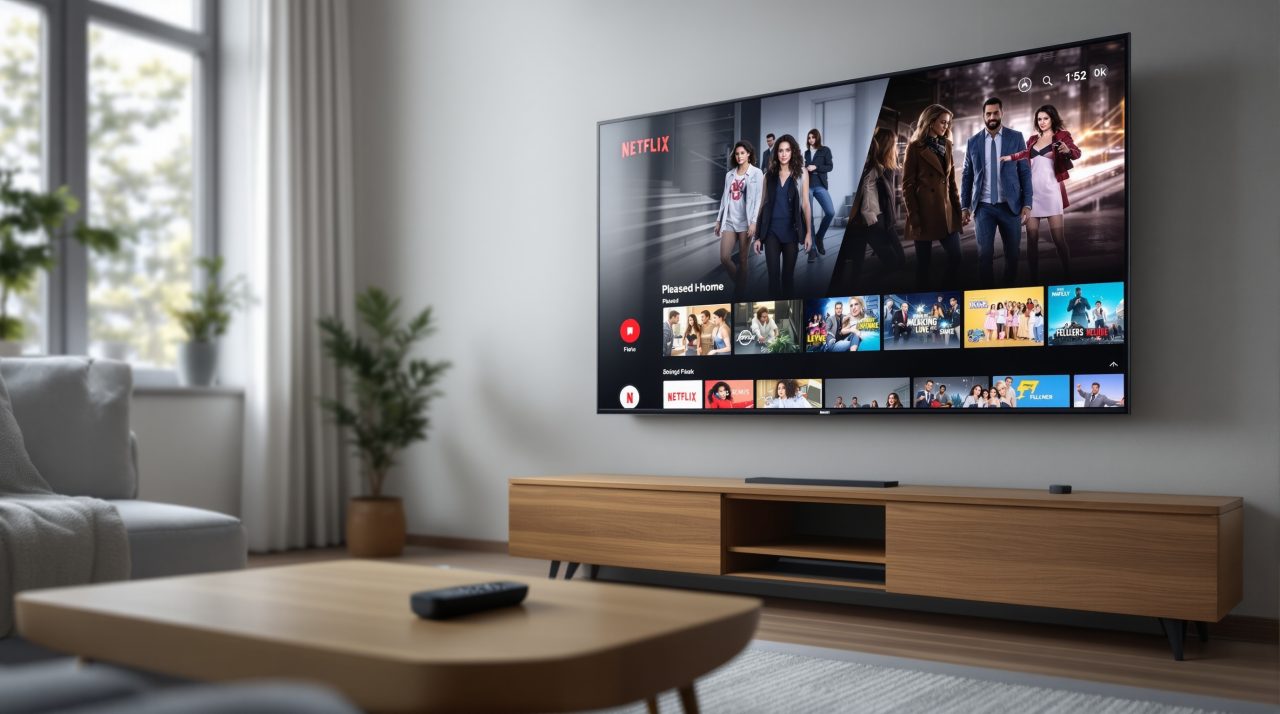
Netflix is exploring something it spent over a decade training viewers to avoid: live TV you cannot skip through. The Wall Street Journal reported on July 9, 2026 that Netflix executives are weighing themed live channels and bundling rival services, including Peacock, directly into the app, a response to a real slide in how much people watch once they subscribe.
Subscribers are not canceling. They are just watching less. For households already paying every month, that shift could mean commercial breaks that behave nothing like the skippable ones already on the platform, and a home screen that starts looking more like cable than the service built to replace it.
TL;DR: Netflix is weighing themed live TV channels and bundling other services, including Peacock, directly into its app, according to the Wall Street Journal. The move responds to an engagement problem rather than a subscriber one: Nielsen data shows Netflix’s share of US TV viewership fell to 7.8% in April, the lowest reading since 2025. Nothing is confirmed, and live channels would mean ads viewers cannot skip past.
What Netflix’s live TV channels would actually look like
Netflix executives have discussed continuously streaming channels built around a single genre, such as comedy, drama, or reality, according to reporting by Jessica Toonkel and Ben Fritz at the Wall Street Journal. Instead of picking a title from a row, viewers would land on a channel already playing something in that category, closer to how free ad-supported services like Tubi or Pluto TV already operate.
The idea marks a real reversal. Netflix’s founders spent years arguing that on-demand, binge-friendly viewing was the entire point of leaving cable behind. A scheduled channel puts some of that control back in Netflix’s hands, not the viewer’s.
Talks are still preliminary. Netflix has not detailed how live programming would interact with its ad-supported tier, and the company has not confirmed a timeline for testing or launch.
Why Netflix is worried about engagement, not subscribers
Netflix’s churn rate remains among the lowest in streaming, and the company keeps posting higher profit. The problem executives flagged this spring is different: people are spending less time actually watching once they are already paying. Netflix’s share of US television viewership fell to 7.8% in April 2026, the lowest level since May 2025, according to Nielsen’s The Gauge.
The dip shows up clearly across the past year.
| Month | Netflix share of US TV viewership |
|---|---|
| April 2026 | 7.8% |
| March 2026 | 8.2% |
| February 2026 | 8.4% |
| January 2026 | 8.8% |
| December 2025 | 9.0% |
| November 2025 | 8.3% |
| October 2025 | 8.0% |
Nielsen and Netflix’s own reporting point to specific titles that underperformed expectations this year, including The Four Seasons, the Avatar: The Last Airbender live-action series, Running Point, One Piece, and Beef. None of those are flops by outside standards. They simply did not hold viewers the way Netflix is used to.
That gap between subscriber retention and actual watch time is the real story here, not a looming cancellation wave.
Bundling Peacock would turn Netflix into a storefront, not just a library
Netflix is also discussing folding other subscriptions directly into its own interface, starting with Peacock, according to the Wall Street Journal. The idea would let a Netflix subscriber add Peacock as a line item inside the same app, browsing both libraries from one home screen instead of switching apps or logging in separately.
Amazon already does something similar through Prime Video Channels, and Apple TV+ offers the same kind of add-on access. Netflix adopting the model would be an admission that owning the home screen matters more than owning every title on it.
That is a bigger identity shift than a new content row. A company that spent a decade telling people to cancel cable would be rebuilding a version of the cable guide inside its own app.
None of this is close to final. Talks over revenue splits and technical integration with Peacock are still preliminary, and Netflix has not said which markets would see a bundle first.
Netflix’s live sports ambitions reach further than genre channels
Netflix already holds broadcast rights to select NFL games, WWE Raw, Major League Baseball’s opening day, and future editions of the Women’s FIFA World Cup. Executives are reportedly also weighing bids for the men’s FIFA World Cup in 2030 and 2034, following the outsized audiences the 2026 World Cup already pulled in on streaming this summer.
Live sports solve a problem genre channels cannot. Games happen on a schedule nobody controls, which forces people to show up at a specific time instead of whenever they get around to it. That kind of appointment viewing is exactly what Netflix’s engagement numbers say it is missing.
Bidding for a World Cup is a different scale of commitment than four genre channels, though. Rights fees for global tournaments run into the billions, and Netflix would be competing directly against broadcasters with decades of sports infrastructure already in place.
What subscribers should watch for before Netflix decides anything
Nothing here is locked in. The Wall Street Journal’s own reporting describes these as internal discussions, not an announced product, and Netflix has not confirmed whether live channels or a Peacock bundle will ever ship.
Netflix has also not said how live programming would touch its ad-supported tier, which brought in roughly $1.5 billion last year. A live channel is unskippable in a way on-demand content never was, which makes it a more valuable slot for advertisers and a more noticeable one for viewers.
For subscribers weighing whether to wait this out, DigitBin has already mapped a handful of free Netflix alternatives that fill the same gap without a live TV pivot.
The clearest signal is not the specific features being floated. It is that Netflix, for the first time since it killed its DVD business, is treating its own core format as something that might need to change.