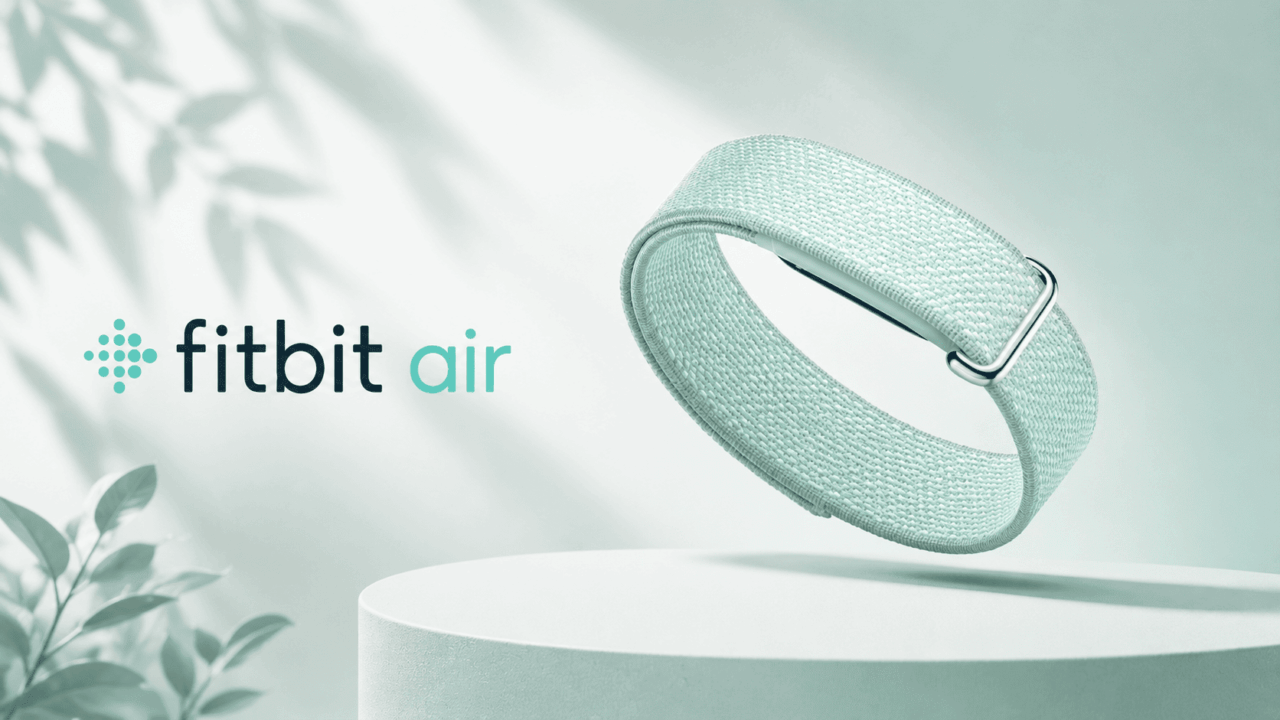
Google officially launched the Fitbit Air today, May 7, 2026, and pre-orders are open now on the Google Store. The device ships May 26. At $99.99, it is Google’s first screenless fitness band and a direct challenge to WHOOP, which charges at least $199 per year just for entry-level access. The Fitbit Air costs less upfront, requires no ongoing subscription for core tracking, and runs on both Android and iOS.
This is one of the more significant Fitbit hardware launches in years, arriving just ahead of Google I/O 2026 and alongside a full rebrand of the Fitbit app to Google Health.
TL;DR: Google launched the Fitbit Air on May 7, 2026, at $99.99. It is a screenless tracker that monitors heart rate, sleep, SpO2, skin temperature, and AFib. Battery lasts seven days. Core tracking works without a subscription. The Gemini-powered Google Health Coach costs $9.99/month or $99.99/year extra. Pre-orders are open now and devices ship May 26.
What the Fitbit Air is and how it works
The Fitbit Air has no display, no buttons, and no GPS. The entire tracker sits inside a small plastic pebble that weighs 5.2 grams. With the band attached, the full setup comes to 12 grams. 9to5Google reports the pebble snaps into the band from below and pops out from the top, making swaps quick without tools.
Sensors inside include an optical heart rate monitor, a 3-axis accelerometer and gyroscope, red and infrared sensors for SpO2 tracking, and a skin temperature sensor.
The device also watches for signs of atrial fibrillation while you are still or asleep and sends irregular heart rhythm notifications when something looks off.
Since there is no screen, every stat lives in the Google Health app on your phone. Automatic workout detection runs in the background, or you can start a session manually from the app. The Fitbit Air stores seven days of minute-by-minute movement data and one day of workout data before syncing over Bluetooth 5.0.
Battery life and charging
Google claims seven days of battery life from the lithium-polymer cell inside. Fast charging is available: five minutes of charging adds a full day of use, and a complete charge from zero takes around 90 minutes.
The charger is a new pill-shaped magnetic connector that uses USB-C on the cable end. You do have to remove the band to charge it, which is a practical difference from WHOOP’s on-wrist wireless charging setup. That said, weekly charging while you shower is a minor inconvenience for most people.
Bands and pricing
The base Fitbit Air is $99.99 and comes with the Performance Loop band, a micro-adjustable textile strap with a stainless steel buckle. Additional bands are sold separately and start at $34.99 for the Active Sport silicone band. A polyurethane Elevated Modern band costs $49.99.
There is also a Stephen Curry Special Edition at $129.99, featuring a raised interior print for airflow, a unique water-resistant coating, and Curry-specific design details. Every purchase of the Fitbit Air includes three months of Google Health Premium at no extra charge.
The Fitbit app is now Google Health
Alongside the hardware launch, Google is officially rebranding the Fitbit app as Google Health. The rebrand comes with a redesigned layout built around four tabs: Today, Fitness, Sleep, and Health. The Fitbit brand stays on hardware. All software is now Google Health.
Fitbit Premium becomes Google Health Premium. The monthly price stays at $9.99. The annual price goes up from $79.99 to $99.99. Google Health Premium is also included in Google One AI Pro and Ultra plans, so existing subscribers get access at no extra cost.
The premium tier unlocks the Google Health Coach, which is powered by Gemini. It reads your Readiness score, sleep data, and recent workout load to give daily guidance in plain language: push hard or ease off.
It can generate adaptive fitness plans and respond to follow-up questions conversationally. The coach exits public preview on May 19 and goes global then. Existing users on the Android 17 Gemini ecosystem will find the integration familiar.
Fitbit Air vs WHOOP: the numbers
| Feature | Fitbit Air | WHOOP 5.0 (One tier) |
|---|---|---|
| Upfront hardware cost | $99.99 | $0 |
| Subscription required | No | Yes |
| Entry subscription cost | $99.99/year (optional) | $199/year (mandatory) |
| Battery life | 7 days | 14 days |
| Works on iOS | Yes | Yes |
| AFib detection | Yes | Yes (MG tier only for ECG) |
| AI coach | Gemini | OpenAI |
WHOOP has a longer battery, faster data sampling at 26 times per second, and a more established recovery scoring system built on clinical sleep data. Those advantages are real, particularly for athletes who need precise strain and recovery numbers. But WHOOP charges from day one with no hardware-only option. Every tier requires a live subscription to use the device at all.
The Fitbit Air works out of the box without ever paying a monthly fee. The Gemini coaching is an optional upgrade, not a gate on the core product. For someone who wants passive, always-on health awareness without locking into another recurring cost, that is a meaningful difference.
What this launch means for Fitbit going forward
This is a category shift for Fitbit as a brand. Every device it has made since the Google acquisition has had a screen. The Fitbit Air strips that away entirely and bets on the phone as the primary interface. Whether that trade-off suits you depends on how often you actually look at your wrist versus your phone.
The device is available in 21 countries at launch. Pre-orders are open on the Google Store today. Units ship May 26.