
Last year I held a Pixel 9 Pro in one hand and a Pixel 8a in the other at a friend’s place. He had just spent 999 dollars on the Pro. I had spent 499 dollars on the 8a six months earlier. We shot the same subject, same lighting, same scene.
On both phone screens, the photos looked identical. I had to zoom to 200 percent on a 4K monitor before I could tell which was which, and even then it took me a minute. That moment stuck with me, because it made me ask a question I have been thinking about ever since: what exactly am I paying for?
The Price Gap Has Become Genuinely Difficult to Justify
The Samsung Galaxy S25 Ultra starts at 1,299 dollars. The Google Pixel 9 Pro XL is 1,099 dollars, and the standard Pixel 9 Pro is 999 dollars. The OnePlus 13 sits at 899 dollars. These are not fringe prices for niche buyers anymore. These are the mainstream flagship numbers in 2026.
The Pixel 8a, meanwhile, is 499 dollars. Google’s own Pixel 9a, the newer mid-range option, launched at 499 dollars too. That is a gap of 400 to 800 dollars between the top of the market and a phone that handles everything most people actually do.
For that gap to make sense, the flagship needs to offer something that meaningfully improves daily life. Not benchmarks. Not spec sheet victories. Actual, felt, daily improvement. After switching to a Pixel 8a two years ago, I am genuinely struggling to find it in normal use.
The Camera is the Argument You Have to Confront Honestly
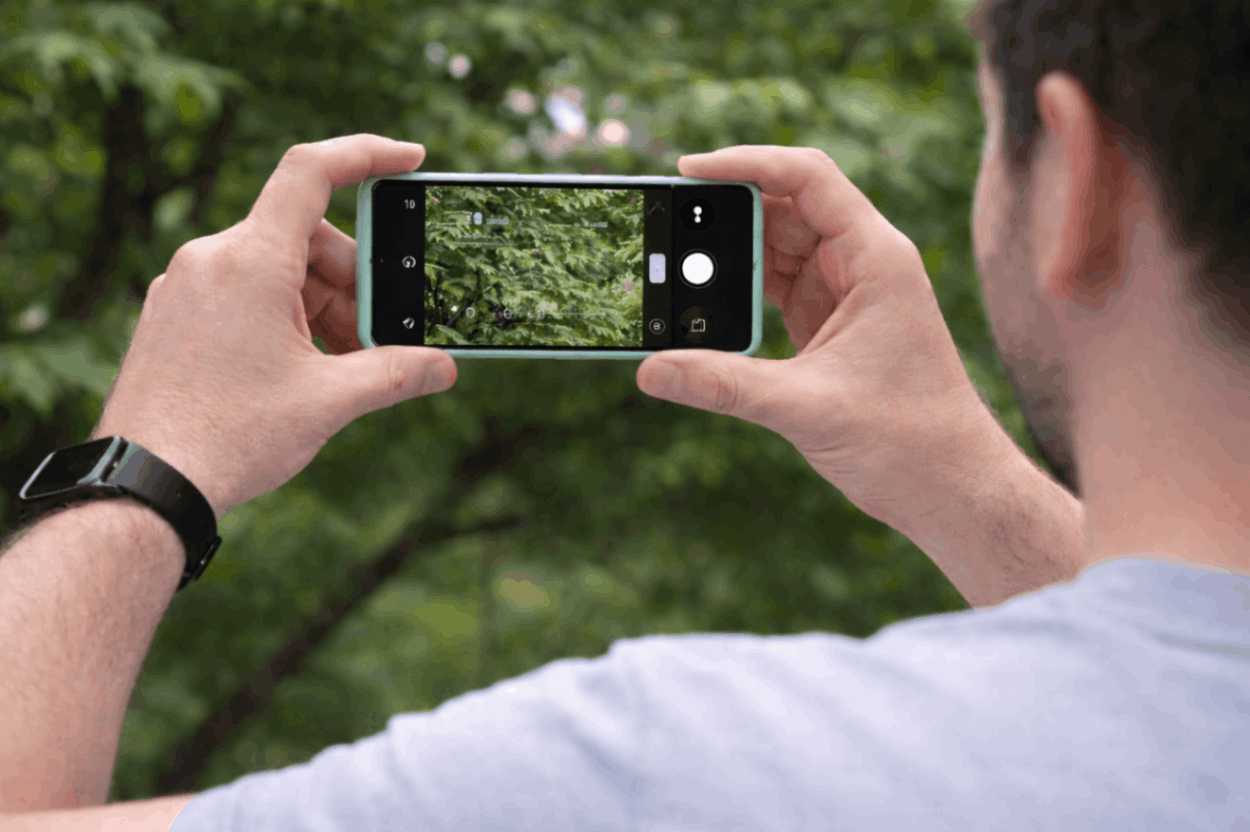
The camera is always the first thing people say when defending flagship prices. And they are right that the camera is better. But better in what conditions, and visible where?
The Pixel 9 Pro has a 50MP main sensor with a larger aperture and a dedicated 5x telephoto. The Pixel 8a has a 64MP main sensor with no telephoto, just a 2x crop mode. On paper, the Pro wins clearly. In the 80 percent of photos most people actually take, the gap is smaller than you expect.
I shot the same family dinner scene on both phones. Indoor lighting, overhead ceiling lights, no flash. On a phone screen, I genuinely could not tell the difference. Both images were sharp, both had accurate colours, both captured the faces correctly.
It was only on a 4K monitor at 200 percent zoom that the Pro showed slightly less grain in the shadow areas and a touch more detail in the fabric on someone’s shirt.
That level of difference is real. It is also invisible in the place where 99 percent of photos actually live: a phone screen, a WhatsApp share, an Instagram post compressed to 1080p.
If you are a photographer printing at A3 or editing professionally, the Pro matters. If you are shooting kids at a birthday party and sharing to a family group chat, it does not.
Night photography is the legitimate exception. In genuinely dark conditions, the larger sensor and wider aperture on the Pixel 9 Pro pull away from the 8a in ways you can see on a phone screen.
If you shoot a lot at night, that gap is real and worth knowing about. For daytime shooting, family events, and travel, the 8a is within arm’s reach of the Pro in the situations that actually come up.
Performance: The Gap That Closed Years Ago
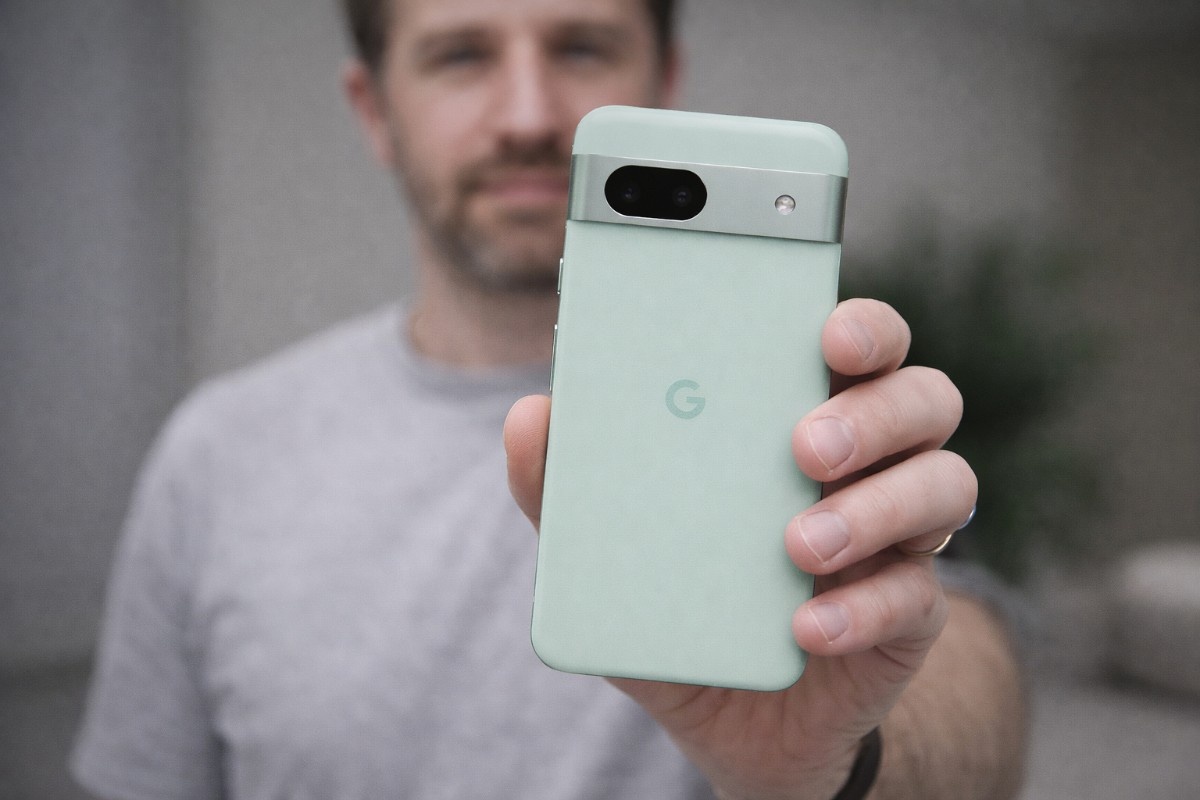
The Pixel 8a runs on the Tensor G3 chip, the same processor that was in the Pixel 8 Pro flagship. The Galaxy A55 runs on Samsung’s Exynos 1480, which handles everything a non-gaming user needs without hesitation. The OnePlus Nord 4 ships with a Snapdragon 7+ Gen 3, a chip that was considered near-flagship grade when it launched.
I use my phone for messages, email, Chrome with 20-odd tabs, Google Maps, Spotify, and the occasional YouTube video. Every mid-range phone I have tried in the last two years handles all of that without a moment of hesitation.
I have not experienced a lag, a stutter, or a dropped frame doing any of those tasks on the Pixel 8a.
The Snapdragon 8 Elite in the Galaxy S25 Ultra would run those same tasks at roughly the same felt speed. Faster in benchmarks, absolutely. Faster in the way I actually experience using the phone, not that I can detect.
Gaming is the real differentiator in raw performance, and I will acknowledge that honestly. If you play Genshin Impact, Diablo Immortal, or any GPU-intensive game at high settings, the flagship chip pulls away from the mid-range in thermal management and frame consistency over a long session. That is a real difference for a specific group of people. It is just not most people.
Battery Life: The Mid-Range Actually Wins Here
This one surprises people. The Pixel 8a has a 4,492mAh battery. The Pixel 9 Pro has a 4,700mAh battery. On paper, the Pro has more capacity. In day-to-day use, the 8a consistently gets better screen-on time in most reviews, primarily because the Tensor G3 in the 8a runs cooler and more efficiently than the Tensor G4 in the Pro under everyday workloads.
The Pixel 8a has a 4,492mAh battery. The Pixel 9 Pro has a 4,700mAh cell and costs 500 dollars more. In day-to-day use the difference in endurance is negligible for most people. The Pixel 9a, Google’s newer mid-range phone at 499 dollars, has a 5,100mAh battery that outlasts the 9 Pro in most real-world tests.
Flagship phones charge faster on paper. The S25 Ultra supports 45W wired charging. The Pixel 9 Pro supports 27W. The Pixel 8a supports 18W, which is genuinely slow and is a legitimate criticism. If you hate waiting for a charge, the 8a is not the right phone for you. But the Pixel 9a fixes this with faster charging at the same 499 dollar price point.
What You Actually Give Up
I want to be honest about what mid-range phones do not do well, because this piece is supposed to be useful and not just cheerful about cheaper phones.
Telephoto reach is a real loss. If you shoot sports, wildlife, or anything where you need genuine optical zoom beyond 2x, the 50 dollar crop zoom on a mid-range phone is not the same as a dedicated 5x or 10x telephoto lens. That gap is visible and worth the money if zoom matters to you.
Build quality is noticeable in the hand. The Galaxy S25 Ultra has a titanium frame and Corning Gorilla Armor 2 on the front. The Pixel 8a has an aluminium frame and Gorilla Glass 3, which is meaningfully less tough. Both function daily without issue, but the S25 Ultra feels exceptional in a way the 8a does not pretend to.
If the tactile experience of holding a premium object genuinely matters to you, that gap is real.
Software updates are a wash at the top. Google promises 7 years for both the Pixel 9 Pro and the Pixel 8a, which is the same commitment. If you want a mid-range Samsung in the US, the Galaxy S24 FE at around 649 dollars gets 7 years of updates too.
The mid-range options with shorter update windows, like the Galaxy A series that is not sold in the US, are a separate consideration for readers in other markets.
The Number That Keeps Coming Back to Me
500 dollars. That is the gap between a Pixel 8a and a Pixel 9 Pro right now, and it grows to 800 dollars if you step up to the Pixel 9 Pro XL.
500 dollars is a weekend trip. It is a quality mechanical keyboard and a year of cloud storage. It is a decent mirrorless camera lens if photography is what you actually care about. 800 dollars — the gap to the Pro XL — is a return flight, a course, or a meaningful head start on something else you actually want.
I am not saying flagships are bad. They are genuinely impressive devices and if money is not the constraint, the Pixel 9 Pro and Galaxy S25 Ultra are worth every dollar they cost in terms of what they deliver.
But money is usually the constraint, and the question is whether the delta between a Pixel 8a and a Pixel 9 Pro changes 500 dollars’ worth of daily life.
For me, after two years of using mid-range phones as my primary device, the honest answer is no. Your mileage depends on whether you shoot a lot at night, play demanding games, or genuinely need telephoto reach.
If any of those apply to you, the flagship earns its price. If none of them do, you are paying for potential you will probably never use.