Apple says it will commit up to $100 million over three years to titanium from Perryman Company, a family-owned producer in Houston, Pennsylvania, for the iPhone Duo’s enclosure. The October 20, 2026 announcement is part of Apple’s American Manufacturing Program update and names six other US suppliers as well.
For anyone holding the first foldable iPhone, it answers a question few people ask at the counter: where does the metal around the hinge come from? It also shows what Apple wants the build story to be.
TL;DR: Apple’s own newsroom says the iPhone Duo’s grade 5 titanium enclosure comes from Perryman in Pennsylvania, backed by up to $100 million over three years. Six more US suppliers are named for the Duo and iPhone 18 Pro. The release covers materials and components, not the inner display, so it does not address the cracked screen reports.
Where the iPhone Duo titanium comes from
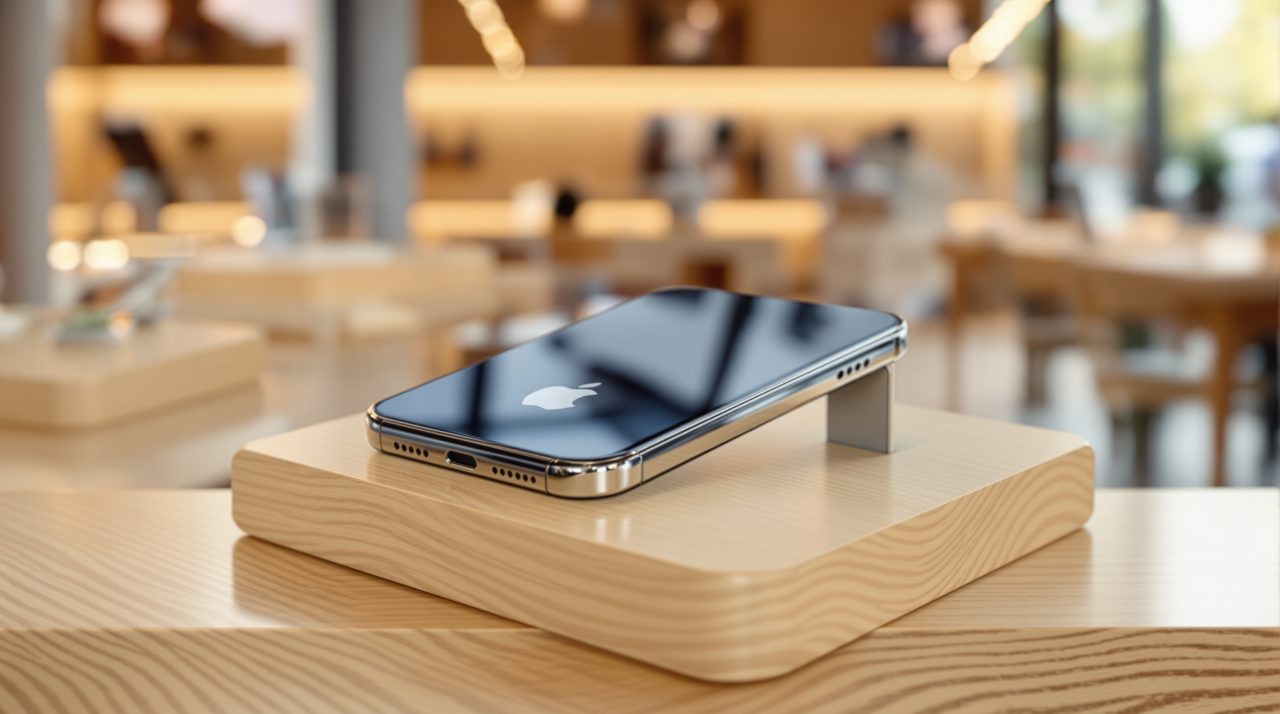
Apple’s release says Perryman melts, forges and rolls titanium at its Houston, Pennsylvania site. That metal goes into the grade 5 titanium enclosure of the iPhone Duo, which Apple describes as “exceptionally strong, providing amazing durability to the first foldable iPhone.”
Apple also says the titanium is at least 80% recycled content, and that Perryman is a new partner in the program. The $100 million figure is worded “up to,” so it is a ceiling and not a purchase total Apple has itemized.
That ceiling language is the detail most coverage will skip. Either way, titanium is only one of seven suppliers in the announcement.
The other US suppliers Apple named
Apple lists the partners by what each one makes, and the spread runs from glass to lasers to chips. Here is the list as the release gives it.
| Supplier | Location | What Apple says it supplies |
|---|---|---|
| Perryman Company | Houston, Pennsylvania | Titanium for the iPhone Duo enclosure |
| Qnity Electronics | Delaware headquarters | Films for the iPhone 18 Pro variable aperture system |
| Broadcom | Fort Collins, Colorado | Radio frequency components |
| Corning | Harrodsburg, Kentucky | Ceramic Shield and other cover glass |
| Coherent | Sherman, Texas | VCSEL lasers for Face ID and the Dynamic Island |
| TSMC | Arizona | More than 100 million chips for Apple in 2026 |
| Amkor Technology | Peoria, Arizona | Packaging and test facility, Apple among first customers |
Corning is the one with a hard date attached. By the end of 2026, Apple says all iPhone and Apple Watch cover glass sold worldwide will come from its Kentucky site.
Qnity is the other newer name, having joined the program in March. Its films end up in the iPhone 18 Pro camera, not the Duo.
What it does and does not say about the cracked screens
Owners have started posting photos of inner screens cracking near the hinge, and our report on the cracked inner screens found the evidence thin and the cause unconfirmed. Apple’s titanium announcement lands in the middle of that conversation without touching it.
The release talks about the enclosure, the outer body. The reported damage is to the folding display inside, which the release does not discuss.
Strong metal around a screen and a screen that survives folding are separate engineering problems. Not a dramatic distinction, but an important one if you are deciding whether the durability line applies to the part you will actually be looking at.
How much of the iPhone Duo is American
Apple says nearly 100 components in the iPhone Duo and iPhone 18 Pro come from American companies in more than a dozen states. It ties that to its $600 billion, four year US commitment and says it works with suppliers in all 50 states, supporting more than 450,000 American jobs.
Read the wording closely. The release is about components and materials, and it does not say where the phone is assembled, so “made in USA” would overstate it.
It also mentions an Advanced Manufacturing Center in Houston, Texas that opened in August and trains small and medium sized businesses. The same site is set to begin making Mac mini this year, according to Apple.
If you picked up a Duo during launch day at the Apple Store, none of this changes how the phone works in your hands. What it changes is the story Apple tells about it, and that is worth knowing when the marketing leans on durability.