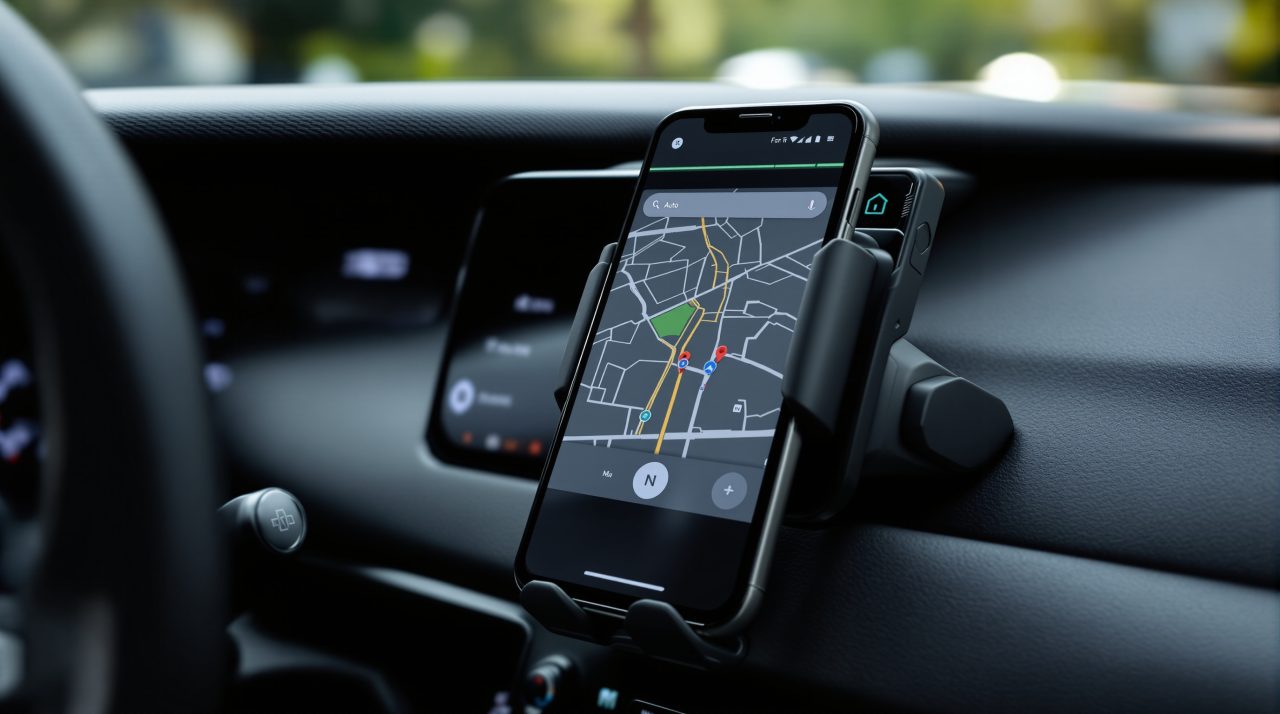
Gemini Personal Intelligence began rolling out on Android Auto on October 20, 2026, according to Google’s announcement. It lets the assistant pull details from your Gmail, Calendar, Photos and Maps while you drive, and cars with Google built in get it “in the coming months.”
The practical difference is small but real: you can ask for the address in an email or the coffee shop from yesterday’s chat instead of fumbling with your phone at a red light. It only works if you opt in.
TL;DR: Gemini Personal Intelligence is live on Android Auto as of October 20, 2026, and is coming to cars with Google built in in the coming months. It connects Gmail, Calendar, Photos, Maps, YouTube and Search only after you opt in. It is limited to personal accounts, age 18 and older, and excludes the EEA, Switzerland, the UK and Nigeria.
What Gemini Personal Intelligence does in the car
With your permission, Gemini connects information across Google apps, including Gmail, Google Calendar, Google Photos, Google Maps, YouTube and Search. It can fetch a specific email, photo or saved place, and it can reason across several of them to answer one question.
Google’s examples are everyday ones. Ask for your flight gate and whether the flight is on time, and you get both answers together. Ask for an indoor restaurant along your route that fits your usual preferences, such as vegetarian options, and it filters for you.
The photo example is the one that sticks. You can ask to navigate to the car wash you photographed last week, which is a request no voice assistant could handle when it only knew what you said out loud. That also raises a question about who can use it.
Who gets Personal Intelligence on Android Auto
Google says Gemini is available in cars globally, but Personal Intelligence has tighter limits. It is for eligible personal Google accounts held by people 18 and older, so Workspace business, enterprise and education accounts are out.
It is also unavailable in the European Economic Area, Switzerland, the United Kingdom and Nigeria. The US is not on the exclusion list, and neither are most other regions. The post does not list supported languages, and it does not mention a subscription or paid plan, so treat both as open questions until your rollout appears.
| Item | Details |
|---|---|
| Android Auto | Rolling out from October 20, 2026 |
| Cars with Google built in | “In the coming months” |
| Accounts | Personal Google accounts, age 18 and older |
| Not available | Workspace business, enterprise and education accounts; EEA, Switzerland, UK, Nigeria |
| Setup | Opt in; carries over if already enabled in the Gemini app |
If you already turned it on in the Gemini app, the setting carries over to the car, so there is nothing extra to switch on. This arrives a week after Gemini 4 Argon reached the Gemini app, and it is another sign Google wants Gemini to follow you through the day, much like the Universal Cart does for shopping.
Privacy controls you should check first
Connected apps start switched off. You choose which ones to link, and you can turn Personal Intelligence off at any time in Gemini settings.
In cars with Google built in, personal responses are shared only when you are in the car with your phone connected. That is a sensible guard for a shared family car, where you would not want a passenger’s screen to surface your inbox.
Without Personal Intelligence, navigation, music, calls and general questions still work. The answers just are not tailored to you. For most people that is the sensible starting point: link Maps and Calendar first, then add Gmail and Photos once you trust how it behaves.
What this changes for your daily drive
The real gain is fewer small stops. Looking up a doctor’s address from an old email while parked is a chore; saying “take me to my appointment” is not. The detail most coverage will skip is that this only helps if your calendar and email are tidy enough for Gemini to find the right item.
It will also make mistakes at first, as any assistant matching a vague request to a stray email will. Check the destination on screen before you pull out, and keep an eye on the rollout, since Google says it began October 20 and may reach your car gradually.