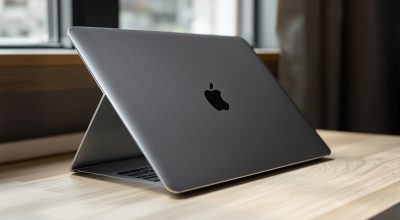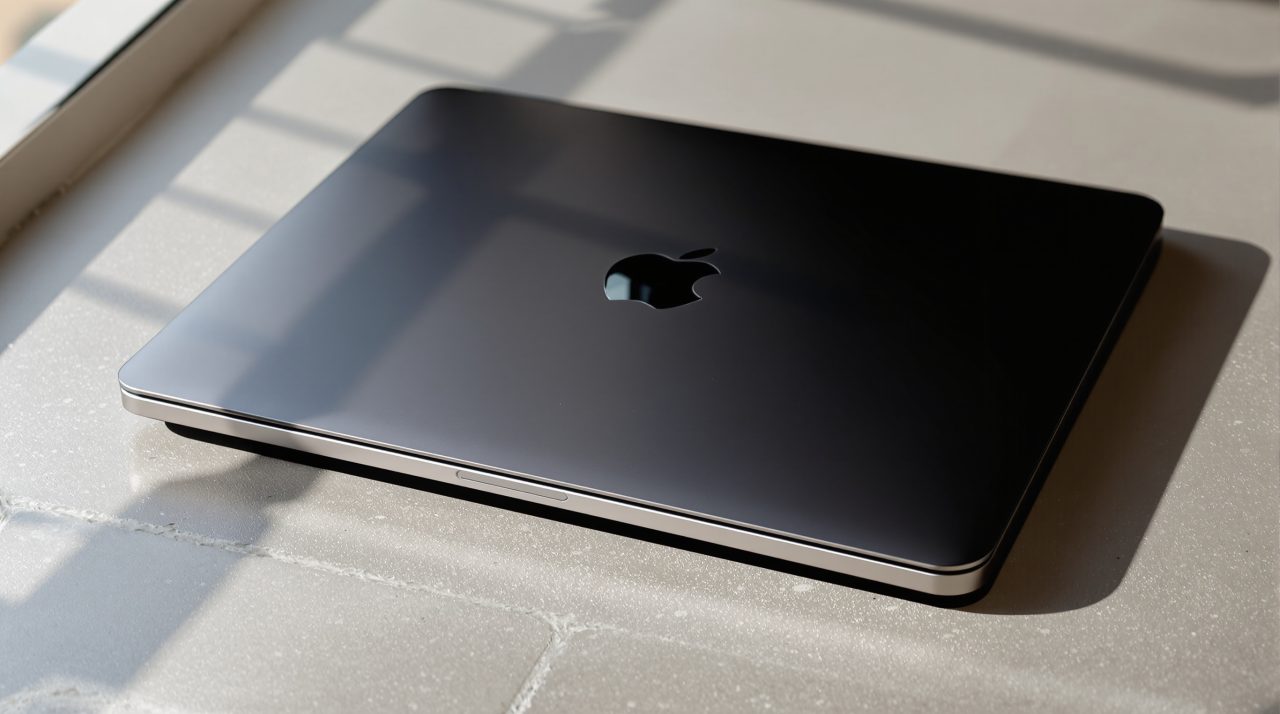
Apple’s first touchscreen MacBook Pro is confirmed. Mark Gurman at Bloomberg reported last week that the device will use the existing M5 Pro and M5 Max chips, paired with an OLED display, an updated industrial design that introduces Dynamic Island to Mac for the first time, and pricing expected closer to $4,000 than $2,500.
The device arrives in 14-inch and 16-inch configurations. The launch window is late 2026 or early 2027. That price is the number worth sitting with. The current 14-inch MacBook Pro with M5 Pro costs $2,499 after Apple’s recent price increases. The touchscreen model comes in at roughly double that, and it is not replacing the MacBook Pro lineup that already exists.
TL;DR: Apple’s first Mac with a touchscreen is the MacBook Pro, confirmed by Bloomberg’s Mark Gurman with M5 Pro and M5 Max chips, an OLED display, and Dynamic Island. Gurman estimates pricing closer to $4,000 than $2,500. It arrives late 2026 or early 2027, with an M7-powered follow-up confirmed for 2027.
What Apple confirmed about the touchscreen MacBook Pro
The device comes in 14-inch and 16-inch sizes, matching the current MacBook Pro lineup. M5 Pro handles the 14-inch base configuration; M5 Max is available in both sizes as the higher-end option.
The display is OLED, which would be a first for any Mac laptop. Current MacBook Pros use the Liquid Retina XDR panel that Apple has shipped in this form since 2021. OLED brings deeper blacks, higher contrast, and individually controlled pixels, the same technology shift Apple made with iPhone starting with the iPhone X in 2017.
Apple is also bringing Dynamic Island to Mac for the first time. The feature debuted on iPhone 14 Pro in 2022 and arrived on iPad Pro in 2024. The MacBook Pro becomes the third Apple platform to carry it, and the first on a traditional laptop lid.
Gurman describes the design as updated without detailing the hinge or chassis changes required to support a touch panel. This is not a convertible. The keyboard and trackpad remain. Touch input adds a direct interaction layer to the MacBook Pro form factor without changing its fundamental shape.
| Spec | MacBook Pro M5 Pro | Touchscreen MacBook Pro |
|---|---|---|
| Chip options | M5 Pro, M5 Max | M5 Pro, M5 Max |
| Display type | Liquid Retina XDR | OLED |
| Touch input | No | Yes |
| Dynamic Island | No | Yes |
| Sizes | 14″, 16″ | 14″, 16″ |
| Starting price | $1,999 | ~$4,000 |
| Available | Now | Late 2026 / early 2027 |
Why M5 chips instead of the M7 Apple is building now
The M5 Pro and M5 Max launched in the current MacBook Pro refresh in March 2026. Using existing silicon in the touchscreen model is a deliberate choice, not a gap in the product roadmap.
The engineering challenge here is the display stack, not the processor. Adding a reliable touch digitizer to a clamshell laptop alongside an OLED panel, accurate Dynamic Island cutout geometry, and thermal management across that form factor is the hard part. Reusing established M5 chips removes one variable from a complex product introduction and shortens the development timeline.
Using existing M5 chips in a touchscreen debut makes sense commercially, but it also means the version most people will reference in five years is the M7 follow-up.
Gurman confirmed an M7 Pro and M7 Max version of the touchscreen MacBook Pro is planned for 2027. The M7 chips are expected on TSMC’s second-generation 2nm process, a step above the 3nm node the M5 uses today.
The price in context of what Apple’s Mac lineup costs right now
Apple raised prices across its Mac and iPad lineup on June 25, 2026, citing the ongoing shortage of memory and storage components. The 14-inch MacBook Pro M5 Pro moved from $1,699 to $1,999. The 14-inch M5 Max moved from $2,499 to $2,999.
Gurman’s estimate of closer to $4,000 than $2,500 puts the entry touchscreen configuration above even the post-hike M5 Max. The premium reflects the OLED panel cost, the touch digitizer layer, and the Dynamic Island engineering. The memory cost pressures driving Apple’s broader price increases apply here too: OLED panels carry a significant manufacturing premium over the Liquid Retina XDR displays in the current lineup.
There is no official price yet. Gurman’s estimate is a floor, not a ceiling. The final number depends on storage tier options and which chip configuration ships at entry level.
Who the touchscreen MacBook Pro is actually for
The standard MacBook Pro is not going anywhere. Apple is positioning the touchscreen model above it, not replacing it. That separation matters for anyone deciding whether to wait for this device or buy what is already available.
Creative professionals working in digital illustration, motion graphics, or annotation-heavy document workflows have wanted touch input on a Mac for years. The iPad Pro with Magic Keyboard offers some of this experience but runs iPadOS, not full macOS. The touchscreen MacBook Pro closes that gap directly, at a price that makes it a considered purchase rather than a default one.
At $4,000 and above, most buyers do not need it. The rest of the MacBook lineup at lower price points covers writing, browsing, file management, and productivity apps. This model exists for a narrower set of workflows and is priced accordingly.
What changes if the M7 version is worth the wait
The M7 follow-up in 2027 will arrive with faster chips, and likely a more refined touch implementation based on what Apple learns from the M5 launch.
Apple’s pattern with first-generation products in new categories is consistent. The first MacBook with an M chip was followed by a faster M2 generation within two years. The first OLED iPad Pro shipped in May 2024, and a next-generation model with display improvements is already expected. First generation establishes the category; second generation optimizes it.
The M5 touchscreen MacBook Pro makes sense for buyers who need touch input on macOS now and can justify the price. For everyone else, the 2027 model is likely the one that ages better.