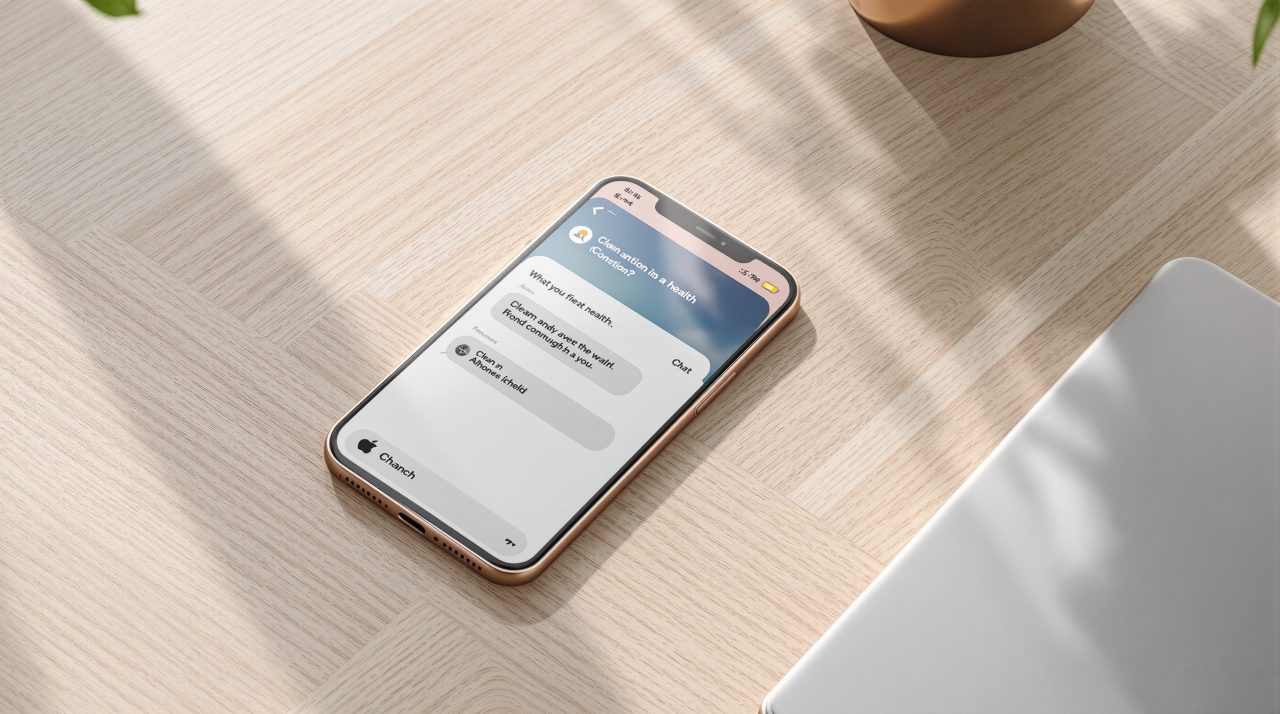
Apple has launched the Apple Health AI Study, a US research study that asks up to 200,000 volunteers to use a conversational health assistant and report how it goes, according to Apple Newsroom. Joining means downloading a dedicated app and answering health questions in plain language.
If you have ever typed a symptom into a chatbot at midnight and wondered how much to trust the answer, this study is Apple measuring exactly that. It also tells you where Apple’s health ambitions may be heading next.
TL;DR: The Apple Health AI Study enrolls up to 200,000 US adults aged 21 and older who own an iPhone 15 Pro or later running iOS 26 or later. Participants chat with a health assistant built with OpenEvidence and can optionally share HealthKit data. Apple says the data will not be used to train AI models, and the app is not meant to diagnose anything.
What the Apple Health AI Study asks you to do
Apple says the study looks at what drives trust in health AI, how good the answers are, whether people understand them, and what they do afterward. The findings are meant to shape how Apple designs these experiences.
Participants ask everyday health questions and get complicated medical information explained in approachable language. Each response comes with linked clinical citations, so you can check where a claim came from before repeating it to your doctor.
The answers come from OpenEvidence, a clinical AI platform that Apple says is widely used by healthcare professionals. Apple names The New England Journal of Medicine, JAMA and Nature among the sources it draws on. That choice says a lot about what Apple wants to test, because a chatbot that cites journals is a different product from one that sounds confident.
Who can join and which iPhone you need
Enrollment is limited to the United States, to adults aged 21 and older, and to an Apple Intelligence-enabled iPhone. In practice that means an iPhone 15 Pro or later running iOS 26 or later, per Apple’s announcement.
That requirement quietly rules out a large share of iPhones still in use. If your phone is a standard iPhone 15 or older, you can read about the study but not take part.
You enroll by downloading the Apple Health AI Study app from the App Store, reading how the study works, and choosing to join. Apple did not list an enrollment deadline or any compensation.
What happens to your health data
Sharing is optional. Participants decide whether to connect HealthKit data types such as resting heart rate, activity, sleep or lab results, and whether to answer survey questions. The redesigned iOS 27.3 beta Health app already lets testers log clinical lab results, one of the data types the study mentions.
Apple says study data will not be used to train AI models, and that it has security measures in place to protect the data it maintains and participants’ confidentiality. The app also has guardrails meant to spot certain concerning questions and point people toward a provider or other resources.
Apple states the app is not meant to diagnose or treat any condition or replace a clinician’s advice. That disclaimer matters, because the risks of leaning on a chatbot for medical decisions are not hypothetical, as one ChatGPT wrongful death lawsuit shows. Those claims remain unproven.
Who this study is really for
Apple’s own quote frames it as research first. Sumbul Desai, Apple’s vice president of health and fitness, says responsible innovation starts with scientific rigor and clinical grounding, and UCSF’s Robert Wachter says rigorously studying what works is how the field gets there.
Apple has not said this study leads to a consumer product. Even so, a health assistant that can read your sleep and heart rate data would be a natural fit for the Health app, and enrolling is the only way to see how Apple is testing the idea.