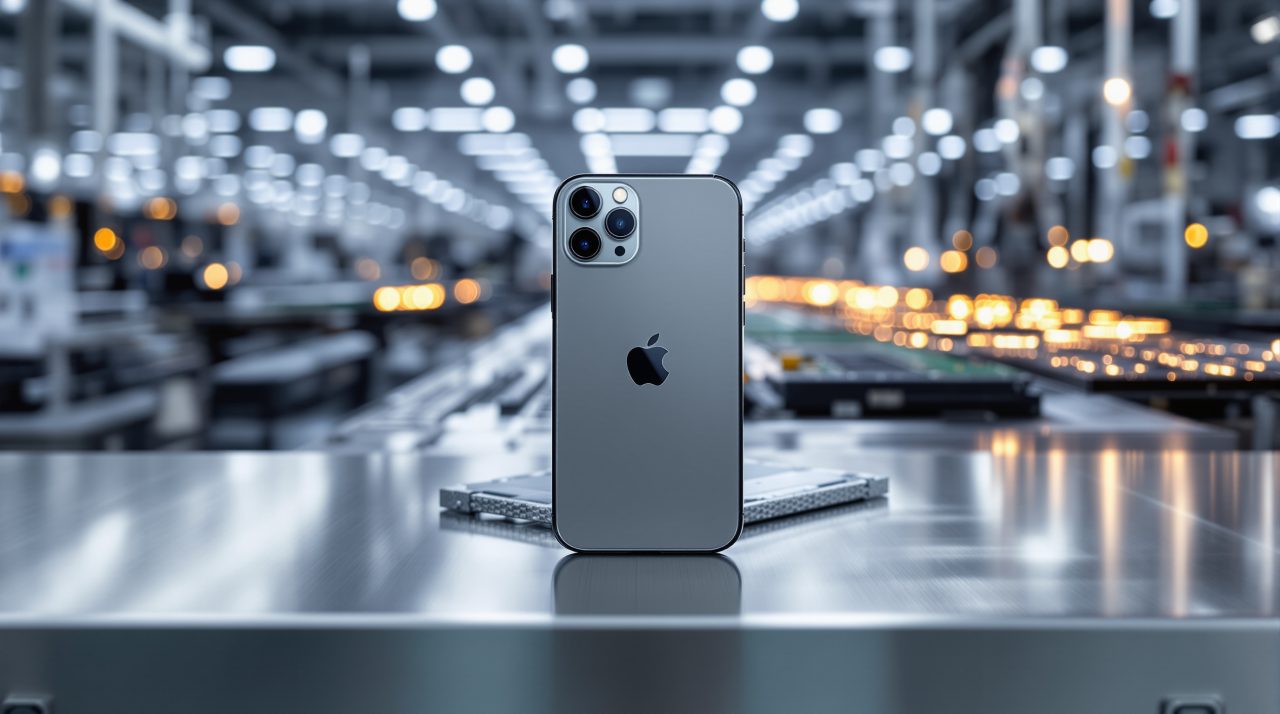
The Trump administration does not want Apple buying Chinese memory chips, and the message came directly from a cabinet official. Commerce Secretary Howard Lutnick told the Wall Street Journal that he personally relayed the administration’s opposition to Apple, a day after touring the company’s new manufacturing facility in Houston with Tim Cook. Apple has spent months negotiating for approval to buy chips from two Chinese suppliers, CXMT and YMTC, hoping to ease a memory shortage that has already pushed up iPhone and MacBook prices this year. If that route closes, the shortage driving those price increases has one less way out.
TL;DR: Commerce Secretary Howard Lutnick says the Trump administration opposes Apple sourcing memory chips from Chinese suppliers CXMT and YMTC, a plan Apple pursued for months to ease its RAM shortage. Lutnick told the Wall Street Journal he relayed that opposition to Apple directly. Apple’s COO says memory chips need little customization, meaning off-the-shelf Chinese chips were a real option. With that path now politically blocked, the fix for elevated iPhone and Mac prices looks further away.
What Commerce Secretary Lutnick actually said
Howard Lutnick did not soften the message. Speaking to the Wall Street Journal, the Commerce Secretary said the Trump administration is “not in favor” of Apple buying memory from Chinese suppliers, adding that “it’s not great American companies using Chinese memory.” Lutnick made the comments a day after joining Tim Cook at Apple’s new Advanced Manufacturing Center in Houston, alongside Senator Ted Cruz and other officials.
Asked whether he had told Apple directly, Lutnick said he had done so “plainly.” That leaves little room for Apple to read the administration’s position as anything but a firm no, at least for now.
| Event | Date | Detail |
|---|---|---|
| Apple tests Chinese DRAM | July 8, 2026 | Apple reported testing memory chips from CXMT |
| Senate pushback | July 29, 2026 | Bipartisan senators urge Apple to drop the plan |
| Houston facility visit | August 13, 2026 | Lutnick and Cook tour Apple’s Advanced Manufacturing Center |
| Lutnick opposition confirmed | August 14, 2026 | Commerce Secretary tells WSJ the administration opposes the plan |

Why Apple wanted Chinese memory chips in the first place
Apple has been negotiating for months to buy memory chips from two Chinese companies, CXMT and YMTC, according to the Journal. Apple was already testing CXMT-made memory chips as of July 8, 2026, as it looked to diversify away from suppliers squeezed by the same AI-driven demand behind the broader RAM shortage hitting phone and computer prices industry-wide.
The catch is that YMTC sits on the US Commerce Department’s Entity List, and the Pentagon has separately labeled both YMTC and CXMT as Chinese military companies. Apple COO Sabih Khan told the Journal that memory chips need little customization compared with other iPhone components, meaning Apple could plausibly use off-the-shelf Chinese chips without triggering the export control rules that apply to sharing custom design data.
The pushback started weeks before Lutnick’s comments
Lutnick is not the first Washington voice to object. A bipartisan group of senators urged Apple in July to abandon its Chinese memory chip plans entirely, citing the same national security concerns tied to the Entity List designation.
Apple has not hidden its interest in the option. Tim Cook told investors on the company’s July 30 earnings call that Apple is “evaluating all options” for its memory supply, while cautioning that adding suppliers “may not necessarily mean lower product prices.” That framing now looks like Cook preparing investors for exactly the outcome Lutnick is describing.
Apple’s Houston visit was supposed to buy goodwill
Lutnick’s blunt comments came during what was meant to be a friendly photo opportunity. He toured Apple’s new Advanced Manufacturing Center in Houston with Cook a day earlier, one stop in the company’s $600 billion domestic manufacturing commitment.
That investment is widely read as an attempt to stay in the administration’s good graces while Apple pushes for exceptions elsewhere, like the Chinese memory chip request. Lutnick’s comments suggest the goodwill from Houston does not automatically extend to every supply chain decision Apple wants to make.
What this means for your next iPhone or Mac
Apple’s Chinese chip plan was never guaranteed to lower prices, but it was one of the few concrete levers the company had pulled to ease the shortage behind this year’s price increases. Memory-driven price hikes have already landed on Apple’s laptop lineup this year, and the same math sits behind the iPhone 18 Pro’s pricing strategy.
With Chinese chips facing direct political resistance, Apple’s remaining options are the slower ones, waiting for global memory production to catch up, or absorbing costs the way it already has elsewhere in the lineup. Neither moves as fast as a new supplier would have, and that gap between political signaling and market reality is usually where price increases end up surviving.