Plug a friend’s OnePlus into a 100W charger and walk away for half an hour. Come back, and it is basically around 80 percent or even more.
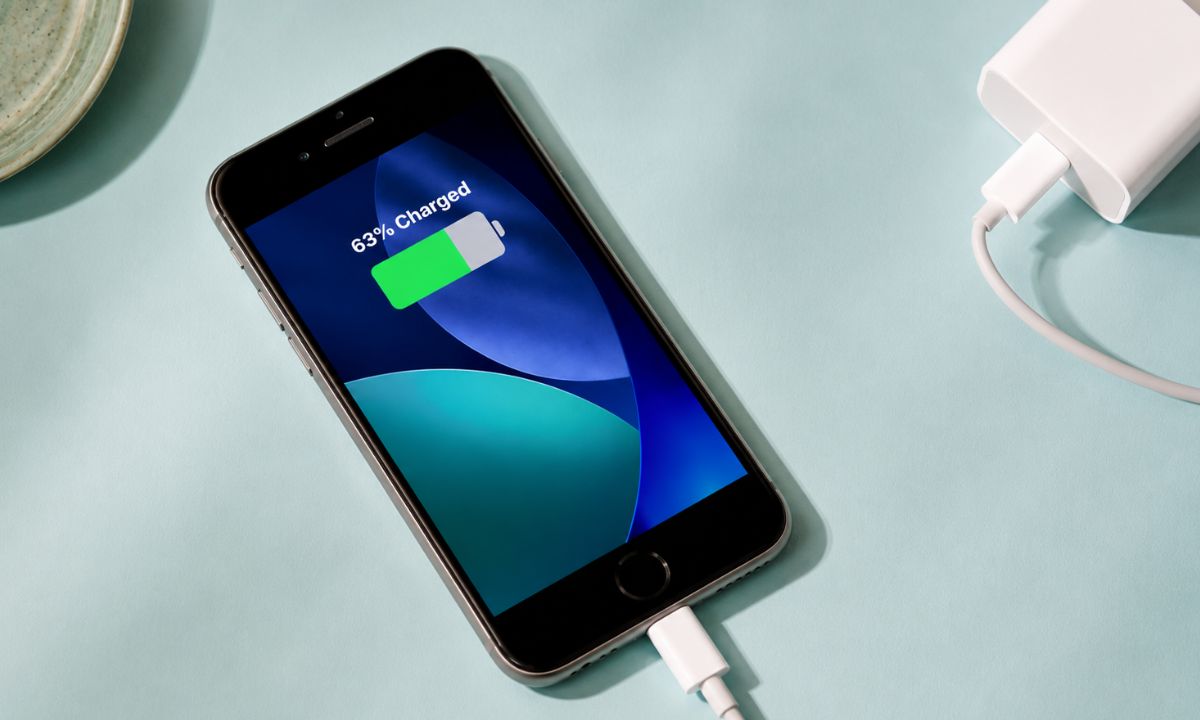
Next, put your iPhone 16 into a 30W adapter for charging and walk away for the same half hour. You are probably around 55 percent.
The frustration that follows is real. As an iPhone user, I can vouch for this. That gap between how Android and an iPhone charge is real; it is documented, and there is a specific reason for it.
The first thought that comes into mind is the battery size. Well, primarily, that is not the case. It is not a processing power problem either.
It is a deliberate decision Apple made, and they have not been particularly quiet about why. Understanding it changes how frustrated you are allowed to be when it comes to enduring the slow charging of your iPhone.
TL;DR: Apple deliberately caps iPhone wattage at around 30W to reduce heat and protect battery health long-term. Android brands use proprietary fast-charging systems that push 60W to 120W. Optimized Battery Charging also slows overnight charging by design, pausing at 80 percent until just before you wake. The iPhone 17 Pro is finally closing the gap, hitting 36W sustained and taking about 75 minutes for a full charge versus nearly 100 minutes on the iPhone 16 Pro.
The actual wattage numbers, side by side
| Phone | Wired charging | 0-100% time | Battery size |
|---|---|---|---|
| iPhone 16 Pro Max | ~30W sustained | ~100 minutes | 4,685mAh |
| iPhone 17 Pro Max | ~36W sustained | ~75 minutes | ~4,685mAh |
| Samsung Galaxy S26 Ultra | 60W | ~49 minutes | 5,000mAh |
| OnePlus 13 | 100W SuperVOOC | ~35 minutes | 6,000mAh |
| Xiaomi (HyperCharge) | Up to 120W | Under 30 minutes | Varies |
The iPhone 16 Pro Max charges at a sustained rate of around 27 to 30W wired, with brief peaks near 37W under heavy load.
Apple’s marketing claims 50 percent in 30 minutes with a 20W adapter, which is the same line they used for the iPhone 15. ChargerLAB’s lab testing confirmed those figures and found that sustained speeds rarely exceed 30W regardless of how large the adapter is.
Compare that to the Samsung Galaxy S26 Ultra at 60W wired, reaching 78 percent in 30 minutes and a full charge in around 49 minutes.
The OnePlus 13 supports 100W SuperVOOC and fills its 6,000mAh battery from dead to full in roughly 35 minutes per GSMArena’s testing. Xiaomi’s HyperCharge reaches 120W on retail devices. These are mainstream flagship numbers, and not lab experiments.
The iPhone’s battery is also smaller. The iPhone 16 Pro Max carries 4,685mAh while the OnePlus 13 has 6,000mAh. Apple is pushing less power into a smaller battery, and it still takes longer. That combination is the clearest illustration of the gap.
Why Apple limits charging speed on purpose?
Apple’s position on this has been consistent across multiple product generations. The company caps wattage to reduce heat generation inside the cell during the charging process.
Heat is the primary long-term enemy of lithium-ion batteries. A battery stressed by repeated high-temperature charge cycles degrades faster, loses capacity sooner, and delivers worse performance earlier in its life.
Battery University, one of the most cited references in battery electrochemistry, documents that elevated cell temperature accelerates capacity loss more than almost any other operational factor.
A lithium-ion cell held at 40 degrees Celsius loses capacity significantly faster than one kept at 25 degrees, across equivalent charge cycles. Apple’s conservative wattage keeps the phone cooler during charging, which in theory extends how long the battery stays healthy over the full ownership period.
There is real logic to this. The counterargument is that many Android brands have solved the heat problem through engineering rather than avoidance.
Xiaomi and OnePlus invest heavily in multi-stage charging curves, dual battery cell designs, and dedicated thermal management to keep temperatures down even at 100W and above. Apple has historically declined to compete on that engineering front.
Optimized Battery Charging makes it look even slower
Layered on top of the wattage ceiling is Optimized Battery Charging, on by default since iOS 13.
It learns your daily routine and deliberately holds the charge at 80 percent overnight, only finishing the last 20 percent shortly before your predicted wake-up time. Apple confirmed this behavior directly in its support documentation.
If you plug in at 11 PM, your phone may sit at 80 percent for several hours. Anyone who does not know this is happening will unplug at 6 AM, confused about why they are at 82 percent.
It is not a bug. The chemistry behind it is sound: high state-of-charge storage genuinely accelerates lithium-ion degradation, and minimizing the time spent at 100 percent has measurable benefits over the battery’s lifespan.
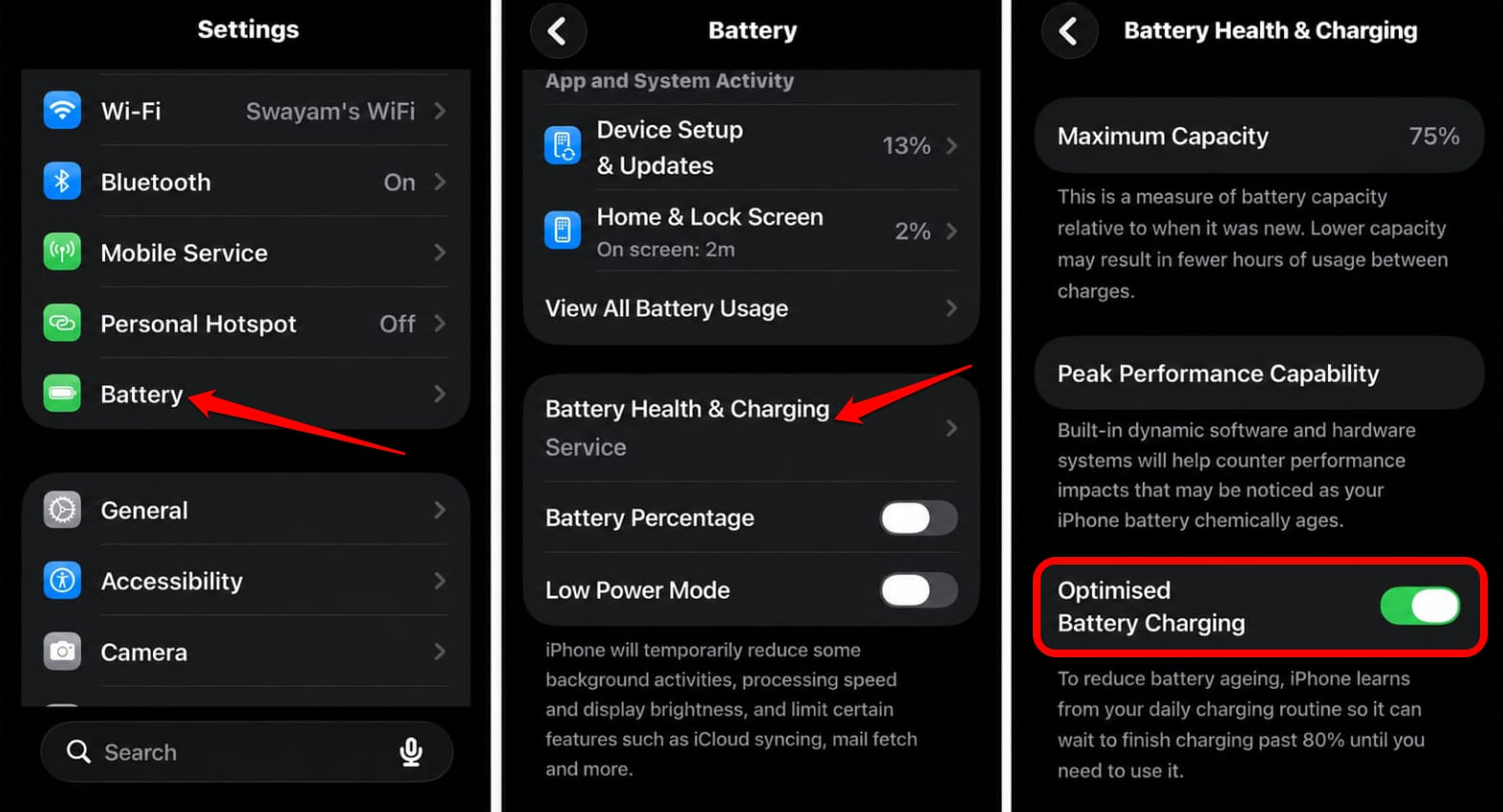
To disable it,
- Open the Settings app.
- Go to Battery > Battery Health and Charging.
- Enable Optimized Battery Charging.

The mystery behind the last 20 percent battery
Every lithium-ion phone slows down significantly after around 80 percent charge, regardless of brand.
The constant-current phase, where the charger pushes a high, stable rate of power, covers the first 80 percent. After that, it switches to a constant-voltage phase, tapering current down gradually to avoid overcharging the cell. The last 20 percent takes nearly as long as the first 80.
Apple leans into this taper more conservatively than most Android manufacturers. The result is a charging curve that feels particularly slow when you need to get from 85 to 100 percent quickly before heading out. iPhones are not uniquely bad here, but they are calibrated more cautiously than the competition.
Why do Android devices charge so fast?
Android manufacturers built proprietary systems specifically to solve the problem Apple declined to engage with.
OnePlus SuperVOOC, Xiaomi HyperCharge, and Samsung Adaptive Fast Charging all let the charger and phone negotiate higher voltages and currents than standard USB Power Delivery allows.
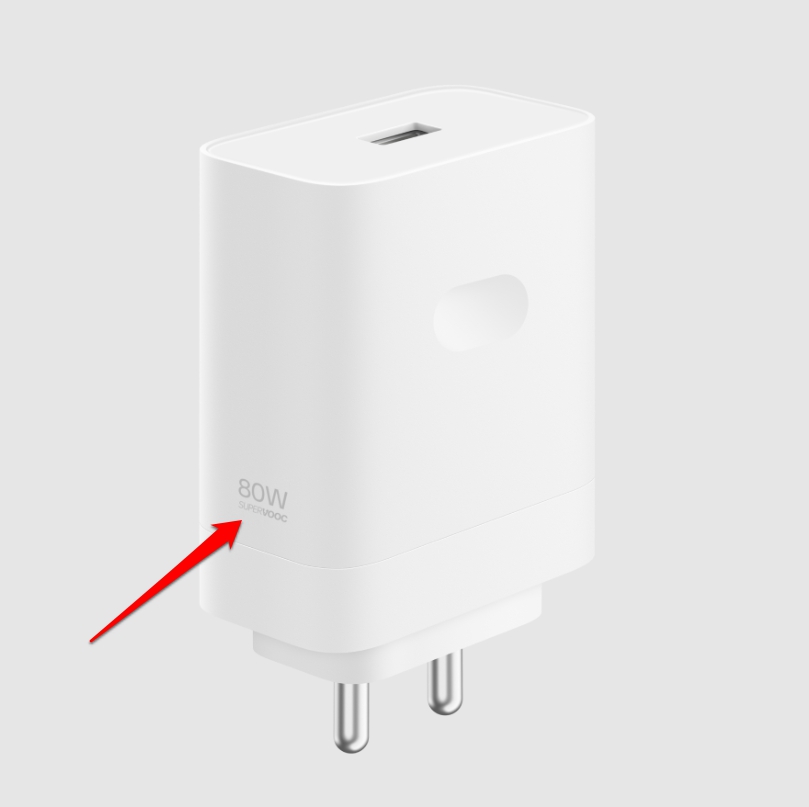
These systems are hardware-specific and non-interoperable. A OnePlus 100W SuperVOOC adapter will not push 100W into a Samsung. A Xiaomi 120W brick will not fast-charge an iPhone above standard USB-PD speeds. Each requires a matched hardware pair.
Apple uses universal USB-C Power Delivery. A quality third-party 40W USB-C PD charger gets close to the iPhone 17’s maximum speed.
That universal compatibility is a real-world advantage that tends to get underweighted in wattage comparisons.
How iPhone 17 changed the math?
The iPhone 17 Pro and Pro Max are the first models where Apple meaningfully broke from years of stagnation on charging speed.
PhoneArena’s real-world testing showed the iPhone 17 Pro reaching 67 percent in 30 minutes, up from 58 percent on the iPhone 16 Pro. A full charge now takes around one hour and 15 minutes, compared to roughly one hour and 40 minutes on the previous generation.
ChargerLAB measured peak charging speeds of up to 36W on the iPhone 17 Pro Max, a roughly 20 percent year-on-year gain.
A CNET charging test across 33 smartphones in 2026 ranked the iPhone 17 Pro second overall on combined wired and wireless speed, behind only the Galaxy S26 Ultra. The wired gap in a 30-minute test was two percentage points.
The iPhone Air and iPhone 17e still use 20W wired. If you are not on the current iPhone 17 Pro or standard model, the old ceiling still applies. And at the extreme high end of Android, OnePlus and Xiaomi are still in a different wattage bracket entirely.
Frequently asked questions
Does a more powerful charger make my iPhone charge faster?
Up to a point, yes. The iPhone 17 Pro charges fastest with a 40W or higher USB-C PD adapter. Going above that wattage adds nothing because the iPhone’s own power management chip caps what it accepts.
Why does my iPhone stop charging at 80 percent overnight?
That is Optimized Battery Charging, on by default since iOS 13. It pauses at 80 percent and finishes just before your predicted wake-up time to reduce time spent at full charge, which slows battery degradation.
Will a Samsung or OnePlus fast charger work on my iPhone?
Only at standard USB-C PD speeds. Proprietary fast-charging protocols like SuperVOOC and HyperCharge are not compatible with iPhone and will not push higher wattage into it.
Does fast charging damage iPhone battery?
Apple’s own charging speeds are unlikely to damage the battery. The risk with fast charging is heat. Since Apple limits iPhone wattage to control heat, battery stress from charging is lower than on many high-wattage Android phones.
Which iPhone charges the fastest?
The iPhone 17, iPhone 17 Pro, and iPhone 17 Pro Max all support up to approximately 36 to 40W wired charging with a compatible adapter. The iPhone Air and iPhone 17e are still limited to a 20W wired charger.