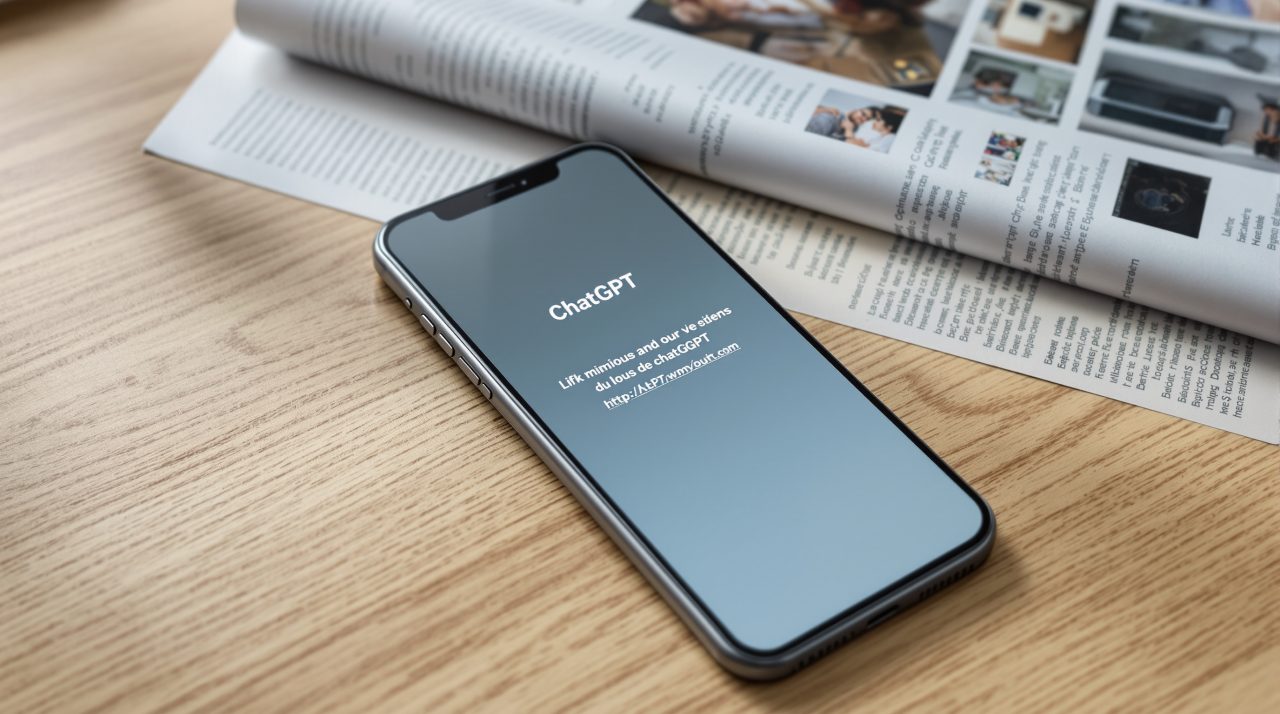
Le Groupe Figaro and OpenAI announced a strategic partnership on November 18, 2026, that makes Le Figaro journalism discoverable in ChatGPT. The Le Figaro OpenAI partnership covers current reporting and archive articles, shown as summaries and excerpts with links back to the original stories.
If you ask ChatGPT about French news, Le Figaro becomes a named, linkable source instead of something paraphrased without a trail. Whether that sends readers to the publisher is the open question, and the announcement does not answer it.
TL;DR: OpenAI and Le Groupe Figaro have signed a partnership that brings Le Figaro articles and archives into ChatGPT as summaries and excerpts with links. Le Figaro keeps editorial control and plans to roll out ChatGPT Enterprise internally. No price, length of deal or training terms were published, so the real effect on readers and traffic is still unknown.
What the Le Figaro OpenAI partnership covers
OpenAI’s announcement says the deal spans current reporting and archive content from Le Figaro and associated publications, across news, business, culture and lifestyle. Articles will be discoverable in ChatGPT through summaries and excerpts, each including links to the underlying stories.
That link detail matters. A summary without a link answers the question and ends the visit, while a summary with a link at least leaves the door open to the original article.
Le Figaro will retain full editorial independence and control over its journalism, according to OpenAI. That sentence reads like a promise about the newsroom, not about how ChatGPT will treat the articles once they are in it.

Two French publisher deals in two days
OpenAI announced a partnership with LVMH’s Media Division on November 16, 2026, two days before the Figaro news. Le Figaro follows that group into ChatGPT.
Taken together, the two announcements show OpenAI adding named French publishers one at a time, which should give ChatGPT more to draw on when someone asks about French politics, business or culture.
The quotes in the announcement point the same direction. Groupe Figaro CEO Marc Feuillée says the deal builds on the work of more than 600 journalists, and OpenAI’s Varun Shetty, Vice President of Media Partnerships, says the aim is to help more people discover Le Figaro’s reporting.
What the announcement leaves out
OpenAI’s post gives no financial terms, no contract length and no statement on whether the articles are used to train models. Publishers weigh those details heavily, and readers rarely see them.
It also does not say when the Figaro content appears in ChatGPT, in which languages, or on which plans. That is the detail most coverage will skip, and it decides whether a US reader ever notices the change.
Scrutiny of OpenAI is running at the same time elsewhere, as the Oregon lawsuit over ChatGPT and child safety shows. Licensing deals with publishers sit in a very different corner of that picture, but they feed the same question of how much people should trust what ChatGPT says.
What this means if you use ChatGPT for news
The announcement also says Le Figaro plans to introduce ChatGPT Enterprise across various teams and to explore other uses of OpenAI technology in its workflows and reader services, guided by its AI charter and editorial standards.
For an English-language reader in the US, the useful habit is simple. When ChatGPT shows a linked excerpt, open the link, because the excerpt is a pointer and the article is the record.
ChatGPT keeps taking on new jobs, including ChatGPT Wallet for agent purchases. Handing it more of your news diet is a similar choice: convenient, and worth making deliberately.