Google rolled out a Waze Gemini update on July 13, 2026, and the release draws a clear line between what US drivers get right now and what they are still waiting for. Google’s own Waze blog, authored by Waze general manager Gai Berkovich, confirms five separate changes shipping at once, and only three of them are live everywhere Waze operates today.
The update touches how Waze routes you, how much it talks, how you report road problems, and how you search for a destination. Two of the five pieces are gated: one to a small beta group, one to seven countries that do not include the United States. Here is what actually changes for a US driver opening Waze this week, and what is still out of reach.
Waze now remembers how you actually drive
Personalized navigation is the first change, and it is rolling out now globally on Android and iOS. Waze will track your previous trip choices, whether you consistently pick highways over side streets or take routes with fewer stops, and start surfacing those preferences first the next time it calculates a route.
The feature layers on top of Waze’s existing traffic-pattern modeling rather than replacing it. Drivers who do not want the personalization can turn it off entirely in settings or simply pick a different suggested route each time, according to Google’s announcement.
The app finally has a volume knob for its own voice
Less chatty mode is the second change, also live globally on both platforms starting this week. Turning it on cuts down how often Waze interrupts with turn-by-turn narration, keeping only the alerts that matter, like an upcoming hazard or a lane change, while trimming the rest.
Less chatty mode does not go silent. Google’s post specifies that critical reminders about hazards and turns still come through, just less frequently, which keeps the safety function of voice guidance intact for anyone who mainly wants Waze to stop talking over a podcast.
Reporting a closed road no longer needs the right words
Conversational Reporting expands with this update too. The feature has let drivers describe traffic slowdowns out loud since it entered beta in 2024, and Waze now extends that same natural-language reporting to road closures and outdated addresses. Saying “the road is closed here” is enough for Waze to route the report to local map editors for verification, rather than requiring a driver to tap through a specific incident-type menu.
Reporting road updates conversationally is also live globally on Android and iOS starting this week, alongside the personalization and less chatty features.
Asking Waze to find a gas station only works if you are in the beta
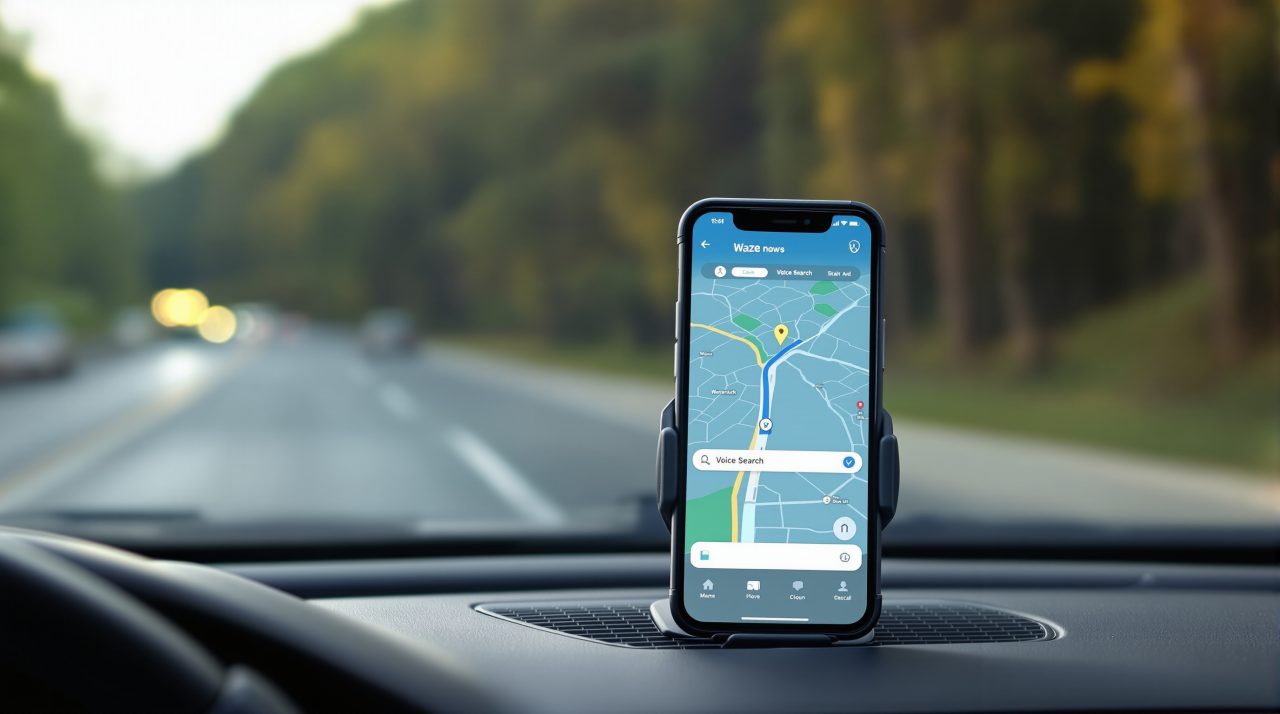
The feature most likely to get attention, Gemini-powered destination search, is the one with the narrowest rollout. Google’s announcement describes tapping the search voice icon and asking something like “find me a gas station nearby with the lowest prices” or “find parking close to Grand Mall,” with Waze returning a list of matching results a driver can start navigating to immediately.
This mirrors Ask Maps, the similar Gemini-powered search Google already built into Google Maps, which suggests Waze is catching up to a capability its sibling app has had for some time. Google’s own post specifies this feature is rolling out only to the Waze beta community, not the general release, so most US drivers will not see the search voice icon behave this way yet. Anyone curious how Google’s Gemini rollout has played out across its other apps can see the pattern repeat in DigitBin’s ongoing audit of Gemini across Gmail, Docs, Photos, and Chrome, where the same beta-first, wide-release-later approach shows up again and again.
Motorcycle mode is the headline feature, and it skips the US entirely
The most heavily promoted piece of this update, an AI-powered Motorcycle mode that factors in two-wheeler shortcuts, lane restrictions, and hazards like raised crosswalks and narrow bridges, is rolling out in Argentina, Brazil, Colombia, Malaysia, Mexico, Peru, and the Philippines. The United States is not on that list.
Google’s post frames this as a starting set of markets “with more countries on the way,” which leaves the timeline for a US rollout unconfirmed. American motorcyclists who have watched Waze’s car-first routing miss narrower legal shortcuts for years are stuck waiting alongside everyone else.

Related
Gemini Intelligence Android 17: What It Does and What It Promises
What the Waze Gemini update actually turns on for US drivers
| Feature | What it does | Status for US drivers |
|---|---|---|
| Personalized navigation | Learns and prioritizes your usual route preferences | Live now, Android and iOS |
| Less chatty mode | Reduces non-critical voice prompts | Live now, Android and iOS |
| Conversational reporting for map updates | Report closures and address errors by talking naturally | Live now, Android and iOS |
| Gemini destination search | Voice search for nearby places by description, not name | Beta community only |
| Motorcycle mode | AI-routed two-wheeler shortcuts and hazard alerts | Not available; live in 7 non-US countries |
Why Google is spreading Gemini this thin across Waze
The staggered rollout fits a pattern Google has used across its Gemini push this year: ship the lower-risk personalization and safety tweaks broadly, then hold back the features that need more real-world tuning, like natural-language search or region-specific routing rules for motorcycles, until a smaller group has stress-tested them. Android 17’s own Gemini Intelligence rollout followed the same narrow-first approach on phones before expanding.
Waze already ran that same playbook with Conversational Reporting itself, which spent months in a trusted-tester beta after its original 2024 announcement before reaching a wider release. If that timeline repeats, Gemini destination search and Motorcycle mode’s US expansion are more a matter of when than if, but Google has not committed to a date for either.