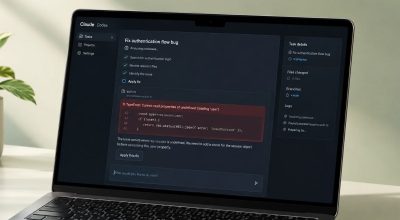
Anthropic launched Claude Ship on November 23, 2026, a beta set of agents that review GitHub pull requests, push fixes and, where a team’s policy allows it, approve them. The idea is that code written by agents should not then wait for a person to click approve on every routine change. Claude Ship is limited to Team and Enterprise plans and to GitHub repositories, and its approval agent can sign off on a change that nothing has reviewed if a team writes its policy that way.
What Claude Ship does to a pull request
Claude Ship bundles three agents. Code Review reads a change against the surrounding codebase and posts findings, with Quick, Standard and Deep levels that admins set per repository. It has been generally available since October 15, 2026, when Anthropic said most reviews finished in 6 to 10 minutes instead of about 20 during the preview.
The two new agents are in beta. PR Steward steps in on failing CI checks, merge conflicts and review comments, and after every push it comments with what it changed and how to undo it. Anthropic says it is designed not to approve or merge anything, and developers can steer it with an @claude comment or halt it with @claude stop.
Claude Approvals makes the decision. It applies a policy file that lives in the repository, and Anthropic describes it as working like a smarter CODEOWNERS file. A routine change can pass on Claude’s say-so, while riskier paths can still demand people.
Solo developers get a shortcut. Typing /ship in Claude Code pushes the change, opens the pull request, reviews it and works on feedback and failing checks, and the command is rolling out in Claude Code and the desktop app from launch day. What can merge still depends on the developer’s permissions and the repository’s branch rules.
Anthropic offers one internal number: on the Claude Code team, merged pull requests more than doubled from June to September while the share reverted fell by more than 40%. The company frames Claude’s review as one layer of a broader process there, so the figure does not show what review alone achieved.

Who can use it and what it costs
Claude Ship is available on Team and Enterprise plans for repositories on GitHub, including GitHub Enterprise Cloud. It is not available to organizations with Zero Data Retention, the HIPAA configuration or customer-managed encryption keys, and Approvals cannot start under FERPA or Access Transparency settings, according to the Claude Approvals documentation.
Billing runs on tokens through an organization’s usage credits, separate from what the plan includes. Admins can set spend limits for Code Review and PR Steward, though PR Steward has no limit of its own until one is set. Approvals has no base charge, but its classifiers are billed, and a policy that asks for Claude’s review triggers a billed Code Review even in observe mode.
That makes the recommended trial run, observe mode first, a paid one. Eligible Enterprise organizations can claim at least $10,000 in Claude Ship credits to use within 30 days of claiming, with claims open until January 15, 2027. Running /ship itself counts as regular Claude Code usage.

Where approvals can slip through
The documentation is blunt about the gaps. The Claude Approvals check blocks a merge only where a team makes it a required check in GitHub, and normally not in observe mode. A policy that asks for one seat can be filled by the author, and with zero seats a pull request written by a bot can merge when no person has looked at it.
Two settings matter most for teams that want Claude to approve. A rule that lets Claude approve starts no Code Review by itself, so Claude can approve a change nothing has reviewed unless the policy only allows approval when Code Review passes. And where a GitHub branch rule requires one approval, Claude’s approving review can count as that approval.
Adding a policy file can also quietly switch off automatic reviews. Where every file in a pull request falls under the policy, automatic Code Reviews normally stop unless a rule names claude/code_review. The Claude Ship documentation adds a plain warning that the agents use AI and may miss bugs or security vulnerabilities, which is why a policy that keeps people on risky paths is the part worth getting right first.