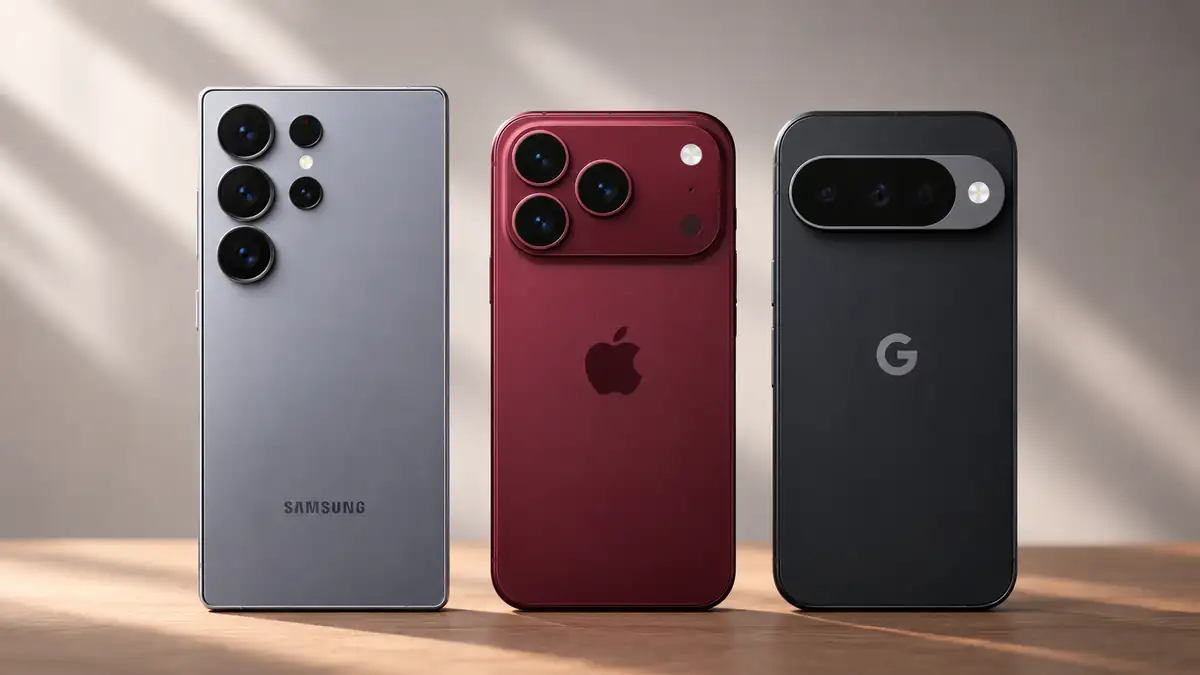
The iPhone 18 Pro Max starts at $1,299 in the US, the Pixel 11 Pro XL at $1,299, and the Galaxy S26 Ultra at $1,299.99 before trade-in, so the price tag won’t tell you which one has the chip worth having. What you get for the same money is three very different bets, and you tend to find out about them late: when a game starts dropping frames, when a map session leaves the phone warm, or when a photo lingers a beat too long on screen. That is why A20 Pro vs Snapdragon 8 Elite Gen 5 vs Tensor G6 matters less as a speed contest than as a question of what each company wants its chip to do.
So why do Apple and Google build their own chips, and why does Samsung do both? Apple and Google design their own A-series and Tensor chips, while Samsung designs Exynos but still buys Snapdragon for the Ultra and every US model. Each company, going by the public record, is protecting something different: Apple its control over the whole device, Samsung its supply and its bestseller, Google its AI features and its budget.
We use the Snapdragon 8 Elite Gen 5 in the Galaxy S26 Ultra as a yardstick, because most Android flagships have shared it, and we don’t treat it as a scoreboard. Nothing here comes from our own testing. Specs come from the companies’ own pages, benchmark numbers from Geekbench and 3DMark, and each opinion about why a company chose its chip is ours.
TL;DR: Apple’s A20 Pro leads on single-core speed, and the iPhone 18 Pro Max holds its pace best in heat tests, helped by Apple designing the chip and the phone together. Samsung hedges with Snapdragon in the Ultra and every US model, which makes its phone the steadier all-rounder, while Google’s Tensor G6 is fast enough for daily use, trails in gaming and heat, and bets on AI and camera features. Process size sorts none of them.
A20 Pro vs Snapdragon 8 Elite Gen 5 vs Tensor G6: what each phone runs
The iPhone 18 Pro runs Apple’s A20 Pro, a 6-core CPU with 2 super cores and 4 efficiency cores plus a 7-core GPU, as listed on Apple’s tech specs page. It is built on TSMC’s 2nm process. The Galaxy S26 Ultra runs the Snapdragon 8 Elite Gen 5 for Galaxy, a 3nm processor, and the Pixel 11 Pro runs Tensor G6.
Tensor G6 is a 3nm chip. Google’s hardware VP, Peng Yu-chun, confirmed to Taiwan’s CNA that it uses TSMC’s refined 3nm process. Google’s own pages don’t list a node, and pre-launch coverage on this site pointed to 2nm too, so treat any source still calling G6 a 2nm chip as out of date.
Samsung splits its range. The Ultra uses Snapdragon everywhere, and so do the S26 and S26+ in the US, while Europe and other regions get Samsung’s own Exynos 2600 in those two models. UK buyers should check the listing, because the chip depends on the market.
The yardstick is also a generation behind. Qualcomm announced two newer chips on September 22, 2026, the Snapdragon 8 Elite Gen 6 and the faster Snapdragon 8 Elite Extreme Gen 6, both on a 2nm process, so the Gen 5 in the S26 Ultra is the previous generation, though it is still what Samsung’s current Ultra ships with.
| Spec | A20 Pro (iPhone 18 Pro) | Snapdragon 8 Elite Gen 5 (Galaxy S26 Ultra) | Exynos 2600 (S26 and S26+, some regions) | Tensor G6 (Pixel 11 series) |
|---|---|---|---|---|
| Process | 2nm (TSMC) | 3nm | 2nm GAA (Samsung) | 3nm (TSMC) |
| CPU cores | 6 (2 super, 4 efficiency) | 8 (2 at 4.74GHz, 6 at 3.62GHz) | 10 (1 + 3 + 6) | 7 (1 + 4 + 2) |
| GPU | 7-core Apple GPU | Adreno 840 | Xclipse 960 | PowerVR CXTP-48-1536 |
| Geekbench 7 single-core | 3,994 (Pro Max) | 2,914 | No comparable figure in our sources | 2,112 to 2,293 (Pro XL runs) |
| Where it ships | iPhone 18 Pro and Pro Max | S26 Ultra everywhere, S26 and S26+ in the US | S26 and S26+ in Europe, Korea and other regions | Pixel 11 series |
| Maker’s main pitch | GPU up to 40% faster than the previous generation, vapor cooling | CPU 19%, NPU 39% and graphics 24% gains over the S25 Ultra, per Samsung | Deca-core CPU with Arm C1-Ultra, Xclipse 960 GPU | 50% more TPU compute for on-device AI |
App speed and touch: Apple’s single-core lead is the gap you would notice
The clearest difference between these chips is single-core speed, the number behind how quickly an app opens and a page finishes rendering. In Geekbench 7 the iPhone 18 Pro Max scores 3,994 single-core and 11,256 multi-core, and the iPhone 18 Pro 3,988. The Galaxy S26 Ultra scores 2,914 and 9,989, which puts the Apple phone about 37% ahead on single-core and 13% on multi-core.
Tensor G6 sits at the other end. The Pixel 11 Pro XL scores 2,112 to 2,293 single-core in individual Geekbench 7 runs, roughly 21% to 28% below the S26 Ultra, and we found no chart average yet. Against last year’s phone, single runs show the Pixel 10 Pro XL at 1,997 and the 11 Pro XL at 2,293, about 15% up.
Apple put its effort into a few very fast cores: two at 4.93GHz and four at 2.64GHz, against the S26 Ultra’s two at 4.74GHz and six at 3.62GHz.
The A20 Pro die measures about 98.2 square millimeters, almost the A19 Pro’s size, and the chip adds a GPU core and much more neural processing area. Memory now sits beside the processor in one package instead of on top, which may help move heat out, per TechInsights’ preliminary teardown. Apple took the new node’s density and filled it with hardware instead of banking the saving.
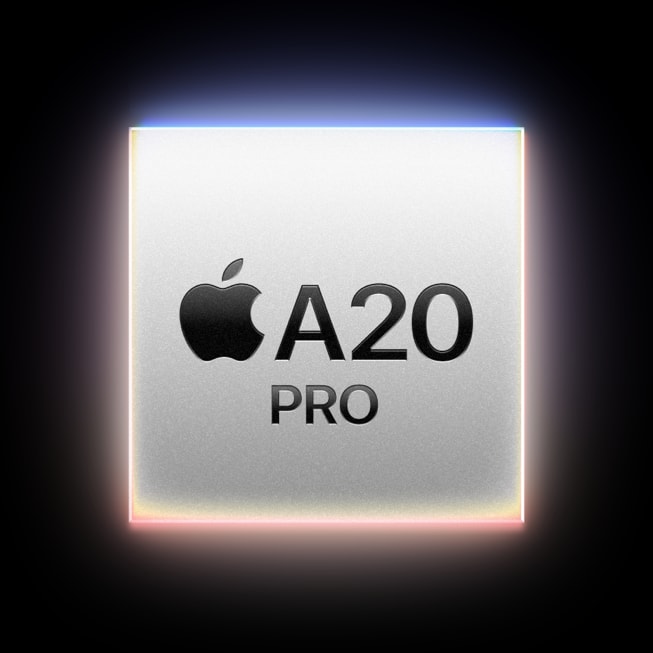
Our read: that is a choice only a company selling the whole phone can make. Nobody else can buy an A20 Pro, so nobody else can match an iPhone by buying the same part, and Apple can tune the chip, the cooling and iOS as one thing.
Daily use narrows that gap. Most app launches, scrolling and messaging don’t use a flagship chip’s full single-core headroom, so the Pixel’s deficit shows up mainly in long games and heavy edits. That is our read, since we found no test that measures it directly.
Touch is harder to separate. We found no test that measures touch latency on all three phones, and in our understanding it depends more on the panel and touch controller than on the main chip.
Samsung hedges: Snapdragon where the sales are, Exynos where it can
Samsung’s S26 range is the clearest case of a company covering its bets. Samsung reportedly planned roughly 70% of S26 phones on Snapdragon and 30% on Exynos, with the Ultra on Snapdragon everywhere.
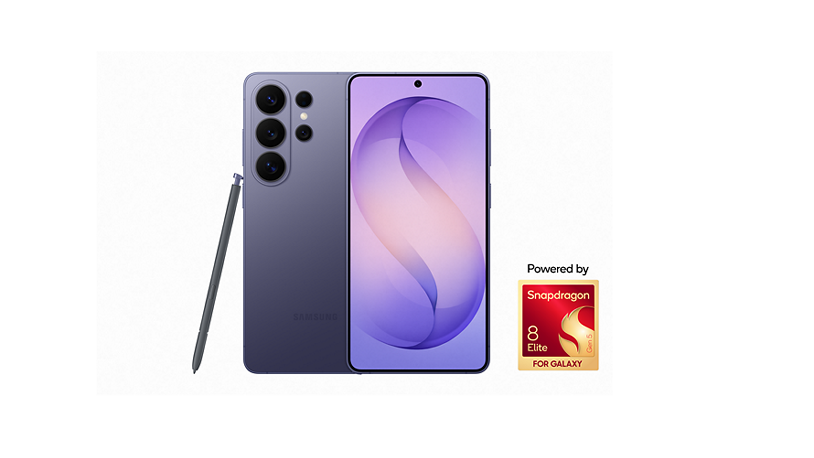
Our read: Samsung put the proven chip in its highest-priced phone and kept its own chip for models where a miss costs less. That also keeps Samsung’s foundry running, which matters to a company that sells chips as well as phones.
The Exynos 2600 is a serious attempt. It is the first mobile chip on a 2nm GAA process, with a deca-core CPU featuring Arm C1-Ultra and the Xclipse 960 GPU.
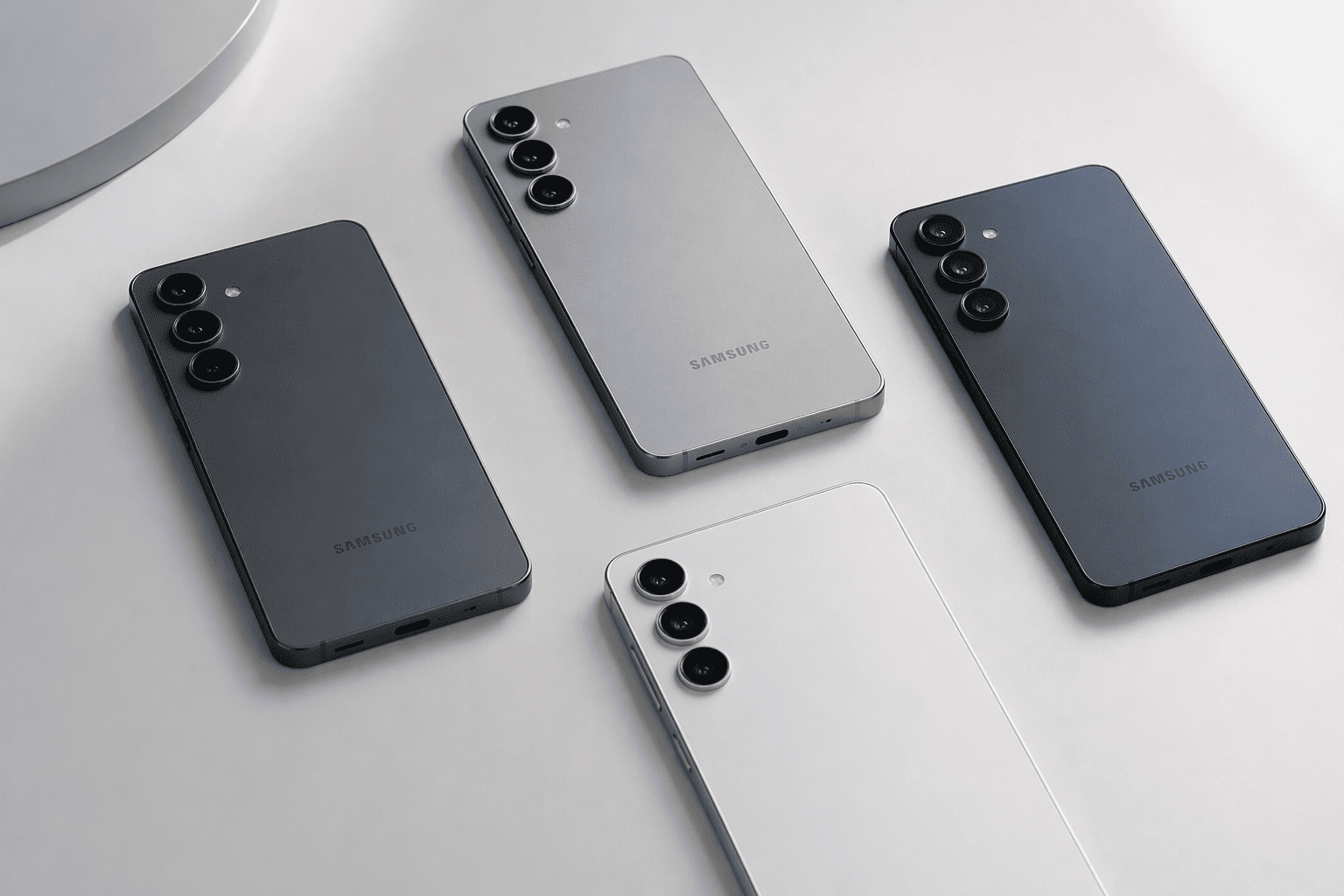
The nanometer myth: why 2nm and 3nm don’t sort these chips
It is tempting to rank these chips by process node, and the numbers refuse to cooperate. Tensor G6 and the S26 Ultra’s Snapdragon are both 3nm, yet the Pixel scores 2,112 to 2,293 single-core against 2,914.
The 2nm A20 Pro sits above both at 3,994. In 3DMark Wild Life the Galaxy S26 with the 2nm Exynos 2600 scores 24,673 against 25,688 for the Snapdragon version, so it lands near it without passing it.
The node sets a ceiling and the design decides how much of it you reach. Core layout, GPU, memory and cooling matter as much as transistor size, and those are exactly where the three companies chose differently.
Heat and gaming: where the three phones separate most
Heat and gaming is where the three phones differ most clearly, and the order in tests is Apple, then Samsung, then Google, with caveats on each. Sustained performance matters more here than a peak score, because a game that starts fast and settles slow is the one you notice.
Apple first. In 3DMark’s Wild Life Extreme stress test, the iPhone 18 Pro Max holds a 79.4% stability score and the iPhone 18 Pro 62.8%, and the Pro Max reaches 67.9 frames per second in Solar Bay Unlimited against 49.37 for the S26 Ultra. Apple’s own pitch is a vapor-cooled A20 Pro.
Both iPhones share the A20 Pro, and Apple says both have a next-generation vapor chamber, yet they score 79.4% and 62.8%. That 17-point gap means the result belongs to the whole phone and not the chip alone, and we found no source that explains the difference.
Samsung is in the middle. Its US page calls the S26 Ultra’s cooling its largest Vapor Chamber ever, which it says enables 21% greater thermal performance. Its stability score lands between about 54% and 69% depending on the run, still below the iPhone 18 Pro Max’s 79.4%.
Apple’s lead isn’t a clean sweep against Qualcomm’s newer generation, which the S26 Ultra doesn’t use. On a Qualcomm reference device, the Snapdragon 8 Elite Extreme Gen 6 scores 9,941 in Wild Life Extreme against 8,344 for the A20 Pro, while the A20 Pro leads Solar Bay Extreme, 2,904 to 2,262. Qualcomm’s heat behavior is itself disputed.
Google is last on the evidence we could find. In 3DMark Wild Life Extreme the Pixel 11 Pro XL scores 3,326 against 7,123 for the S26 Ultra, both Android phones on the same test, which is more than double. Google says the vapor chamber on the Pixel 11 Pro phones helps keep them at peak speeds, but we found no sustained-gaming test to confirm it.
The Pixel’s GPU is an Imagination PowerVR CXTP-48-1536, and Google doesn’t publish a GPU spec of its own. Google’s chip messaging is about AI and the camera, and that is where it asks to be judged.
If you play for an hour or shoot long video, this is the section that should decide your phone. If you mostly scroll, message and navigate, none of these gaps will be what you remember.
Display: the chip matters least here, and the three are closer than marketing suggests
All three phones use an adaptive 1 to 120Hz panel, so none of them wins on refresh rate. Rated peak brightness is 3,000 nits outdoors for Apple, 2,600 for Samsung and 3,600 for Google.
Rated isn’t measured. The iPhone 18 Pro Max measures about 2,396 nits peak in lab testing. The real differences are features, such as Samsung’s Privacy Display and the anti-reflective coating Apple lists.
The chip’s part is keeping 120Hz smooth when the phone is hot, which ties the screen back to the heat section. Display is a tie on specs and a split on features.
Video: three different answers to what the phone should record
Video is where the three companies drew the line in different places. The iPhone 18 Pro and Pro Max record 4K Dolby Vision at up to 120fps, plus ProRes and Apple Log 2, and ProRes at 4K and 120fps needs external recording.
Samsung leads with resolution: the S26 Ultra records 8K at 30fps and 4K at 120fps. The Pixel 11 Pro and Pro XL record rear 8K at 24 or 30fps, powered by Video Boost, and 4K up to 60fps, per Google’s spec page.
Each format list matches the company’s pitch. Apple lists demanding formats recorded on the phone, Samsung chases the big resolution number, and Google ties its 8K to Video Boost.
We found no test of long 4K recording on all three Pro phones, so heat during video is the gap to watch in long-term reviews.
Camera and AI: where Google spends its silicon
Google is the one company that explains its chip mostly through camera and AI features, and that is where its bet makes sense. The iPhone leans on a vapor-cooled chip, the S26 Ultra on a 200MP camera and a big processor, and the Pixel on software.
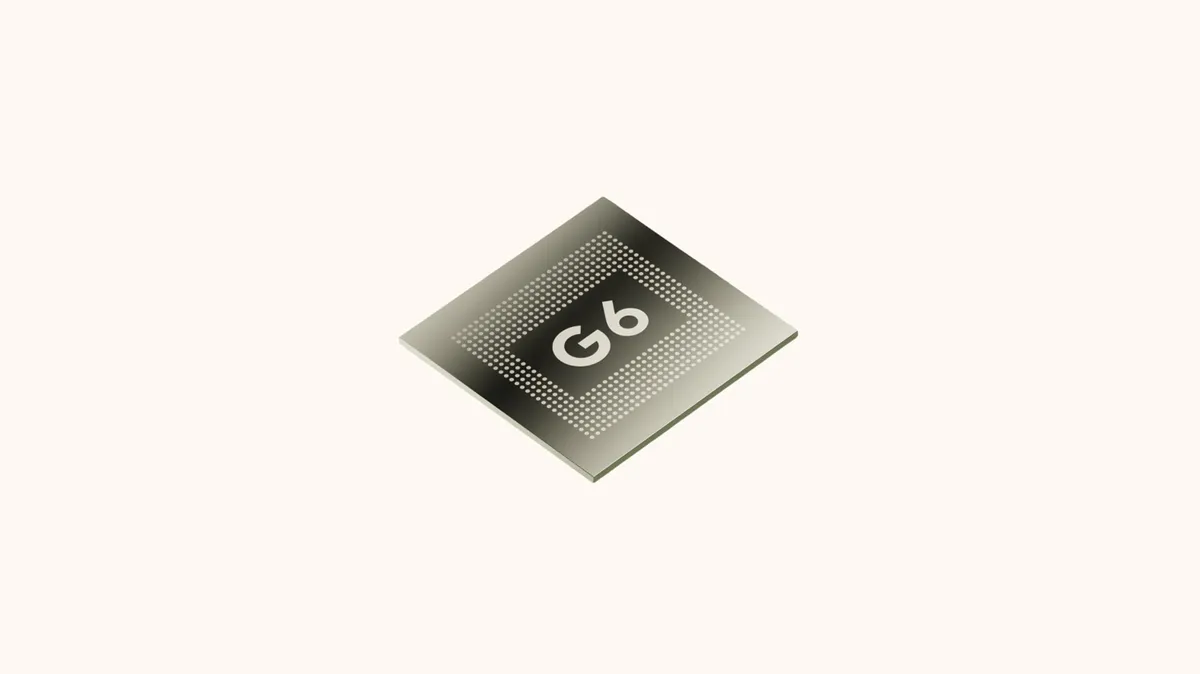
Google says Tensor G6 has 50% more TPU compute, makes Instant Night Sight up to 4.5 times faster and drives 120x Pro Zoom on the Pro phones, per its Tensor page. Its launch post adds that on-device AI tasks run up to 3.5 times faster using up to 3.5 times less energy. Those figures are Google’s own, and we found no independent test of them across all three phones.
Apple lists a dual 16-core Neural Engine, and Samsung says its customized Snapdragon brings a 39% NPU boost over the S25 Ultra. In our read, Google isn’t trying to win every conventional benchmark. It builds hardware and software together for on-device AI and photography.
Battery and modems: the part nobody benchmarks well
Battery claims come from the makers and measure different things, so we don’t rank them. Apple says the eSIM-only iPhone 18 Pro Max gets up to 45 hours of video playback and the iPhone 18 Pro up to 36, crediting advances in Apple silicon and a larger battery. Google lists 30+ hour battery life for the Pixel 11 Pro and Pro XL, and the S26 Ultra lasted 16 hours and 10 minutes in a review battery test.
Google also says Tensor G6’s CPU compute delivers up to 20% better power efficiency, a claim we haven’t seen independently measured.
Modems add a second layer. Apple lists its own C2 modem for the iPhone 18 Pro, but the US iPhone 18 Pro Max reportedly carries Qualcomm’s Snapdragon X80, per a TechInsights teardown. The Pixel 11 reportedly swaps Samsung’s modem for MediaTek’s M90, and the S26 Ultra reportedly uses Qualcomm’s X85.
Apple and Google both probably want control of the radio because it sits behind many battery and signal complaints. We found no controlled test comparing the C2, X80 and M90 on battery, so treat any idle drain benefit as a claim.
OS optimization: the chip is only half the story
The iPhone 18 Pro ships with iOS 27, the Pixel 11 with Android 17, and the S26 Ultra with One UI 8.5. Apple doesn’t publish an update guarantee that we could find.
Google promises 7 years of OS, security and Pixel Drop updates for the Pixel 11 Pro phones. Samsung promises seven generations of OS upgrades and seven years of security updates for the S26 series.
Optimization follows ownership. Apple owns the chip and the OS, Google owns Tensor and Android, and Samsung owns neither the chip in its Ultra nor the base OS, so it has the most to reconcile.
Side by side: how the three phones differ day to day
This table pulls the results together. Where results varied we show the range or say so.
| What you feel | iPhone 18 Pro / Pro Max | Galaxy S26 Ultra | Pixel 11 Pro / Pro XL |
|---|---|---|---|
| Sustained gaming stability (3DMark stress test) | 79.4% (Pro Max), 62.8% (Pro) | About 54% to 69%, by run | No result found |
| 3DMark Wild Life Extreme (Android phones) | Different platform, not compared | 7,123 | 3,326 (Pro XL) |
| Display (rated) | 1 to 120Hz, up to 3,000 nits outdoors, 460 ppi (Pro Max) | 1 to 120Hz, up to 2,600 nits, Privacy Display | 1 to 120Hz, up to 3,600 nits, 495 ppi (Pro) and 486 ppi (Pro XL) |
| Video | 4K Dolby Vision to 120fps, ProRes, Apple Log 2 | 8K at 30fps, 4K at 120fps | 8K at 24 or 30fps via Video Boost |
| Operating system | iOS 27, no stated update guarantee | One UI 8.5, 7 generations of OS upgrades, 7 years of security updates | Android 17, 7 years of updates |
| Modem | Apple C2 listed (US Pro Max reportedly Snapdragon X80) | Qualcomm X85 (reported) | MediaTek M90 (reported) |
| Battery | Apple claims up to 45 hours video playback (eSIM-only Pro Max), 36 hours (Pro) | 16 hours 10 minutes (review test, a different measure) | Google lists 30+ hours |
Three companies, three bets on what a phone chip is for
So why would any of them skip Snapdragon? Apple would give up the control its sustained speed seems to depend on, Samsung hedges because a bad chip in its bestseller costs too much, and Google spends on AI hardware that speed tests reward least.
Each bet leaves a gap. Apple’s lead depends on a chip only Apple can ship, Samsung’s split means two S26 owners can hold different chips, and Google’s AI gains are mostly its own numbers.
No single test covers all three phones on every point, so any ranking here is an informed read. If you game or record long video, sustained results should decide it, and the iPhone 18 Pro Max and S26 Ultra are the safer picks. If you live in the camera and the assistant, the Pixel’s trade is easier to accept, and if you are buying a Galaxy S26 or S26+ outside the US, check which chip your market gets before you pay.