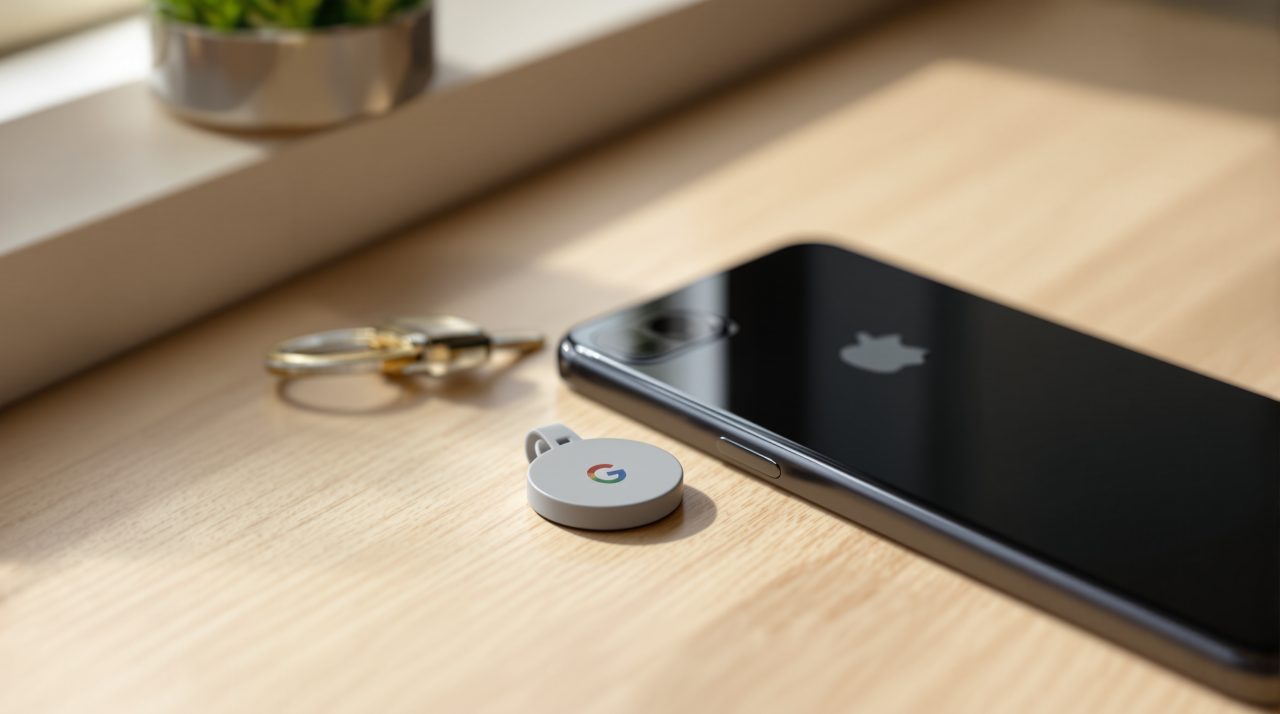
Google’s Pixel Tag goes on sale November 11, 2026, at $29.99 for one or $99.99 for a four-pack, according to Google’s November Pixel Drop post. It is a Bluetooth item tracker from Google, and it taps the Find Hub network of more than 1 billion Android devices. If you have ever emptied every coat pocket looking for keys, this is Google’s answer to the AirTag, with one catch: it speaks Android only.
Here is what the tag does, what it costs and who should skip it.
TL;DR: Google’s Pixel Tag costs $29.99, or $99.99 for four, and goes on sale November 11, 2026. It finds items through Find Hub and uses ultra-wideband for close-range direction, which needs a phone with UWB. The battery is replaceable, and Google’s pages list Android 9 or later with no mention of iPhone. Buy it only if the phones in your house run Android.
Pixel Tag price and release date
Google’s Pixel Drop post lists the Pixel Tag at $29.99 for a single tag and $99.99 for four, with availability starting November 11. Google’s August 12 announcement rounded those figures to $29 and $99, so expect the cents at checkout.
The four-pack works out to about $25 a tag, which suits a household that wants keys, a bag and a wallet covered. The tag first appeared as an unexplained line in an Amazon listing leak ahead of the Pixel 11 launch, so the wait has been a long one.
Price is the easy part. How it finds things is what you are paying for.
How the Pixel Tag finds lost items
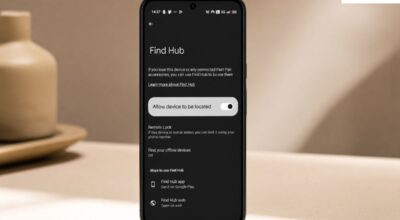
Far from you, the tag relies on Find Hub, where nearby Android phones relay its location, and Google says that location information is end-to-end encrypted. Close by, ultra-wideband and Bluetooth Channel Sounding give distance and direction, but only on a phone with UWB support.
A built-in speaker lets you ring the tag, and Google’s Store listing says pressing the tag’s button rings your phone, even on silent. You can share one tag with up to 10 people, or ring it from a Pixel Watch or by asking Gemini on Pixel Buds.
The hardware decides how long all of that keeps working.
Pixel Tag battery, water rating and size
The Store listing gives the Pixel Tag’s size as 1.1 by 1.8 inches, 0.2 inches thick, at 0.4 ounces with its battery. It is rated IP67, which covers up to 1 meter (about 3 feet) of water for 30 minutes.
The battery is a user-replaceable CR2032 coin cell. Google says it lasts up to a year, but that figure comes from preproduction units paired with a Pixel 10 Pro XL, and real life may be shorter. Google also says the IP67 rating is not permanent and can weaken with wear or repair.
A replaceable battery is a small detail, and it decides whether a tracker stays on a keyring for years or gets swapped out every twelve months.
Pixel Tag compatibility: Android 9 or later, no iPhone
Google’s pages list Android 9 or later for the Pixel Tag, and the footnotes in the August announcement add Bluetooth 6.0 or later, with UWB needed for precision finding. Neither the announcement nor the Store listing mentions iPhone.
Google does not describe any iPhone support, so a mixed household should assume it needs a different tracker. For a $30 tag, that compatibility line matters more than the spec sheet.
Google says your phone also alerts you when it detects an unknown tag traveling with you, with steps to ring it and decide what to do next.
What to check before you order a Pixel Tag
Check your phone’s Android version first, then whether it has UWB, since that decides whether you get close-range guidance or just a ring and a map. The same Pixel Drop also brought Google Fi 5G switching to eligible Pixels, if you want something else to try this week.
If your phone passes both checks, the Pixel Tag is a low risk $29.99 experiment. If it does not, you are paying for a tag that only half works.