Are you planning on buying a new computer? It is common to face confusion about whether to buy a Mini PC or a laptop. Purchasing a new gadget is always full of confusion and doubt. In this era, this pre-purchase doubt flares up even more with so many choices available in the market. While laptops have been in the tech world for a few decades, modern Mini PCs are giving them a run for their money due to the rise in demand for compact computing devices.
In this article, let us check which is better, a Mini PC or a laptop? I have tried comparing both devices based on their usability, portability, price, hardware capability, and similar other relevant factors that will make it easier for you to decide and purchase the suitable computing device.
Future of compact computing
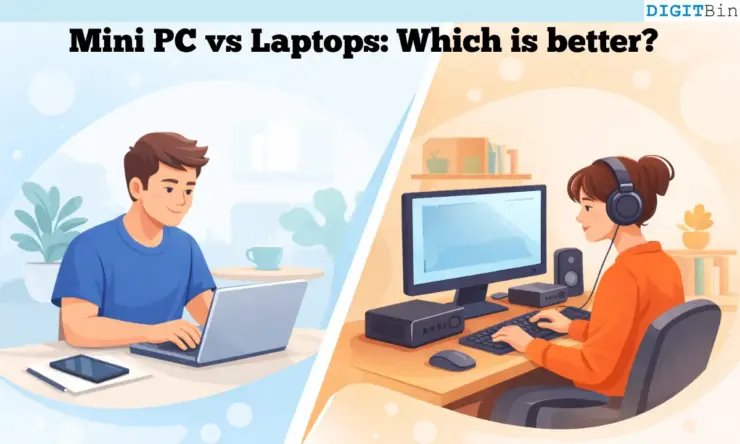
A laptop is popular for its primary feature, portability. You can carry a laptop anywhere in the world, and the laptops in the current era have become thinner and sleeker in design, making them more portable than ever. Laptops are all-in-one devices, with a foldable design that integrates the CPU, GPU, and storage in one chassis.

A Mini PC is the best fit for meeting your stationary computing purposes. This means if you prefer working at one place, with a small desktop setup, a Mini PC makes a lot of sense.
The Windows OS, CPU, hard drive, and storage are bundled into a small cuboidal box. You have to get an external monitor and connect with the Mini PC unit to get started with your work. Usually, Mini PCs help in managing lightweight tasks such as file operations, browsing, and basic computing.
Mini PC vs Laptop: Key differences
Based on several deciding factors, here is a list of differences between a Mini PC and a laptop. Understanding these differences will help you to a great extent to decide on buying either of the two gadgets.
| Differentiating Factor | Laptop | Mini PCs |
| Portability | Highly Portable | The setup is not completely portable. Usage requires an external display and other accessories. |
| Hardware | Available in various hardware combinations for different use cases. | Due to the minimal use-case available in a limited low-end hardware configuration. |
| Performance | Performance varies on the CPU used in a specific model and associated peripherals such as SSD and GPU. Normally, mid-range to high-end laptops have great performance. | As the Mini PCs are designed for basic tasks, they will perform decently. Most likely to stutter at resource-intensive tasks. Also, performance is dependent on externally connected peripherals. |
| Multitasking | Usually handles multitasking well enough, even with low-end specs. | It depends on the CPU unit you are using. The most basic ones at lower prices are not good at multitasking compared to a laptop at the same price. High-end assembly PC are exceptions, depending on an exclusive use-case such as gaming. |
| Gaming | Dedicated gaming laptops are available to play games, and other non-gaming models can be used to play low-end games. | Mini PCs of a lower price are usually aimed at meeting basic task requirements. High-end assembled PCs can be used for gaming, but they are very expensive |
| Upgradability | The hardware of most laptop are upgradeable. Some components of high-end laptops may be non-upgradable. | Very limited scope of upgradability. You need to separately upgrade the components, which may be costly. |
| Longevity | With proper maintenance and upgrades, laptops can function for 6 to 7 years. | From the information obtained from online reviews, Mini PC designed for basic tasks have a shorter life span compared to laptops in the same price range. |
| Use-case | Fits best if you travel frequently and like to have a highly mobile yet compact computer. | Fits best if you prefer working in a stationery yet minimal desktop setup |
Laptop or Mini PC: What do users prefer?
It can sound interesting, but from the information I have gathered, the laptop and Mini PC user bases don’t really clash. Both devices serve different utilities and hence have their loyal user base. Mini PCs have a niche user base that wants a non-mobile compact setup aimed at meeting the basic computing and browsing needs.
The laptop user base is divided into categories depending on portability, basic usage, power usage, and gaming. For different requirements, various types of laptops are available. There are the ones with low-end hardware, and you can also find laptops fitted with the latest high-end hardware.
Based on different factors, I have made several data points by obtaining information from the internet that defines the demand and future of laptops or Mini PCs.
| Metrics | Laptops | Mini PCs |
| Market Value | $109.9 billion value in 2024; expected to grow to $115.1 billion by 2025 and onwards | Mini PC market valued at $25 billion in 2025, with projected growth to ~$40 billion by 2032 |
| Growth Factor | Portability and availability of newer models at regular intervals. | Demand for distributed co-working space |
| CAGR | Estimated market growth 5.3% by 2032 [source] | Estimated market growth 6.9% by 2032 |
| User’s Choice | Laptops have a huge popularity in the PC segment due to their portability and availability for different user requirements. | Use of Mini PCs is getting popularized with increased demand for compact desktop setups [source] |
As you can see from the above table, laptops are widely in demand for their versatile configuration and portability. But Mini PCs, being niche gadgets, also have a solid user base that is estimated to grow in the coming years.
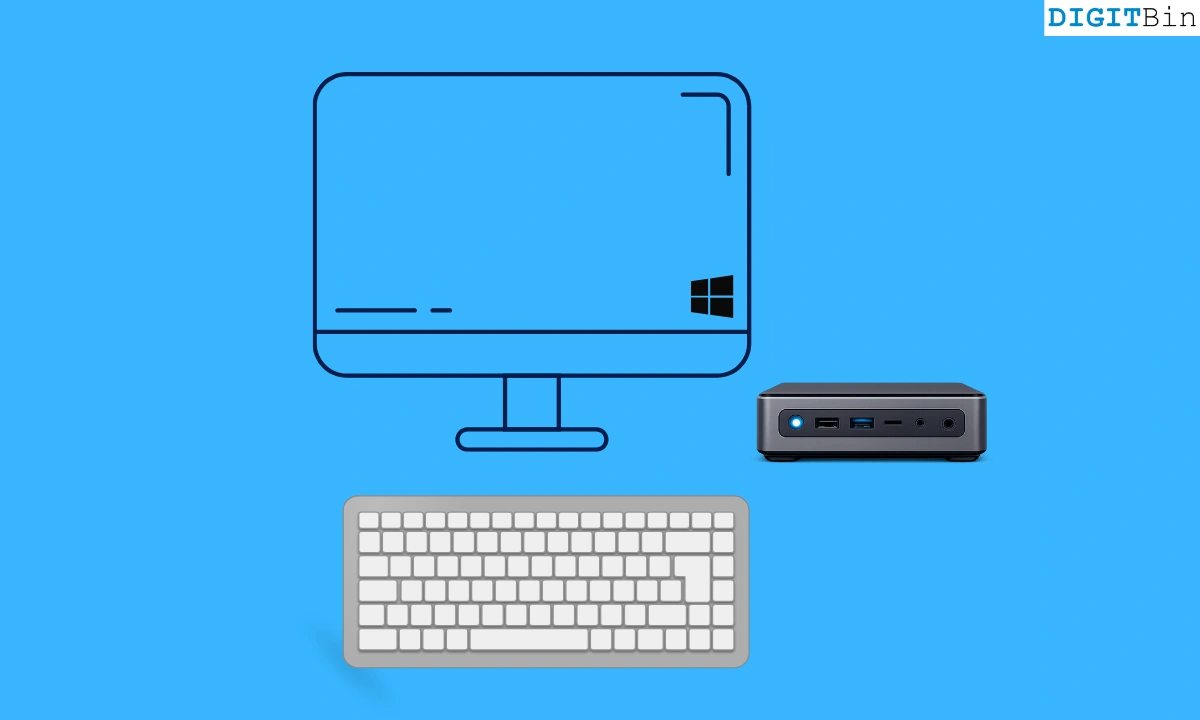
I believe the decision to choose between a laptop and a Mini PC is based on your utility. If you want a formidable and toughly built computer for gaming, you either get a dedicated gaming laptop or assemble a PC with powerful(and expensive) components focused on gaming.
Of course, you cannot get the best gaming performance with a Mini PC that is supposed to meet the basic file operations, browsing, or watching Netflix. If you have a tight budget and simple utility without mobility requirements, such as writing/editing doc files or creating some basic Excel sheets and browsing, a Mini PC can manage it smoothly, and you don’t need one of those high-end laptops.
Do you want to buy a laptop anytime soon? Refer to our guide on how to decide which laptop to buy.
Mini PC or Laptop: What should you pick?
Are you still thinking whether to buy a Mini PC or a laptop? Well, it all boils down to your purpose. If you are not planning to move around a lot, investing in a Mini PC makes so much sense. Otherwise, a laptop will be a great choice if your line of work includes travelling. Both Mini PC and laptop offer sufficient options to choose from, starting with low-end devices going all the way upto high end models.
If you've any thoughts on Mini PC vs Laptops: Which is better for you?, then feel free to drop in below comment box. Also, please subscribe to our DigitBin YouTube channel for videos tutorials. Cheers!

![Omegle Not Working | Server Error on Chrome PC [Fixed] 1](https://cdn.digitbin.com/wp-content/uploads/How_to_Fix_Omegle_Not_Working_on_Chrome_Browser-520x292.jpg)